



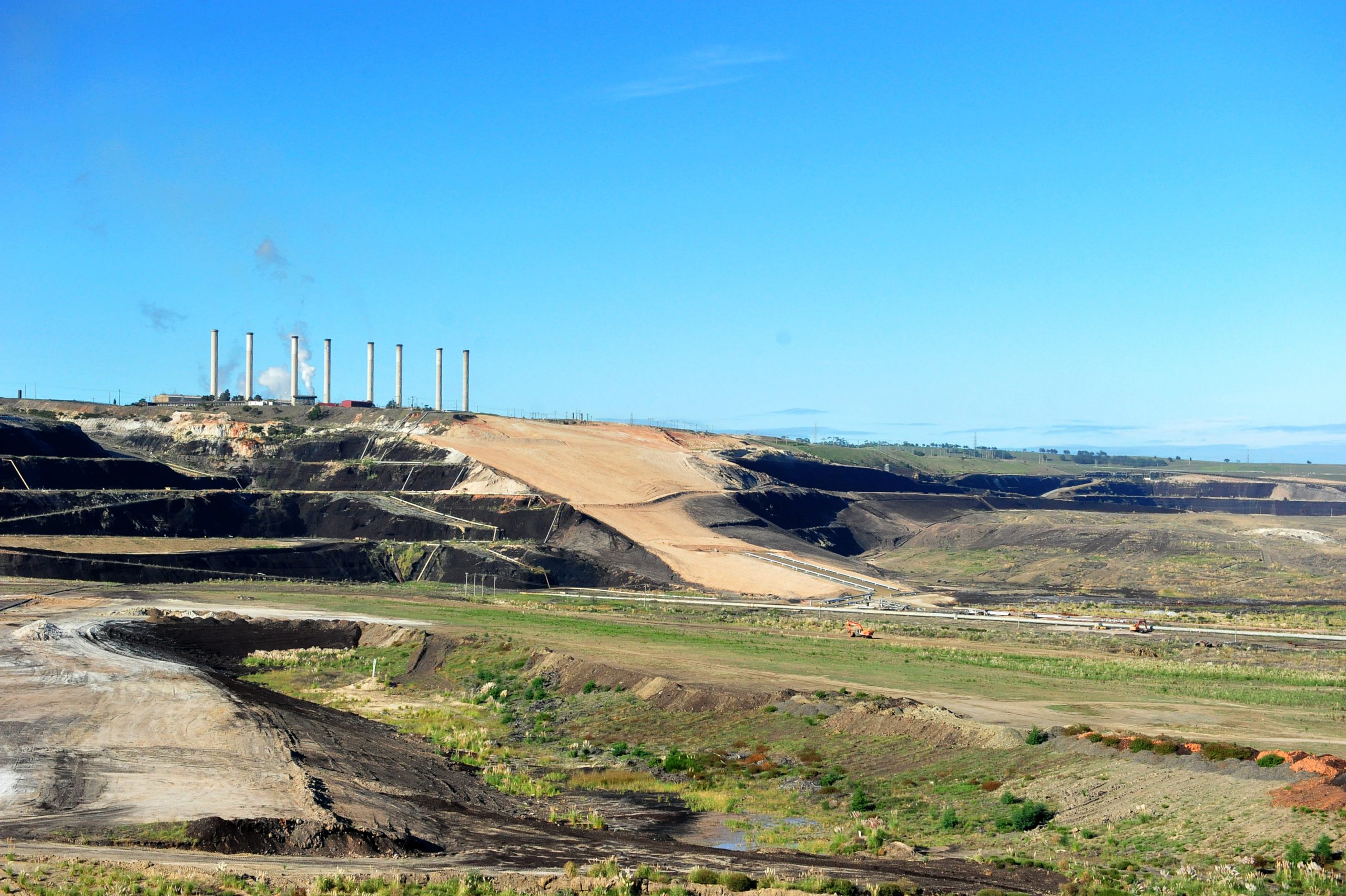
Continued speculation of national energy security has kept the spotlight on the potential closure of the Hazelwood power station and mine.
Federal Energy Minister Josh Frydenberg announced an independent review into national energy security after a Council of Australian Governments meeting in Melbourne on Friday.
As the Federal Government confronted state ministers over the danger of state-wide blackouts seen in South Australia, Member for Morwell and former state energy minister Russell Northe said a body of independent work was needed to understand security of supply after Hazelwood closed.
Mr Northe said he had conversations with the Latrobe Valley generating sector and energy union officials who expressed concern about energy supply security. He also cast doubt on state-based renewable energy targets.
“It’s all good and well to have a greater percentage of renewables, nobody is arguing with that, but how do you get there and make sure you don’t compromise jobs, security of supply and the cost to consumers?” he said.
Construction, Forestry, Mining and Energy Union Victorian district branch mining and energy division secretary Geoff Dyke said the storm in South Australia had been publicly blamed for the blackout, but the problem was the system’s design and stability.
Referencing an Australian Energy Market Report released in August, Mr Dyke said the closure of the Northern and Playford coal-fired power stations in South Australia had caused a big reduction in synchronous inertia in the system.
The report said, ‘while worst case, this approach was considered suitable for a high level insight into the risk of a region-wide collapse upon non-credible separation’.
“Large deviations in frequency cause generators and equipment to trip on protection to avoid damage,” Mr Dyke said. Energy, Environment and Climate Change Minister Lily D’Ambrosio told The Express the potential closure of Hazelwood did not in itself pose a risk to reliable energy supply.
“Households are 10 times more likely to experience disruption to their power supply caused by a storm or a power pole accident, rather than by the closure of Hazelwood,” Ms D’Ambrosio said.
She said the government would be prepared for any scenario and would work with the national market operator to ensure ways of managing the supply with minimal interruption, despite the low probability of this occurring.
Ms D’Ambrosio said Victoria had a broad mix of energy sources, including wind, gas and hydro power, as well as interconnections to New South Wales, Tasmania and South Australia.
“If Hazelwood was to close, the energy market, like any other commercial market, would open the door to increased investment in other sources of energy,” she said.
Environment Victoria campaigns manager Nicholas Aberle said “baseload power” was about power stations that were most economical to run at a constant rate.
Dr Aberle said a number of studies had shown there were no technical barriers to powering Australia with 100 per cent renewable energy.
“We already have electricity interconnectors between most states,” he said.
“In a grid powered by more and more renewable energy, Australia’s geographic size means it is always going to be windy somewhere and it’s sunny enough across different time zones to deal with evening peak demand.”
During a visit to the region last week, Industry and Employment Minister Wade Noonan said coal would serve as an important resource in terms of ongoing base power needs for Victoria.
“The government is open to the use of the coal reserve that is there, but I think we see through Advanced Lignite Demonstration Program there is a series of grant promises that have not been fulfilled,” Mr Noonan said.