


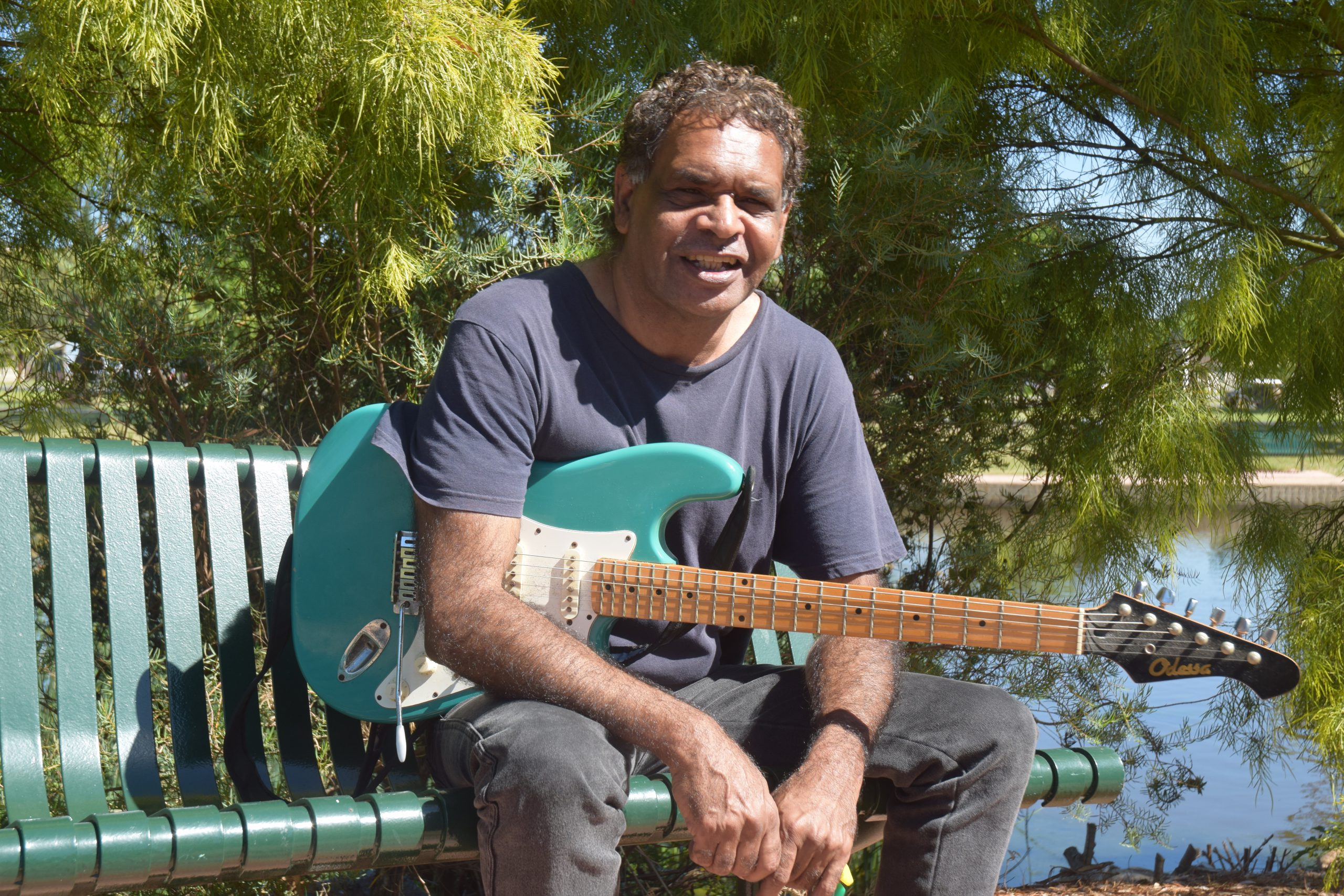
When No Fixed Address started booking gigs again, songwriter and guitarist Ricky Harrison had no choice but to move down from Queensland or fork out for airfares.
“Already we’ve done about 20 shows I reckon this year,” Harrison said.
The reggae musician, now living in Morwell where he spent most of his childhood, is running a Gunai/Kurnai audio art project called ‘Muk Wane’ and is in the middle of recording a new album with No Fixed Address who were pioneers in Aboriginal commercial music.
Recent gigs have even take him aboard a cruise ship in the bay.
“We got up just about to start playing and the boat started turning around to come back in and so we were hitting the waves and … the mic kept bouncing and hitting me in the face,” Harrison said.
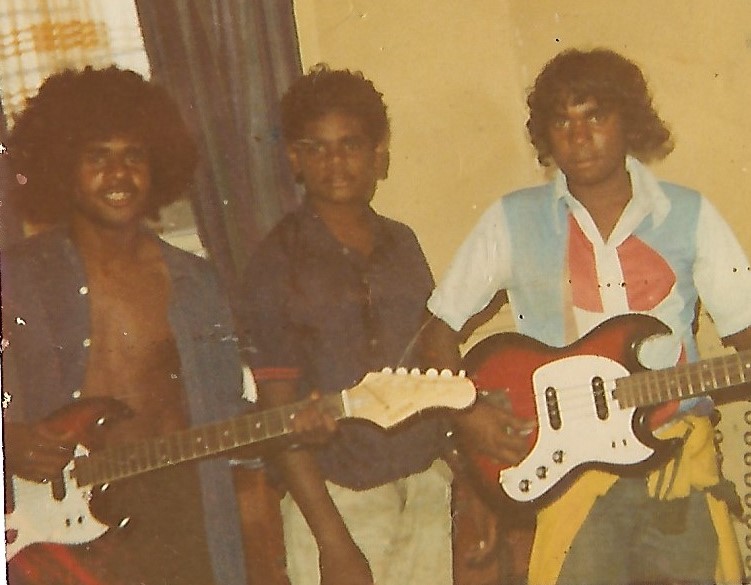
Returning to Morwell has meant a return to songwriting and for him to reconnect with his cousin Nick Moffatt and nephews Sean Moffatt and Peter Hood who he will soon play with for the first time in decades with their band Black Satin.
He said they all used to have special nicknames, with Harrison’s being ‘Ozzie’ after his uncle.
“So everybody called me ‘Ozzie’, then my cousin come up to me and he goes, ‘oh man they call you Ozzie? … that’s terrible man’,” Harrison said.
Harrison asked him why.
“And he goes ‘because you’re black?'”
He was relieved when he realised it was not spelled ‘Aussie’.
At a free gig in Traralgon this weekend the group will perform some familiar reggae hits from No Fixed Address and some new material Harrison has written in Morwell.
“Back then I could write songs and basically put them together in a day but, yeah, nowadays it’s kind of like I have a mental writer’s block,” Harrison said.
“Then you feel like, I don’t know, breaking a string. But you get up, take a walk, sit down.” A song the group will revisit is called Vision which Harrison wrote at 16.
He had a dream the night after reading a news story about yellow chemicals contaminating Lake Victoria in east Gippsland and killing fish.
“I dreamed there was a devil and he was calling out to all the people trying to get them to follow him down to this fire,” Harrison said.
“All these people were standing around there and they were like in a trance sort of thing and it was right there you could see where the poison was in the lake it was like everything was dead.”
He said many people read a little too deep into the lyrics, thinking he meant ‘the white man’s a devil’ but that was never his intention.
Harrison did, however, write many political songs about Aboriginal rights, yet it was “all to do with uplifting everybody’s spirits, especially black people”.
Some new material is written in Gunai/Kurnai language and Black Satin will perform this weekend in a bill with Kutcha Edwards and his band who once played together supporting Carlos Santana in the ’90s.
The free community event is on Sunday, May 27 at Traralgon Performing Arts Centre. Phone the box office for reservations on 5176 3333.