



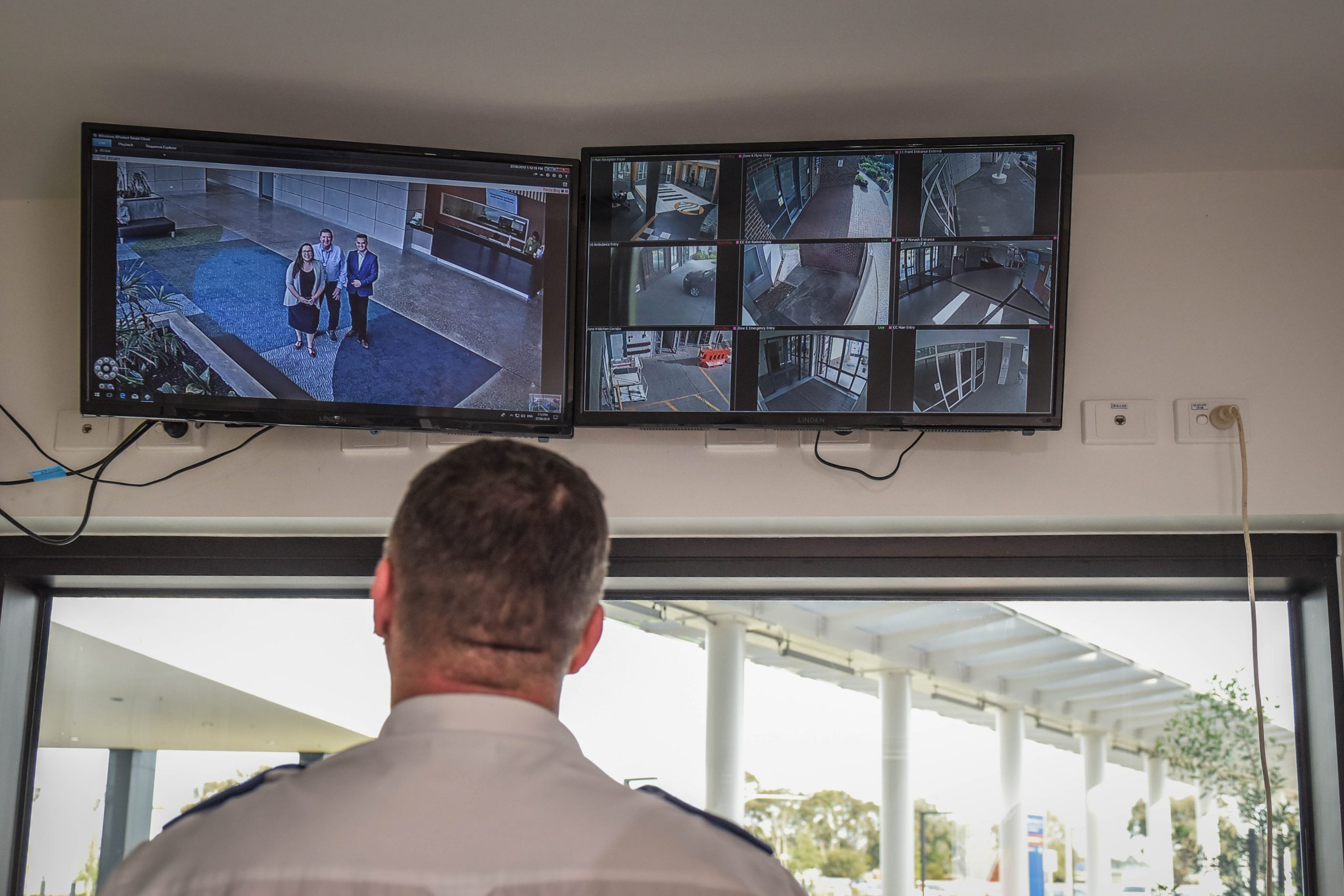
Latrobe Regional Hospital will receive upgraded CCTV cameras and a new off-site mobile duress system from the state government to better protect healthcare workers and staff from abuse.
The safety upgrades are part of the state government’s Health Service Violence Prevention Fund which is providing $8 million to improve equipment, infrastructure and technology to 46 hospitals and mental health facilities across the state.
LRH chief executive Peter Craighead said research indicated that up to 95 per cent of healthcare workers experienced some form of violence in the workplace.
“If you put that figure into perspective, nearly every one of our staff has had to bear the brunt of verbal or physical abuse at some point on the job,” he said.
“No one should have to come to work fearing they’ll be the target of violence or aggression.”
“It’s an ongoing health and safety issue for us. In the last financial year, 426 incidents of occupational violence at LRH were reported.”
Mr Craighead said LRH’s Occupational Violence and Aggression Working Group had been training staff on how to de-escalate threatening behaviour andimproving security systems, however, community attitudes had to change.
“Most importantly though, we need a shift in attitude from people in the community who believe violence and aggression is okay,” he said.
“There’s an assumption the abuse comes from people who are drug-affected or have mental health issues and that’s not always the case.
“There are many instances when people become aggressive because they may have to wait for a service or they’re worried about a family member or friend. My advice is to remove yourself from the situation if you can, take some time out until you’re in a better frame of mind to discuss your concerns.”
Member for Eastern Victoria Harriet Shing said the safety upgrades were designed to provide hospital staff with the equipment necessary to keep staff, patients and visitors safe.
“We have zero tolerance for violence and aggression towards our mental health workers who care for Victorians during their most vulnerable times,” she said.
“It’s never acceptable to attack or abuse our frontline health workers. We’re giving our hospital and mental health facility staff the equipment, infrastructure and technology that keeps staff, patients and visitors safe.”
Other types of projects being funded across the state include GPS tracking systems to improve lone worker safety, CCTV upgrades, swipe card access for doors, car park safety zones, duress systems and personal duress alarms.