


By BLAKE METCALF-HOLT
IN the week following Iran’s retaliation to the US-Israel airstrikes, many Australians rushed to the petrol pumps in anticipation of prices soaring.
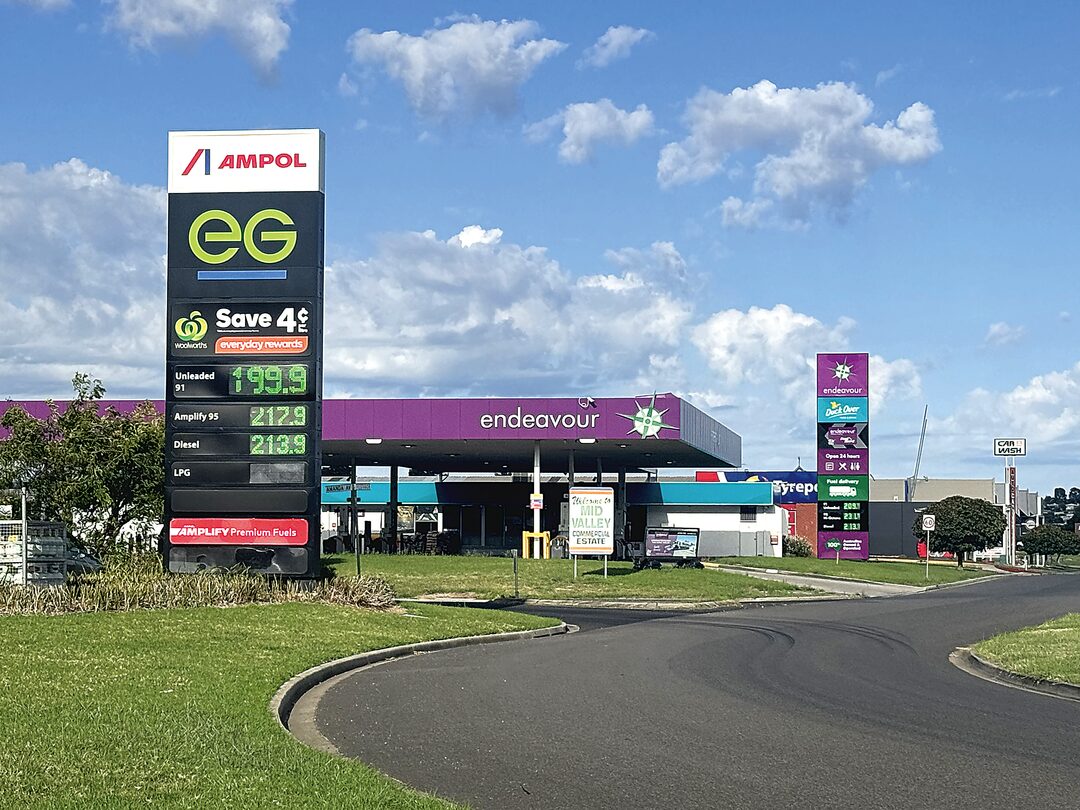
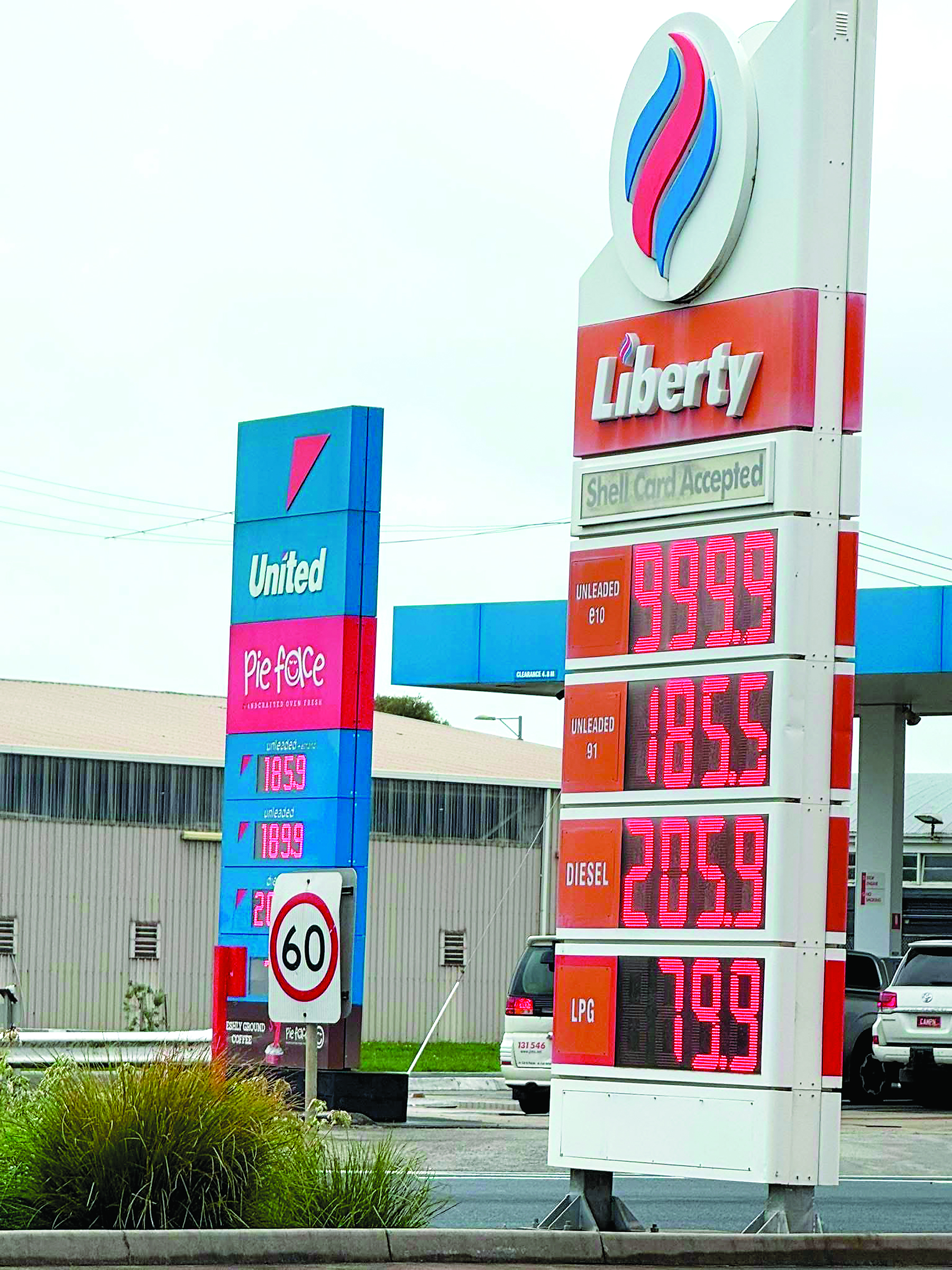
Across the Latrobe Valley and broader Gippsland region, many service stations are beginning to, if not already, tick over $2 a litre.
Financial experts and federal ministers said that the effects on the cost of fuel are expected to be felt in the weeks ahead, and in addition to gas prices rising significantly, will inevitably put more strain on the economy.
Gippsland continued to tick upwards last week, while service stations across metro suburbs around Melbourne rarely sat below $2, similar to surges around Sydney and Brisbane.
Many Latrobe Valley locals have expressed their frustration and warned others about potential price gouging in certain towns.
Hysteria has been sensed across the country, with many rushing to service stations with jerry cans in hand.
The Timberline General Store in Heyfield issued a notice on its Facebook that it had ran out of diesel last Friday.
The local business urged customers to stop panic buying or otherwise be forced to put limits on all vehicles until it settles.
Federal Member for Gippsland Darren Chester said that the conflict in the Middle East shouldn’t be used as an excuse for price gouging.
“Gippslanders are already doing it tough under Labor’s cost of living crisis, so the last thing families and small businesses need is uncertainty around fuel supply and surging prices,” he said.
“The government should be doing everything it can right now to ensure Australia has secure fuel supplies and a clear plan to protect regional communities if this situation escalates.
“What Gippslanders want is certainty. Farmers, freight operators, tradies and families rely on fuel every single day, and any disruption hits regional communities the hardest.”
Last Thursday, local not-for-profit Willow House Community Support ran a free fresh food day out of its Boolarra Avenue, Newborough hub, relieving some financial burden off families with the rapid rise of fuel and cost of living concerns.
Mr Chester also urged the Labor government to better tackle inflation and cost of living, adding that the safeguards for Australia’s fuel reserve must be maintained and strengthened.
The most recent Home Value Index, shows Latrobe Valley is second in regional Victoria for highest 12-month value growth (14.4 per cent) as of February 28 at a median value of $493,543.
The federal government has attempted to lower concerns over fuel prices.
Energy Minister Chris Bowen provided an update on the expectation of fuel prices two days onward from Sunday, March 1 – the day of the first airstrikes on Iran.
“Australia enters this period of great instability very well prepared, much better prepared than in previous crises,” he said on Tuesday, March 3.
“Australia’s refineries and companies are required to keep a stock of fuel on hand in Australia just for this type of eventuality, and I’m pleased to say that we are currently in excess of the minimum stock obligations.”
In reality, Australia housed less than 40 days of petrol, diesel and jet fuel at the time the Middle East conflict started, well below the International Energy Agency’s (IEA) requirement of 90 days of emergency stock.
As an IEA member, Australia has failed to meet these standards consistently since 2012.
Australia does store emergency oil supplies in the US Strategic Petroleum Reserve, following an arrangement in 2020, but this would take two to three weeks to be shipped.
Minister Bowen went on to acknowledge the “challenges and difficulties” the country will experience in due time.
“The major impact on Australia’s petrol prices always will be international oil prices, which will be under real pressure,” Federal Energy Minister Chris Bowen said.
Federal Treasurer Jim Chalmers wrote to the Australian Competition and Consumer Commission (ACCC) informing them of the need to keep a watchful eye on fuel companies attempting to capitalise on public panic.
Despite expectations that it will take a few weeks to see the retail fuel price significantly climb, regular unleaded reportedly rose five to 10 cents (one area allegedly up 16 cents) in just a matter of days, indicating potential price gouging concerns.
On Monday (March 9), markets opened to reveal that global oil prices had shot above $US100 ($142 AUSD) per barrel for the first time since 2022.
Oil prices quickly jumped 10 per cent in the aftermath of the conflict, which was already tracking higher over the past month in anticipation of said events.
In Australia, the average retail petrol price was at $1.81 for the week ending on Sunday, March 1 (the day of the first airstrikes on Iran), and was increasing steadily since the second week of February.
At the beginning of the week, regular unleaded was being retailed across Melbourne at an average price of $2.13, according to frequently used fuel app PetrolSpy.
This all stems from the 33 kilometres of shipping lane along Iran’s south border, the Strait of Hormuz, effectively being closed since the conflict has reared its head.
It connects the Persian Gulf including the likes of Saudi Arabia, Iraq, the United Arab Emirates, Kuwait, Qatar, Bahrain and Oman to open sea.
The region produces 27 per cent of the world’s crude oil, with around 20 to 25 per cent of the global supply shipped via this route.
Major shipping companies said they would not pass through the strait due to the uncertain danger in the area, instead electing to re-route entirely around the most southern point of Africa, the Cape of Good – the longest possible shipping route.
Two Iranian drones were also intercepted at one of the world’s largest oil refineries, Ras Tanura, which was closed temporarily after sustaining limited damage from the debris of the drones’ interception.
QatarEnergy, responsible for close to 20 per cent of the liquefied natural gas global exports, also revealed that two of its operating facilities were attacked and would halt production.
Following this announcement, European gas prices skyrocketed overnight by almost 50 per cent, with fears Australia could follow suit as the globe’s third-largest exporter of LNG.
These attacks were one of many immediate responses by Iran, including strikes on Jordan, Qatar, Kuwait, Bahrain and the United Arab Emirates.
On the morning of Thursday (March 5), the first group of Australians stranded in the Middle East were repatriated to Sydney, as airlines managed the complex task of returning 115,000 citizens to home soil with flights muddied in the days since the conflict arose.
The Department of Transport confirmed with the Express that Victorians are utilising public transport, specifically train services, as a cost-effective alternative to cars.
Gippsland Line upgrades in September last year added 87 new weekly services, while more than 1100 extra trips each week have been added across 14 bus routes in Moe, Morwell, Traralgon and Warragul.
All of Caltex, Endeavour, Shell and BP were contacted for comment however, failed to respond.