



By AIDAN KNIGHT
AFTER a year of uncertainty, the Latrobe Health Assembly is back for 2026.
In June 2025, the Latrobe Health Assembly Board, born from the adverse effects of the 2014 Hazelwood Mine Fire, was informed that the state government would no longer fund its operation.
The Latrobe Health Assembly (LHA) at the time directly corresponded with the Department of Health, which informed the Assembly that its allocated amount of $4.5 million was removed from the state budget.
Board Deputy Chair Ange Gordan described this to the Express as “not a lot of money to them, which meant a hell of a lot to us”. The bruising announcement made its entire staff redundant, closed 30 community projects, and meant the organisation had to vacate its office of eight years.
However, the LHA lives on, now as a community-owned, independent, not-for-profit.
The mission remains the same, but its formation has certainly evolved. Or, as executive Ellen-Jane Browne told the Express, “the passion hasn’t changed – just the pay”.
As reported on the front page of the Express last October, the strong backing and public advocacy from the community and local organisations led to the state government reinstating a portion of the budget, to allow the Assembly a chance to ease into a new, self-sufficient model and give it the best chance at survival without government backing.
Once a robust 18-person team, a fresh three staff members have been appointed this year to keep the operation afloat, with everything else coming from volunteer contributions, of which there are many, including the board chair, executive officer and board members. These few paid positions were only made viable following the redesign of the Assembly structure.
The LHA is now found at 29 Church Street, Morwell – a former hairdressing salon, which has now officially opened after former staff worked through the holiday period to give it a new lick of paint and prepare it for the new era.
The Assembly met for its first board meeting since being dropped from the budget, less bureaucracy and more flexibility.
The focus for 2026 is on applying for grants and attracting supporters who can help keep core programs alive and create new projects tailored to local needs.
“We’ve just got our not-for-profit status, so we’re going to be applying for grants and really pushing to get some good grant money to make some projects happen and keep the work ongoing,” Ms Gordon said.
For her, the real damage of the funding cut was not only the loss of jobs, but the risk of silencing a community that is already “so under the pump and so disadvantaged in so many ways.”
Before the cut, she said, the Assembly had “some amazing projects and programs” and had begun to embed community voice into how agencies planned and delivered services.
“We’d really started to make an impact with the building of relationships between agencies and really having that community voice embedded into all of the work that we were doing,” she said.
“It was really powerful … so really disappointing for not much money for them to attack a community that is already so under the pump.”
As a classroom teacher, Ms Gordon sees the consequences of that disadvantage every day and she is blunt that it is getting worse.
“It’s not getting any better, and the disadvantage is just getting bigger and bigger,” she said.
“Some of these people need every piece of voice that we’ve got to help make a difference and help improve their health and wellbeing – and everyone’s health and wellbeing in the Valley.”
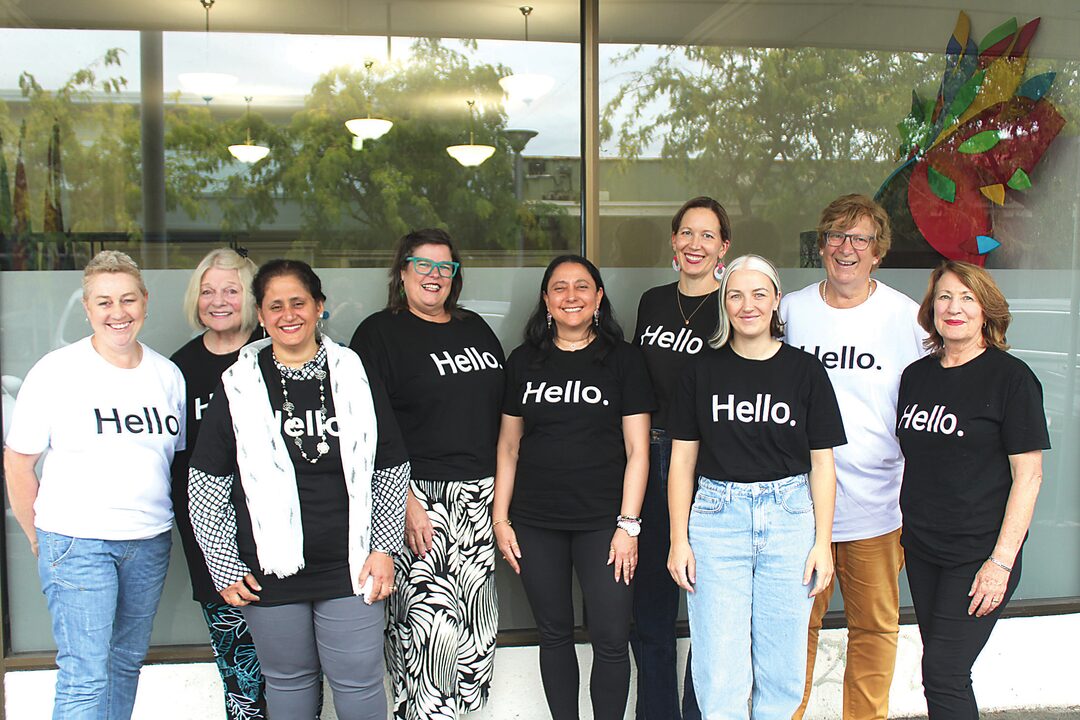
Among the Assembly’s signature initiatives is the Hello project – a simple campaign encouraging people to greet one another to combat isolation and build a sense of welcome.
Board Chair Tanya Rong told the Express the campaign is proof that improving wellbeing doesn’t always require large budgets.
Launched in 2019, the Hello project is based on similar principles to R U OK day – but is not limited to one day in the calendar year. It encourages Latrobe Valley residents to build social connections and reduce loneliness through simple acts such as greeting neighbours, hosting community events and bringing people together in shared spaces.
The importance of volunteers within a community organisation are not lost on the Assembly – they rely on them now more than ever.
Ms Gordan knows this well, having volunteered consistently in the region in some capacity since the events of Black Saturday, serving as chair of the Latrobe Valley Recovery Committee in the year that followed, which likely informed her approach to the formulation of the LHA, of which she is a founding figure.
Still, she believes individuals can make a tangible difference, even without a pay cheque.
“It is powerful, and you can make a real difference. You don’t have to be getting paid all the time to make a difference to the place where you live,” she said.
“If you want it to be a better place, you’ve got to contribute.”
As 2026 unfolds, the Latrobe Health Assembly faces an uncertain funding future, but has a clear mission: to keep the Latrobe Valley’s voice alive in decisions that shape its health and wellbeing – and to prove that, even after the loss of government backing, with passion and resilience, community-driven health can find a new way forward.