



By AIDAN KNIGHT
FOLLOWING the federal government’s decision to halve the fuel excise, state premiers and various chief ministers met the same week to see what they could add to help relief efforts.
A national cabinet meeting took place early last week (Monday, March 30), but came to no agreement as to what the state and territory governments should focus their approach on.
It was pointed out that each government made more money in GST in recent weeks, following the surge of fuel prices, and on Thursday morning, the premiers decided to use these funds to support a further 5.7 cent per litre slash in the fuel excise.
On top of the 26.3 cents cut by the Commonwealth, this brought the total reduction to 32 cents, from now until June 30.
Nationals Member for Eastern Victoria Region, Melina Bath, argued this was not enough.
“Without immediate action that prioritises fuel supply regionally, our food supply chain is at direct and imminent risk,” she said.
“For weeks, The Nationals consistently called for the fuel excise to be halved before it was actioned, but we also called on Labor to prioritise regional fuel security to safeguard food production and the transportation industry.
“Despite repeated clear warnings on the unfolding crisis, the state and Commonwealth Labor governments continued to ignore the severity of the fuel shortages outside metropolitan areas.
“Diesel scarcity and high prices are already disrupting agriculture, driving up operational costs and threatening the availability and affordability of essential goods on our supermarket shelves.”
The state government has maintained the measures are designed to provide broad relief while longer-term supply pressures are addressed at a national level.
The first local servo to drop prices was Saviges Road Moe, selling unleaded at $2.19 on Tuesday, March 31 – a day before the excise cuts came into effect. While the reduction has begun to flow through the bowser, prices remain significantly higher than pre-crisis levels.
With global supply pressures expected to continue, both state and federal governments face increasing pressure to balance short-term relief with longer-term fuel security, particularly in regional areas where reliance on diesel remains critical.
ELSEWHERE, the first week of free public transport lasted one day before issues emerged on the Gippsland line.
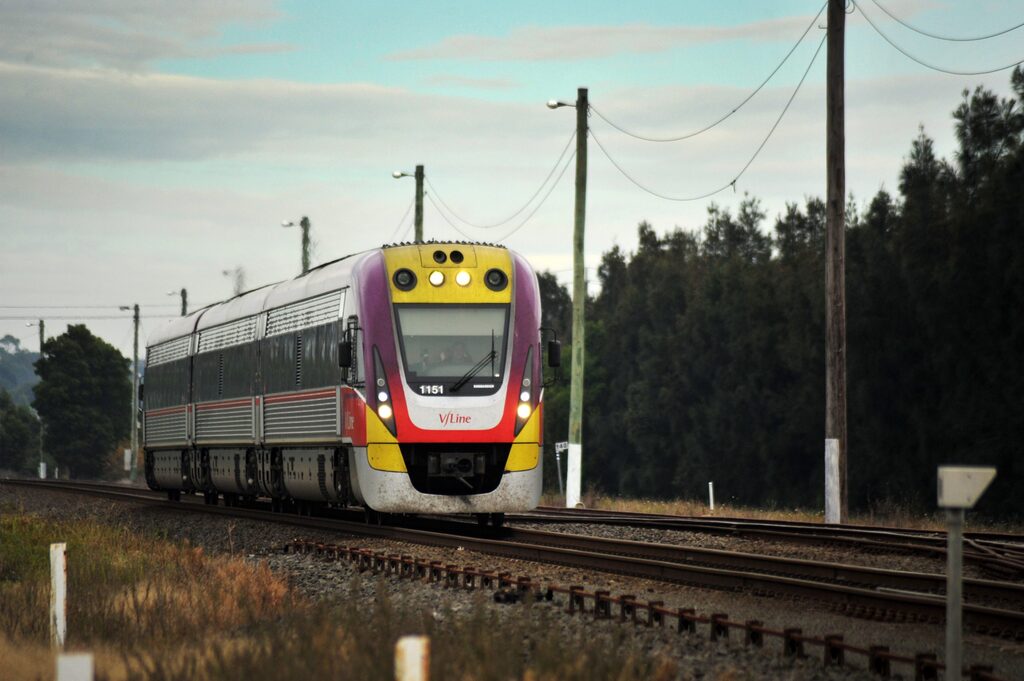
Commuters faced a great struggle getting to work last Wednesday morning, as V/Line announced coaches replacing trains for half the journey at 5.36am. This was reported to be due to another signal equipment fault in official V/Line correspondence, but staff on the ground at Pakenham station were heard to say it was more specifically “track vandalism”.
This affected the very first Traralgon line service, spanning five hours and seven services each way. Those travelling to the city were subjected to replacement coaches from East Pakenham – usually a metro-only station – while those working in the outer suburbs sat unmoved for an extensive period before also being swapped to a coach.
Ashley Imms travels to work using the Sunbury metro line each day, and told the Express, “I have been sitting (on the metro service) for over an hour and haven’t even gotten to Dandenong”, only to be told upon arriving that she would have to switch to a replacement coach to travel any further along the line.
Dandenong station was swarming with those affected by the disruptions. Ms Imms says she began her work day three-and-a-half hours late as a result. Services returned to normality by 10.12am that day.
Later that night, V/Line reported another period of coach replacements, after an incident requiring emergency services took place at Toorak, which caused a backup of metro trains blocking the way for V/Line rolling stock.
Services were fully restored by late morning, but the dual disruptions bookending the day left many Gippsland commuters questioning the reliability of the network during the state’s first week of free regional travel.
Passengers should be aware of planned disruptions for night works on both Traralgon and Bairnsdale lines from Monday, April 13 to Wednesday, April 15 (coaches will replace trains from Southern Cross to East Pakenham).
The Traralgon Line will be similarly affected from Sunday, April 19 to Wednesday, April 22 (coaches replace evening Traralgon line trains for the entire journey).
While many are taking advantage of free public transport, overcrowding has already started to become an issue.
Locals have been left dismayed that early morning peak train services are only three carriages long.
Nationals Member for Morwell, Martin Cameron, has called on the state government to boost commuter capacity for trains along the Gippsland line.
“I’ve been inundated with reports from people who have been forced to stand for the duration of their journey to Melbourne, or been unable to board altogether, because the train is completely full,” Mr Cameron said.
“Crowded public transport in the city may be fine for a short hop, but it is certainly not acceptable for a four-hour V/Line journey.
“Given school holidays begin this (last) week, and the lure of free travel, it’s safe to assume the demand for seats on trains will far outweigh their capacity.
“How can free travel be promoted if passengers are forced to stand for four hours? It’s uncomfortable, unsafe, and shows zero regard for regional travellers.
“If this initiative is to have a meaningful impact in the regions, where the fuel crisis is being felt most, the Allan Labor government should boost the number of carriages on V/Line services.”