



By PEACE IJIYERA
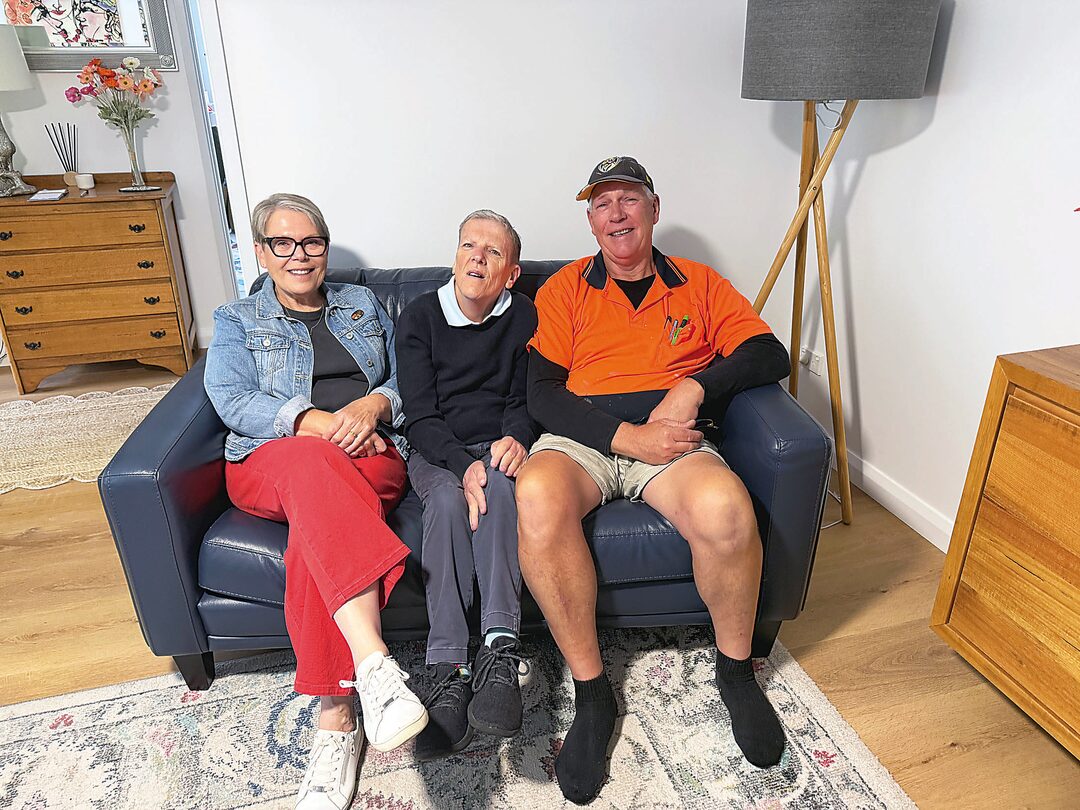
WHEN Catherine and Martin van Niel first heard about a Specialist Disability Accommodation (SDA) located in Moe in April last year, they immediately jumped at the opportunity for their brother and brother-in-law, Justin Hallinan.
Mr Hallinan is a 58-year-old male living with a physical and intellectual disability. For his whole life, he has lived with the support of his family and people around him.
The SDA was approved by the National Disability Insurance Scheme (NDIS), but arguably the most crucial part of the funding, Supported Independent Living (SIL) was not.
Under SIL funding, a carer is available 24 hours a day and seven days a week to assist with daily tasks. An important detail to note is that Mr Hallinan’s name was first on the SDA list. Two other people have received both necessary funding and are ready to move in to a three bedroom home. Mr Hallinan should be moving in with them, but with no SIL funding in sight, it is simply impossible.
Another issue lies in a fourth person who has now also received all necessary funding and is contending with Mr Hallinan’s spot. All documentation and assessments were submitted to the National Disability Insurance Agency (NDIA) in July 2025 and nearly nine months on, the family are still waiting for answers, all while the bedroom with Mr Hallinan’s name on it risks belonging to someone else.
Living independently is a dream for many living with a disability. For Mr Hallinan, that is especially true. His primary care was taken up by his sister, Catherine van Niel, after their mum moved into a nursing home.
As much as the van Niel’s love caring for Mr Hallinan, the demands are proving increasingly difficult with majority of the load falling on Ms van Niel. She spoke about the toll the care of Mr Hallinan, among other life events, is having on her and her family “physically and financially”.
Ms van Niel and her husband Martin, are in their mid-60s and are looking forward to retiring and settling down. They also want to give Mr Hallinan a chance to know what its like to live, albeit semi-independently.
Ms van Niel explained the importance of having both fundings.
“The two specific things we were applying for was SDA … we got the funding for that, but the other part of that is SIL, and that’s supported independent living, and that provides us with the support in the house, all the people that would come in and support Justin. So the SDA is for the actual house, so we got approval for that, without any supports to support him in that house. So that was rejected, and we don’t know why.”
Ms van Niel can’t stress enough that Mr Hallinan “cannot go into a house, unless he has the funding for the supports”, otherwise, what would be the point? The home, located on Moore Street, is in the perfect spot as it is accessible to the Moe CBD and all of Mr Hallinan’s favourite cafés, where he can get his quarter strength flat white with two sugars.
“When I’m in the new house, I’m having three sugars,” Mr Hallinan joked.
Mr Hallinan said he feels “nice” about the house and is looking forward to fixing up his room. He already has an idea of where he will put his bed, and his record player. The van Niel’s said that Mr Hallinan, who has a limited understanding of the issue on ground, innocently asks everyday, “have you rung them?” (NDIS) “is the money in?” Every time the mail comes in, the same thing; “has my money come in?”
Outside of the SDA, the family has tried exploring other living options, including aged care facility’s. However, that option is not available.
“One of Justin’s preferences is to go into aged care, where mum is. But he can’t because he is 58 and you have to be 65 to have an aged care package. NDIS really discourage it for anyone under 65, but they’re not supporting us with an option … our hands are tied,” Ms van Niel said.
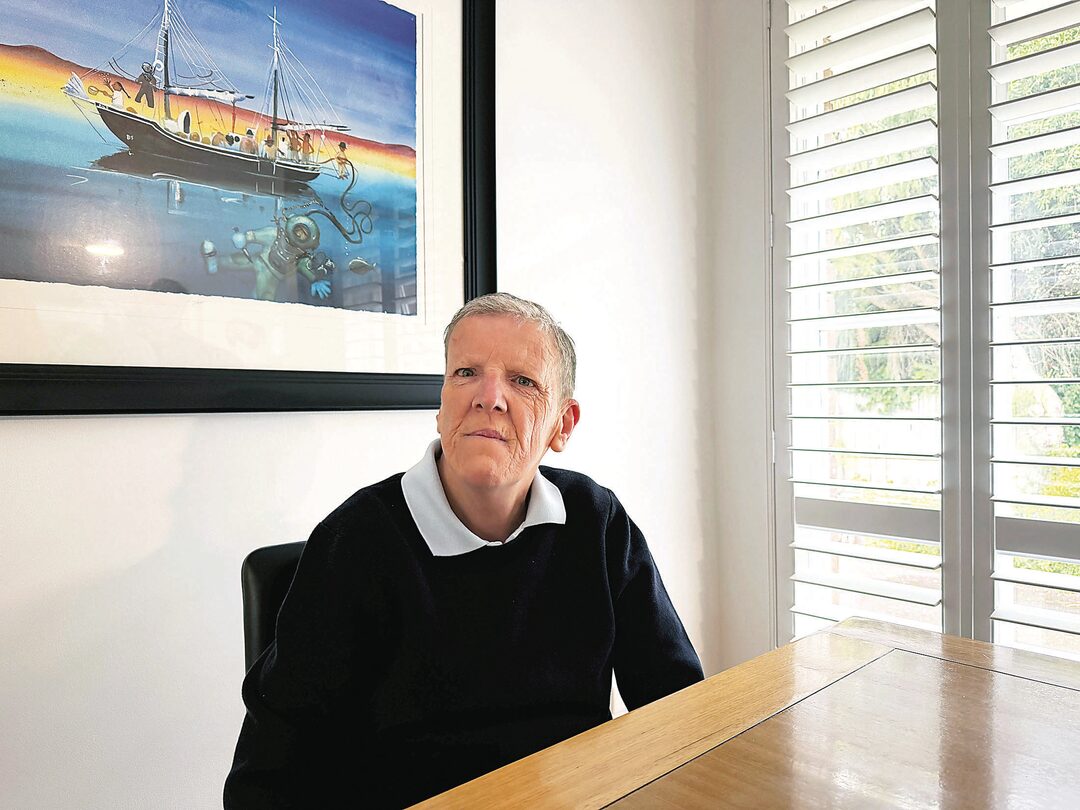
The application process for SDA and SIL began in April last year.
After months of appointments and assessments including physio, dietitian, speech therapy and continence, the application was submitted in July 2025.
Ms van Niel, in true eldest daughter fashion, ensured that the applications were submitted with utmost detail. She said the occupational therapy report itself was more than 60 pages.
“The initial application … with all supporting evidence was sent to the NDIA July 2025, then we had several escalations and complaints actioned after waiting the appropriate [time] … we followed all their guidelines and we did everything as we were meant to do as per the charter.”
In desperation, the family reached out to the office of Federal Member for Monash, Mary Aldred, just before Christmas.
In December 2025, the home and living assessment for Mr Hallinan was approved with a letter supplied in January this year, marking a six month time frame between the initial application to the SDA being approved.
Even after waiting all that time, the SIL funding was not granted. Defeated, the van Niel’s have lodged yet another review, which can take up to 90 days. The family are “really terrified” that Mr Hallinan is “going to be knocked off and miss out on the house he chose”.
Unfortunately, Mr Hallinan and the van Niel’s are not alone in their plight with the NDIS.
As of December 2025, the NDIS supports 761,442 people in Australia. Many relying on NDIS for support have been constantly let down and put through rolls of red tape. This was seen recently when a Regional Victorian NDIS participant, Lee Eastham, won his case against NDIS after they refused to provide funding for a mobility scooter.
In an article published by the ABC, it explained that Mr Eastham lives with hearing and vision impairment, amongst other medical conditions, resulting in limited mobility.
His request for the $7300 mobility scooter would assist him in getting around town. However, the NDIS suggested that Mr Eastham’s ‘need for a scooter resulted from his physical conditions, not the hearing and vision impairments for which he was originally granted access to the NDIS’.
Mr Eastham appealed the case to the Administrative Review Tribunal (ART), which he won.
The NDIS, seemingly adamant on Mr Eastham not receiving the funding, further appealed the case to the federal court, which again, ruled in Mr Eastham’s favour.
The NDIA was required to provide the funding for the scooter and cover legal proceedings.
As written in the story, senior solicitor Mitchell Skipsey said, “somebody isn’t just a bundle of disabilities or diagnoses, but instead a whole person and that whole person is what the NDIS needs to be taking into account when it looks at what their needs are.”
Though extending some grace to the government body, Ms van Niel urges them to act accordingly – fast.
“I understand that these employees at the NDIS are probably really overworked, there’s probably not enough of them … maybe the government needs to think about who they’re employing and how many they’re employing, because there’s probably a really huge workload for these people. But then there’s cases that need looking at quickly; and that’s us.”
The Express reached out to the NDIS.
In response they said, “the NDIS can assist participants to live independently through a range of in-home supports, including assistance in the home with a support worker, home modifications or in cases of high support needs, supported independent living (SIL). The NDIS can also assist Specialist Disability Accommodation (SDA) in specific circumstances.Participants may be eligible for SDA and not SIL, as not all participants living in SDA will need support across 24hours per day. The design features of SDA mean for many people, they can live more independently with less intensive level of supports. Participants or their nominees have a right to request a review of the agency’s decision.”
This suggests that in Mr Hallinan’s case, the NDIS doesn’t believe he is eligible for SIL funding.
For Ms van Niel, who lives with Mr Hallinan and sees his struggles with daily tasks first-hand, she says this is unfair. Mr Hallinan is “incapable of preparing his own meals” and he requires “support with his hygiene”. At night he needs support with winding down and is easily frightened.
“If they [NDIS/A] could [meet Mr Hallinan] and they could see that this man is very disabled, then it becomes human for them”.
For disabled people who don’t have the support of family or friends around, Ms van Niel extends her sympathy.
“I wonder how people go out there who don’t have an advocate. Who don’t have a sister, or a brother-in-law or someone to advocate for them … they must just be existing, that’s it, just existing.”
“They can’t do it themselves. He’s just lucky that he’s got family.”
Ms van Niel one message to the NDIS is this: “NDIS, remember you’re dealing with a real person with a real family, with real feelings and needs”.