



By AIDAN KNIGHT
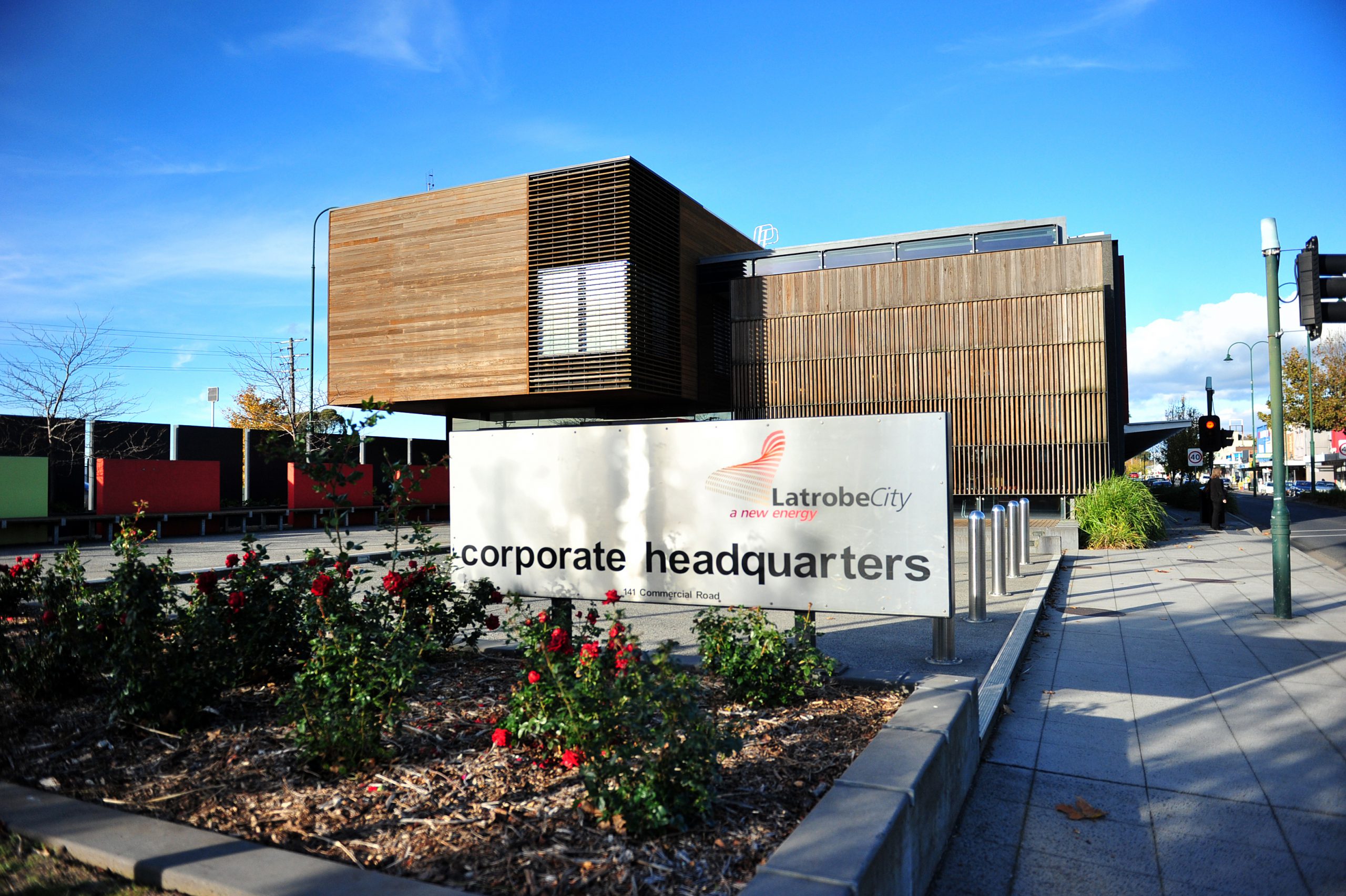
LATROBE City Council has made the decision to cease several memberships within industry bodies.
Council claims a tightened budget and “more matured relationships” aided the decision, which is set to save ratepayers an estimated $15,000 this year.
Council voted to retain its membership with the National Timber Council, while discontinuing its membership with Timber Towns Victoria.
Loy Yang Ward councillor and Latrobe City deputy mayor, Dale Harriman, told the Express rate capping pressures and reducing dual memberships helped inform the decision.
He added that council officers had reviewed the overlap between the two bodies and recommended consolidating Latrobe’s timber advocacy into a single forum.
“Their basic recommendation was that we were in two timber groups, and that we needed to just consolidate a bit, consolidate into one,” Cr Harriman said.
“The National Timber Council ticked more boxes with what’s happening jobs-wise locally and with council’s agenda, more so than Timber Towns Victoria.”
The deputy mayor said the move formed part of a broader effort to trim costs where duplication existed.
A similar logic applied to the decision to stay in Regional Cities Victoria while stepping away from Regional Capitals Australia, as the first provided more value for money than its counterpart.
Cr Harriman stressed the changes did not reflect a retreat from regional advocacy, but a choice to concentrate effort – and membership dollars – on organisations council believes are most active on Latrobe’s priorities, including transport links and jobs. Groups such as One Gippsland and SEATS (South East Australian Transport Strategy) were retained partly because they are among the only regional bodies consistently advocating for the long-planned Traralgon Bypass.
Council also ended its membership with the South East Melbourne Manufacturers Alliance (SEMMA), opting instead to back a developing Gippsland-based industry network.
SEMMA, Cr Harriman explained, is heavily focused on southeast Melbourne manufacturers, including heavy engineering around Dandenong South, an area Latrobe is increasingly on the fringe of, and couldn’t really stretch to say it’s a part of, when competing with other more logical metro areas such as Cardinia Shire.
“The officers came back and said the value to the local industry hasn’t been as high as they thought it would be,” he said.
“Instead, Latrobe is now putting its weight behind One Gippsland and working on a broader Gippsland industry group that reflects the region’s mixed economy.
“One Gippsland takes in not just manufacturing businesses – it also takes in your food and fibre, your farmers, your timber producers, your paper manufacturers. It just fitted a lot better to be part of One Gippsland.”
Cr Harriman noted rising land and operating costs in Dandenong South were already pushing some manufacturers further east, so that any benefit that could be derived from SEMMA’s existing structure would come to parts of Latrobe City naturally, such as manufacturing in Morwell.
One Gippsland was first set up six years ago by now-Liberal Member for Monash, Mary Aldred, alongside Richard Elkington OAM, originally as the Gippsland Local Government Network, connecting council’s across the region.
Cr Harriman travelled with One Gippsland on his trip to Spain last year, for the EU’s International Urban and Regional Corporation Program.
Latrobe City’s ties with the organisation date back to 2021, when then-mayor Kellie O’Callaghan was elected as chair.
Members of One Gippsland appeared alongside Latrobe City’s delegation to Canberra last month, advocating to multiple sitting members for advancements in the municipality.
One Gippsland’s central role is to provide a unified regional voice, aligning what councils want with what local industry wants so that Gippsland presents clear, consistent priorities to state and federal decision-makers.
ANOTHER membership that has ceased is the longstanding connection Latrobe City has held with the Australian-Japanese Business Council, which may alarm some readers who are aware of the municipality’s sister-city agreement with Takasago – which has been an active arrangement since 1980.
Japan and China combined are confirmed by the state government to have expressed interest in $1.5 billion of potential investments into Latrobe City, to which there has been nine different business delegations since 2010.
Cr Harriman assured the Express that these valuable ties were not being cut, simply streamlined, “we were working directly with those groups now, rather than needing an auspicing body to deal with them.”
“So a lot of the Japanese businesses that want to come into the area are coming directly to us.
“We’ve got great contacts (in Japan) with the hydrogen energy supply chain group,” provoking some potential speculation on the Valley’s transitional future from frequent Express letter writers.
“It’s more our relationship, and as we’ve has matured a fair bit with a lot of companies in Japan and even the same in China, they now know who we are.
“They know that we’re reliable and trustworthy and what our resources are here, and what our expertise are here also. So they’re more than happy to deal with this directly, rather than go through the chamber (of the business council). And it’s one of those things we’ve done it for a number of years, it’s paid dividends, and it’s almost, you put in 10 years of hard work, and now the benefits are that those companies are happy to come straight to local government and talk to us, rather than go through the bureaucracy.”
In endorsing the changes, council signalled that future participation in industry bodies will be assessed on clear outcomes rather than longstanding ties, with a focus on measurable benefits for local jobs, investment and infrastructure.
The revised approach is expected to be reviewed as part of future budget processes, with council leaving the door open to rejoining or exploring new partnerships should strategic priorities shift, as memberships remain to be reviewed annually.