



By PEACE IJIYERA
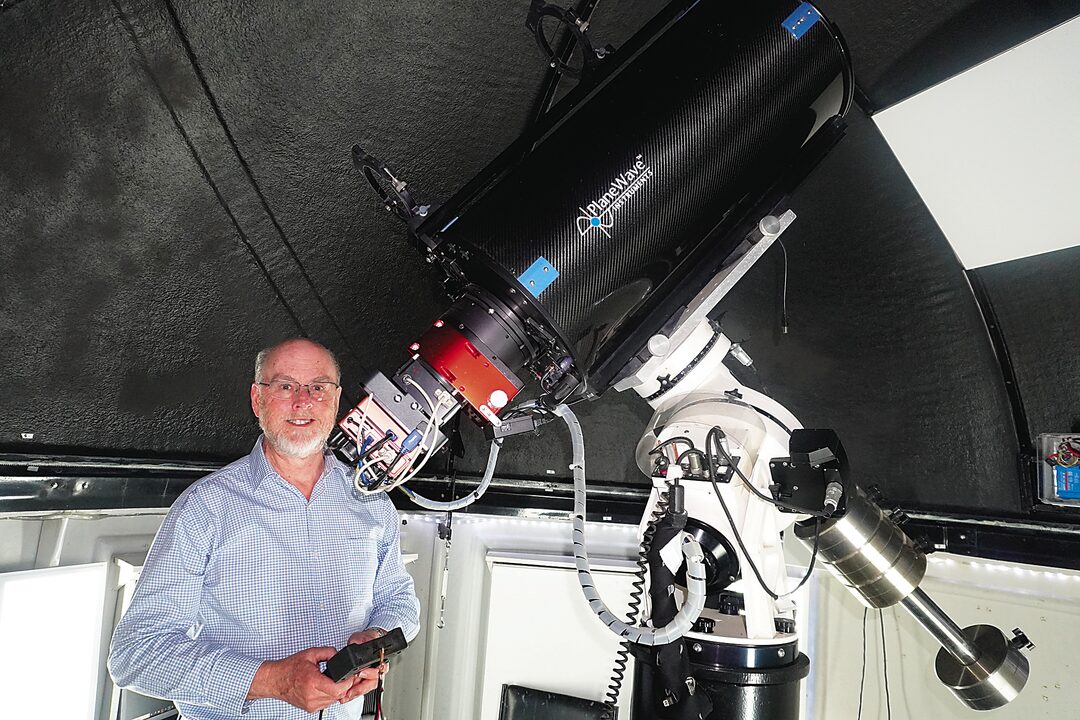
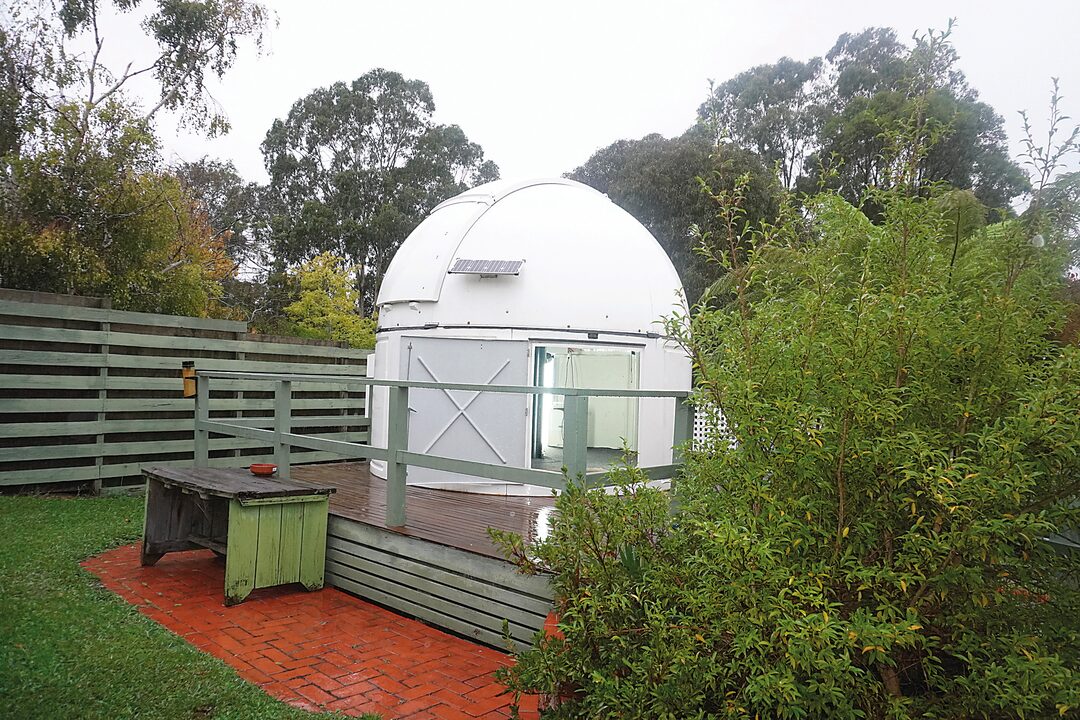
LOCAL amateur astronomer, Chris Stockdale, has sighted potential planets around distant stars all from his backyard observatory in Churchill.
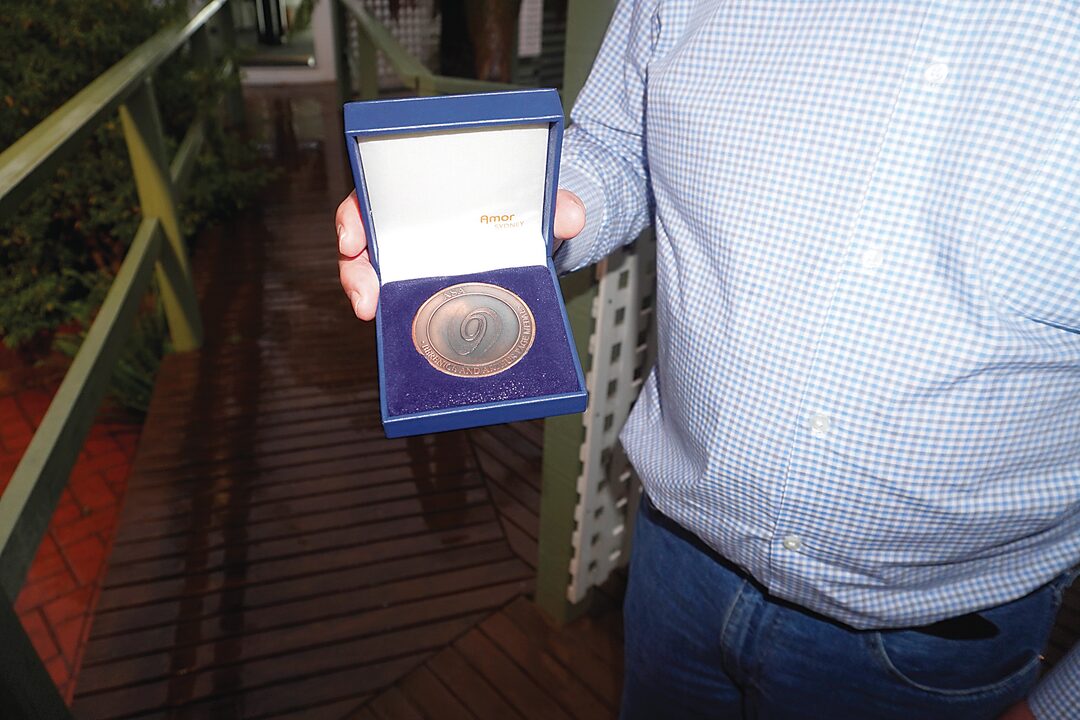
The sightings of more than 100 co-discovered exoplanets made Mr Stockdale recipient of the Berenice and Arthur Page Medal. The medal is awarded bi-yearly to amateur astronomers honouring their work and contributions to astronomy. Mr Stockdale received the medal at a ceremony in Tamworth.
With a background in IT and cybersecurity, Mr Stockdale’s love for astronomy is a hobby that has turned into a “passion”. His love for the science began when he was young, and he has vivid memories of the Apollo missions.
“[I’ve been] interested in astronomy since before the moon landings,” he said.
“Also around about the same time, there were a couple of bright comets in the sky that sparked my interest. My father got me up at about 4am to have a look at the comets and I actually sketched those each night, and I ended up getting up myself after that.
“So that sort of sparked my interest in astronomy. I bought a small telescope myself, it was only a little 50 millimetre refractor and I remember finding Saturn. Managing to find Saturn … I still remember that view today, that first view of Saturn, the bright glow and then the rings around it, it was small, but it was stunning and memorable.”
In 1972, Mr Stockdale joined the Latrobe Valley Astronomical Society (LVAS). He is still an active member more than 50 years later. He brought his “first real” telescope in 1985, just in time to sight Halley’s Comet in 1986.
Since 2018, Mr Stockdale has worked with NASA’s Transiting Exoplanet Survey Satellite (TESS) to validate sightings of planets. He gets “predictions” from TESS, then uses his telescope to validate those predictions by looking for dips in light.
“I monitor the stars looking for this little dip in light. And the dip in light is about half-a-per cent, point four, one per cent, it just depends on how the star is and how big the planet is,” he explained.
Observing these “tiny dips” helps Mr Stockdale monitor exoplanets. An exoplanet is any planet existing outside the solar system, that orbits around other stars.
“What happens when I’m monitoring these other stars … some stars have planets going around them, and if they happen to line up exactly right, you can see the planet go across the star … we don’t actually see it go across, we just see a dip in the light and then it comes back again.”
On receiving his medal, Mr Stockdale said it was “a bit overwhelming”, but enjoyed the moment all the same. To have the medal presented by renowned Australian astronomer and scientist, Professor Fred Watson, meant “a lot” to him.
Mr Stockdale also acknowledged the team effort it took to conduct the observations and analysis work.
Following Artemis 2’s successful expedition to the moon, Mr Stockdale says he is in full support of space exploration, though he is quite content seeing space from the comfort of his dome.
Artemis 2 was a 10 day space journey that started on April 11 this year, and saw four astronauts sent to the moon and back, marking the first crewed flight in more than 50 years. The mission ended with a splash in the Pacific Ocean on April 11.
“[It’s] great, I think it’s good to have. It’s a challenge … certainly pushing the technology and trying to understand more about our universe,” Mr Stockdale said.
“(But) I don’t think I’m really built to do that. It would be awe inspiring, but I don’t think I’d be feeling very well,” he joked.
Mr Stockdale is looking forward to continuing work in “looking for more exoplanets.” He encourages people interested in astronomy to join a club, like he did all those years ago. Whether its learning “how to focus your binoculars”, “finding your way around the sky”, or “finding your way around a telescope”, Mr Stockdale says they are all important skills that can be learnt through joining an astronomical club.
LVAS meetings are held on the second Tuesday of each month at the Moe Library.
For more information, visit the LVAS Facebook Page, or: lvastro.org