




By PEACE IJIYERA
THE verdict is in.
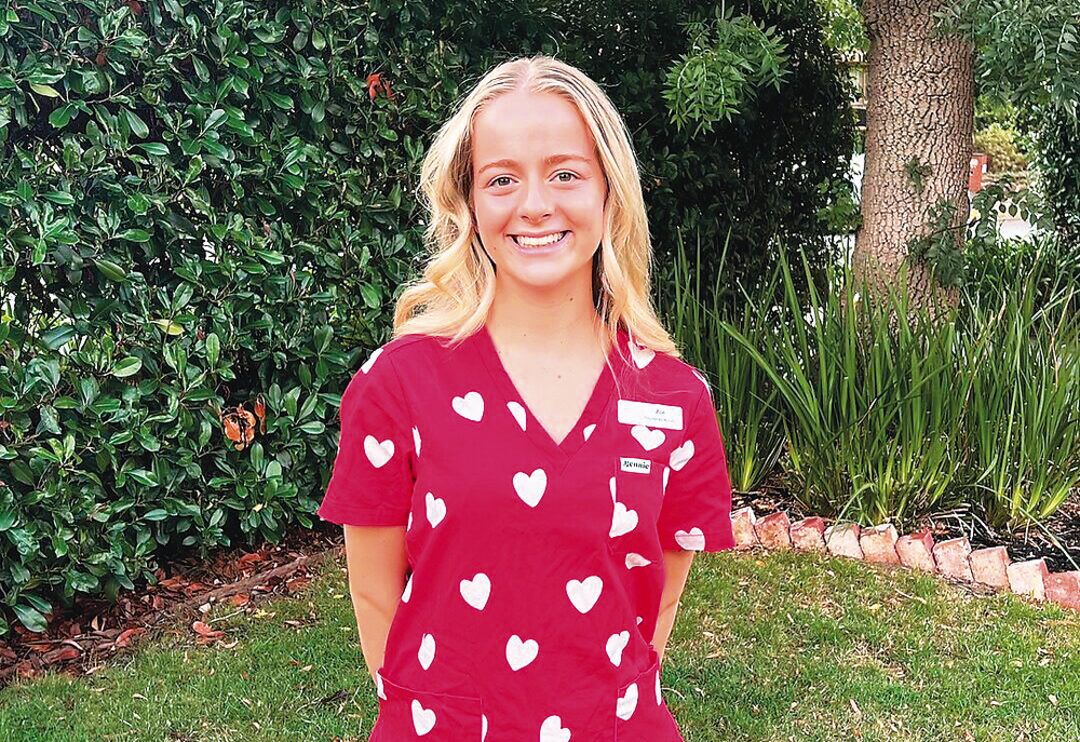
As printed in the Express last month, Federation University Churchill nursing graduate, Zoe Kapolos, presented a 28,000-strong petition to the House of Representatives requesting menstrual leave per month for women suffering with endometriosis and adenomyosis.
The petition was open from April 1 to April 29.
Unfortunately, the federal government’s response amounted to little more than an acknowledgment of receipt.
Minister for Employment and Workplace Relations, Amanda Rishworth, stated that the Labor government acknowledged endometriosis and adenomyosis as “chronic reproductive health conditions” and recognised its impact on “workforce participation and economic security”.
By the number of signatures reaching nearly 30,000, Ms Rishworth wrote that “the government acknowledges this issue matters deeply to many in our community”.
She explained that under the federal government, the Secure Jobs, Better Pay reforms are in place to “strengthen enterprise bargaining, including through the supported bargaining stream that is calibrated to help workers in lower-paid and feminised sectors to negotiate better pay and conditions for themselves”.Ms Rishworth also explained that both employees and employers can “negotiate terms and conditions that suit their needs, including through enterprise agreements, individual flexibility arrangements, employment contracts and workplace policies”.
It was written that the Secure Jobs, Better Pay reforms “strengthened the right to request flexible working arrangements which can help workers navigate reproductive health issues in the workplace”.
“Existing workplace relations settings can, and do, currently provide support to employees experiencing reproductive health issues. These include minimum standards through the National Employment Standards (NES) which include personal leave entitlements and flexible working entitlements for eligible employees.”
The reply concluded with Ms Rishworth thanking Ms Kapolos on behalf of the government, acknowledging her “perspective” and “lived experience”.
“Contributions such as her petition and correspondence help inform ongoing policy discussions and reflect the importance many Australians place on improved recognition and support for reproductive health conditions”.
Ms Kapolos initially posted a neutral and balanced video response reading the letter out word-for-word, where she didn’t show much emotion and was quite stoic.
Though posting the video, Ms Kapolos said, deep down, she felt “disappointed”.
“There’s been so much media coverage, not so much specifically on my petition … but around the acceleration of improving reproductive health conditions and research over the last few months. So I guess there was definitely some hope there in that regard,” she said.
She posted another video giving her “raw and unfiltered” opinions on the outcome. In the video she stated feeling “frustrated” and the outcome was “disappointing” and “disheartening”.
In speaking to Ms Kapolos, she believes that the “flexible arrangements” as part of the Secure Jobs, Better Pay reforms, still isn’t enough for workers.
“There was a section in my petition for my reasoning where I specifically stated that the current flexible work arrangements are not enough and they’re not working,” she said.
“The letter (from government) … really didn’t address anything that I presented with.
“The letter almost felt like it was saying what we have is already enough.”
Ms Kapolos described this as “odd” seeing as though nearly 30,000 people signed to say that it wasn’t enough.
Though the petition’s outcome did not go in Ms Kapolos’ favour, she was happy to have spread awareness on the issue.
She spoke about the numerous DMs and comments she received from people sharing their experiences and stories.
She is also grateful for the government’s recognition of the conditions.
“I am glad that the government did acknowledge that endometriosis and adenomyosis are chronic debilitating conditions. And I also appreciate that they acknowledge … not only myself sharing my story, but also so many others, putting that forward and advocating and sharing education towards reproductive health conditions,” she said.
“So I am glad that they did recognise that, but words only mean so much unfortunately.”
Ms Kapolos is adamant that granting reproductive leave like this is possible, citing Queensland’s 10 days of paid reproductive health leave per year for public sector workers and many other countries who offer some form of reproductive leave.
Ms Kapolos agrees that reproductive leave as a whole would be beneficial to everyone.
Following Men’s Health Week two weeks ago, she also spoke about the benefits of having reproductive leave for treatment for vasectomies and prostate cancer – Australia’s most commonly diagnosed cancer.
“People are needing to take those days off to get those cancer screenings done and those procedures performed,” she said.
Unwavering, Ms Kapolos continues to advocate for women’s health and reproductive leave. Across her social media channels, she continues to educate women and provide resources downloadable for use.
She is currently working on creating community events and partnering with organisations to provide more education and advocacy.