




By STEFAN BRADLEY
A MORWELL-based regional broadband start-up has unveiled a massive infrastructure project to connect hundreds of small towns in Gippsland to a 728km fibre broadband network, aiming to improve connectivity for locals and attract large industries to the area.
Rural Fibre Co (RFC) announced this ambitious new endeavour last week – and construction has already begun. It’s called the ’90 Mile Loop Project’, named after the iconic 90 Mile Beach.
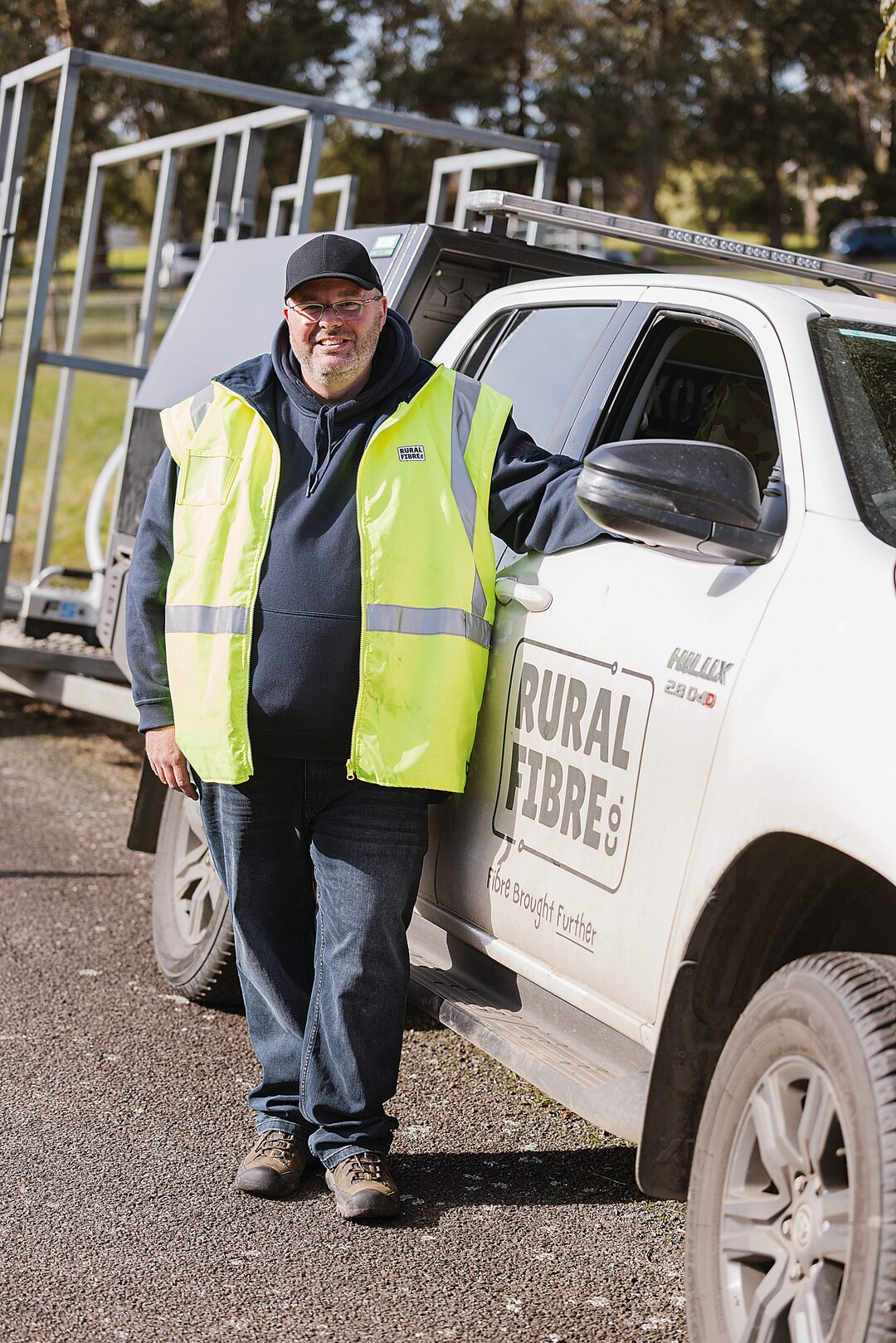
RFC founder and Morwell resident Phillip Britt said the Loop Project will include a series of interconnected and redundant duct and fibre paths linking critical locations in the region, while also connecting to Melbourne via Cranbourne.
He said the Loop Project will not only provide ultra-fast connectivity to more than 200 small towns in Gippsland, but help drive data centre investment into the Latrobe Valley.
“The Valley has fantastic power and industrial water infrastructure, but lacks the fibre infrastructure needed to support data centre development,” Mr Britt said.
“The 90 Mile Loop is designed to support that. It will also provide front-haul fibre for future subsea cables into Victoria, and options for two new landing stations.”
RFC is a Morwell-based broadband provider established in early 2025 to build fibre broadband infrastructure for Gippsland households who currently only have access to the National Broadband Network’s (NBN) fixed wireless service. Fibre is much faster and more reliable than fixed wireless, but due to difficulty or high costs, NBN has not built fibre-to-the-premises broadband for a number of rural properties.
Mr Britt has over 25 years’ experience in telecommunications. In 2008, he co-founded Aussie Broadband in Morwell (now Traralgon-based) which is one of the largest retail internet service providers in Australia. He left Aussie Broadband’s board this year to focus on RFC.
“Rural Fibre Co was set up specifically to overbuild NBN’s fixed wireless and satellite areas and deliver residential-based services. The key difference with the 90 Mile Loop Project is that it’s about driving the actual backbone infrastructure through the region and specifically being able to offer services that are needed by large enterprise and data centre style customers,” Mr Britt told the Express.
The project has already been costed.
“We’re not releasing the figure, but it’s well north of $100 million … we’re looking for partners and investors,” he said.
While designs are being finalised, Mr Britt said he expects the Loop Project to be microduct-based, with technology that will significantly reduce latency between locations.
“And subsea cables coming into Gippsland means that traffic doesn’t have to run via Melbourne, then up to Sydney and so on. It lowers the latency,” Mr Britt said.
Lower latency means a smoother experience for almost anything done over the internet, including gaming, video conferencing, agtech, streaming content and telehealth, even with multiple users on the property.
“It’s also important as we start to move forward in technology, things like potentially autonomous driving and AI infrastructure, latency all starts to play a part in how quickly the traffic gets from us back to the source that’s generating that traffic,” Mr Britt said.
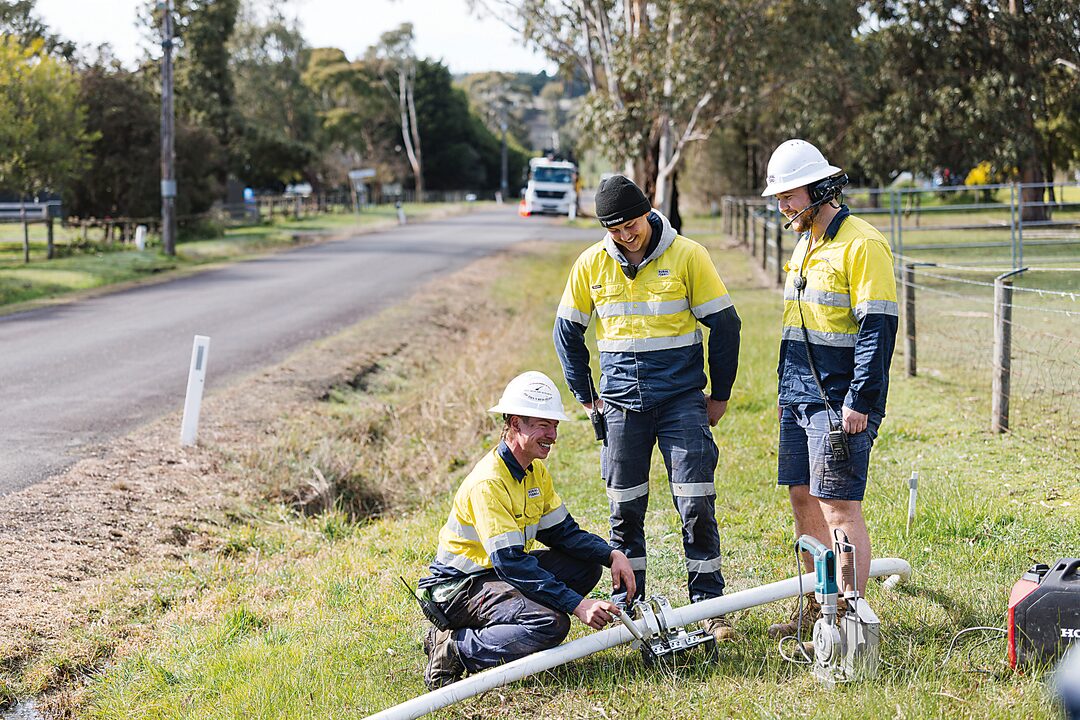
To support the build, Rural Fibre Co will establish a new construction depot in Cranbourne, in addition to its Morwell location, and will expand its existing 43 person crew to over 55.
“The first path, from Cranbourne to the Latrobe Valley via Leongatha, is expected to be completed by June 2027. Other paths will be built progressively during 2027 and 2028, with exact timing driven by customer demand,” Mr Britt said.
Mr Britt said the Melbourne to Latrobe Valley loops will “remove the final barrier to data centre investment into the Valley, which is rich in power infrastructure, industrial water and vast amounts of industrial zoned land”.
“And the prospect of subsea cable capacity directly into Gippsland will be a game changer for the region, having the ability to directly connect to other countries or capital cities without the need to go via a capital city,” he said.
On the residential front, Mr Britt said the project will connect more than 200 small towns in the region to ultrafast internet – a vastly larger number than the original 14 towns in RFC’s original network footprint.
This scale will give 18,000 homes a choice between fibre and their current fixed wireless or satellite services.
“We have already seen this ultrafast service have a profound impact on regional households – for example, people being able to work from home for the first time,” he said.
The Loop Project will also offer businesses along the network dark fibre and lit 10,100 and 400G capacity for the first time – not available from any other provider in the region today.
The Express asked Mr Britt about community backlash against data centres constructed for the AI boom, which includes a $10 billion data centre set to be built in Hazelwood by Singaporean company Keppel Ltd.
“Look, I think there’s a lot of chatter against this, and I think we need to look at it from a realistic point of view and actually what the Valley has in it. The Valley’s been known all of its time for large brown coal power stations that are pumping out lots of CO2 emissions,” he said.
“That water usage is ultimately subsidising the water usage of the community because it’s not drinking water that’s running through those power stations, it’s industrial water, and the fees that they pay for that to Gippsland Water are ultimately offsetting all of our water bills.
“When that disappears, if there’s no industrial water used to take its place, then ultimately our water bills are going to go up. And so if we can drive in other industrial users, like data centres, which actually use significantly less water than what the power stations do, but they can use industrial water.”
There’s also been pushback in regional areas against new transmission lines and renewable energy projects like offshore wind due to disruption they can cause before, during and after they are built. Mr Britt said he expected any impacts from the fibre network to be very minimal.
“Fibre can be built with very low disruption. We do that everyday of the week here,” he said.