



By PHILIP HOPKINS
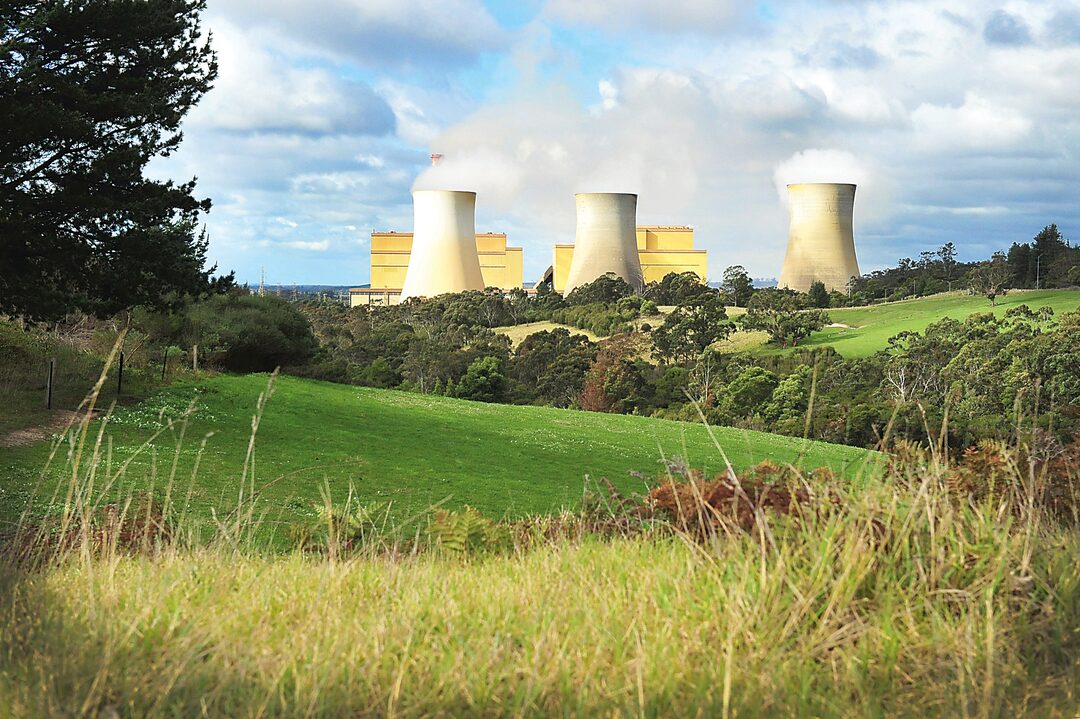
THE Yallourn power station is likely to remain open longer because the large-scale battery technology to convert it to a low carbon emissions hub is not available yet, according to the leader of The Nationals, David Littleproud.
Mr Littleproud said the reality was that a few weeks ago, the world’s leading big battery (the Waratar super battery in NSW), “a billion dollars worth”, had a catastrophic loss.
“It’s kaputt in technical corporate jargon,” he told Sky News.
“The reality is Yallourn is going to have to stay there longer because the batteries that they’re relying on don’t exist. And when they’ve tried to, physics has caught up with them.”
Energy Australia announced last week that it intends to convert the Yallourn site to a low carbon site powered by solar, gas and large-scale battery storage at a cost of about $5 billion. The aim is to supply power to data centres, industry and households.
Mr Littleproud said the Coalition plans to extend the Capacity Investment Scheme (CIS) to existing energy sources as well as new ones.
“That means that Eraring and the coal-fired power stations and gas that’s coming into our grid now is on a level playing field with renewables. And that buys us time to build nuclear energy,” he said.
The CIS now works by the government, guaranteeing renewables developers a minimum income and an upper revenue limit. If the project’s market earnings fall below the floor, the government compensates the shortfall, and if earnings exceed the ceiling, the project repays the government. The scheme aims to stabilise revenue for investors and ensure a reliable electricity supply while protecting taxpayers from excessive costs.
Mr Littleproud said extending the CIS would remove those financial burdens on coal and gas in the grid and new technologies.
“It’s also about making sure that energy operator actually sources the most affordable energy. At the moment, (Climate Change Minister) Chris Bowen is forcing the energy operator to actually source energy predicated on his 2035 targets. That’s putting pressure on the energy market operator,” he said.
“So when will energy bills come down? In two-and-a-half years’ time when there’s an election. But when could they come down? They could come down today if (Prime Minister) Anthony Albanese, overrode Chris Bowen.”
Pressed for detail, Mr Littleproud said the move would put downward pressure on prices by taking away costs and removing the financial burden of the safeguards mechanism. The government has to reduce their emissions by 4.95 per cent every year between now and 2030, he said, and with no technological solution at the moment, developers have to buy offsets.
“That’s a cost. That cost gets passed on to you. If you expand the Capacity Investment Scheme to underwrite energy, no matter the technology, then that puts downward pressure on all energy sources, not just renewables. And by giving that and allowing the energy operator to source all energies, you increase supply,” he said.
“If renewables are the cheapest, then the market will still sort it out. Even if he (Mr Albanese) wants to transition, you are going to need Yallourn. You are going to need Eraring. You’re going to need Callide, Eraring, Millmerran, Tarong.”
The interviewer, Laura Jayes, said energy operators maintain extending the life of Yallourn and Eraring for another couple of years beyond 2028 is doubtful.
“That brings us to halfway through the next term. If you don’t win the next election, how far away is nuclear then? It is still at least a decade away, and those plants can’t be extended for that long,” she said.
Mr Littleproud said Callide in Central Queensland had announced it would make an $80 million investment.
“What we do is by pulling those levers, you give them the certainty of having that baseload power continuing in the grid, because this is what we need to do. To transition, even if they want to put more renewables, there’s not even a supply chain to be able to achieve it. The approvals process is running over everybody’s rights in regional Australia and destroying the actual thing we’re trying to protect, the natural environment. So Labor has no choice. They’re not going to be able to transition to this. They’re not going to get to 82 per cent renewables by 2030,” he said.
“If you pull these levers, you send that investment signal, that confidence to make sure that we can have an energy grid that isn’t all reliable on renewables, that gives us time to build baseload power like nuclear energy.”
Ms Jayes queried whether that can change what Energy Australia is going to do with Yallourn, making a decision based on the market and making money.
“That’s what I’m saying. That’s my point today. These are the levers that send the investment signals to Energy Australia. That’s the power of being in government. New industries like AI data centres can come to this country if we have baseload power,” Mr Littleproud said.
Queried why the Coalition was still low in opinion polls, he said “we’ve only just started on this process”.
“I don’t see anybody being able to put a hole in a cheaper, better, fairer way that we’ve put to Labor’s $9 trillion net zero plan.”
Mr Littleproud said in reducing emissions, the Coalition would also keep pace with “what emissions we actually emit”.
“We’ll still reduce emissions, but we’re going to keep pace. We’re 1.1 per cent of global emissions. We don’t need to streek ahead because we can’t mitigate all the world’s emissions right here in Australia for the rest of the world. But we should do our fair share,” he said.
“This government wants to commit Australia to reducing its emissions by 4.8 per cent every year between now and 2035. OECD countries are doing it at 1.7 per cent. So what we’re saying is there’s a cheaper, better, fairer way for Australians than the lived experience that they have of their energy bills and job insecurity.”