




By PHILIP HOPKINS
ENGIE aims to complete its Environment Effects Statement for the Hazelwood power station site in the first half of next year when it will be available for public comment.
ENGIE Australia’s head of regulation and compliance, Jamie Lowe, told the Express that ENGIE was progressing towards public exhibition of the EES Statement in the first half of 2026, with panel hearings expected shortly after that.
“This follows the recent exhibition of our Declared Mine Rehabilitation Plan, which was based on our preferred final outcome of a high-level pit lake that is safe, stable, sustainable and non-polluting, and capable of being enjoyed by Latrobe Valley residents and tourists over the long-term,” he said.
“We look forward to being active in the community in early 2026 to make sure Latrobe Valley residents have a chance to share their views, and we’ll share more details of public sessions closer to the time.”
The EES is being undertaken as an accredited assessment process, set out in the bilateral agreement under the Commonwealth government’s Environment Protection and Biodiversity Conservation Act (EPBC Act).
A state government spokesperson said the proponent is working through finalising their EES, considering advice provided by the technical reference group and the Department of Transport and Planning.
“The timeline of when the proponent will finalise their EES is a matter for them,” the spokesperson said.
The mine licence relevant to the DMRP covers an area of 4000 hectares – larger than the area of Traralgon – and has several key domains. These include the mine void, which itself has a footprint of about 1200 hectares, the Eastern Overburden Dump (EOD), the former power station, intermediate areas that were utilised as staging areas for conveyor and other systems, as well as large tracts of land that form the remainder of the site.
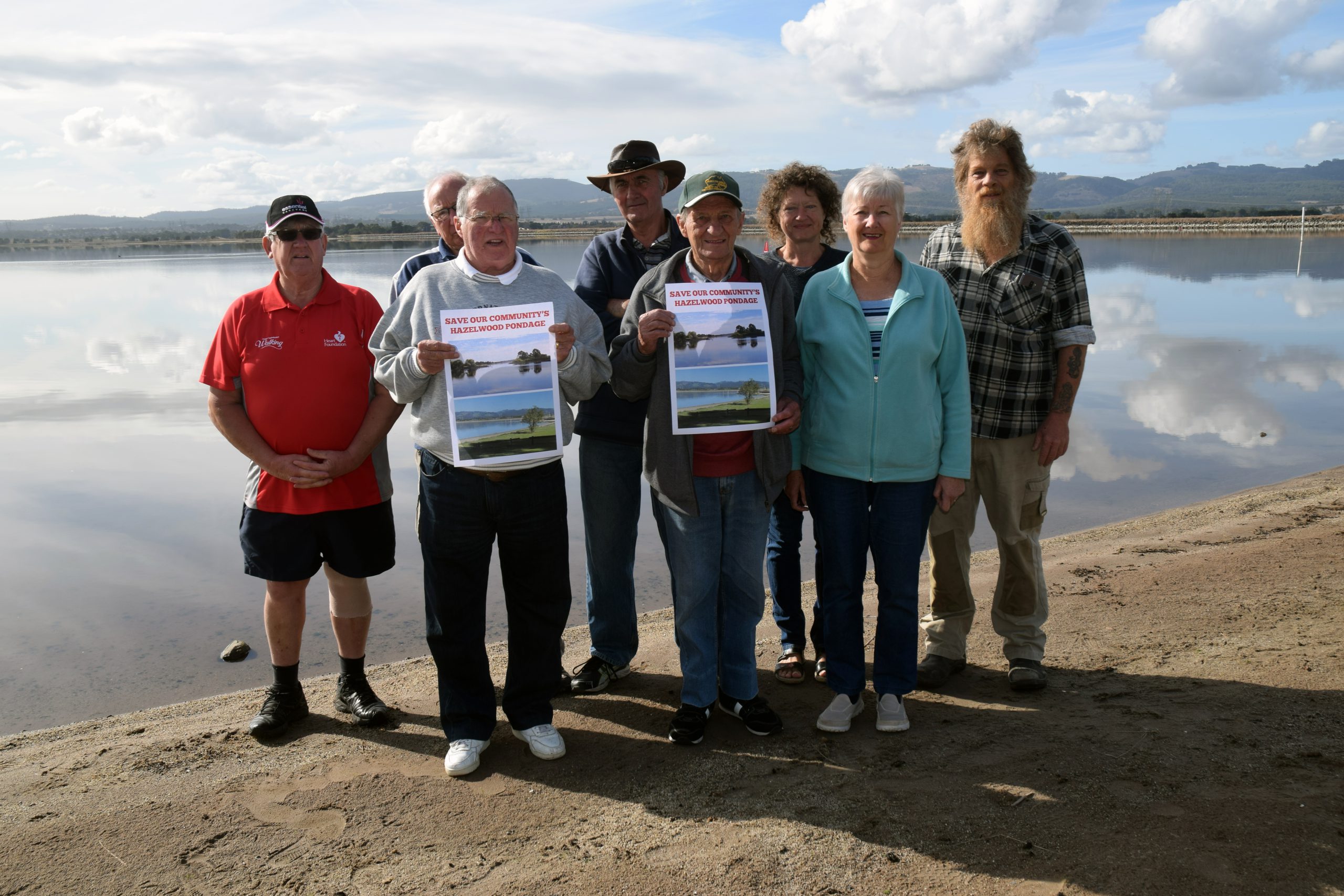
The other large key area is the Hazelwood cooling pond, which sits outside the mine licence and thus does not sit within the remit of the DMRP.
ENGIE aims to divest most of the land covered by the Hazelwood rehabilitation project to either private or government entities for uses compatible with those identified in the DMRP. This is likely to occur progressively as individual landforms transition toward closure and are ready to be relinquished.
The outcomes of the EES, which is being undertaken alongside the development of the DMRP, will ultimately determine the proposed final landform and approach to future active rehabilitation.
As such, the DMRP has been prepared based on ENGIE Hazelwood’s preferred final landform, but may need to be updated once the EES process is completed. The final rehabilitation plans for the site have evolved over several decades and are primarily centred on creation of a full lake in the mine void, which is a matter under assessment in the EES.
To fill the mine void, ENGIE plans to source water from extracted groundwater consistent with licensing; surface water under an agreed commercial agreement, consistent with existing regional bulk entitlements; rainfall runoff from across the site; Morwell Main Drain inflows; and limited flood skimming from Morwell River.
Construction and operation of infrastructure necessary to maintain lake depth and water quality after the fill is completed would include a Morwell River interconnection. This would allow limited inflows from high water and flood events in the Morwell River.
The infrastructure would not affect the usual flows of the Morwell River, which remains in its current form. The company says a full lake and associated works would create geotechnically stable landforms that ensure the mine void remains safe, stable, and sustainable with reduced risk of fire, and protects the Morwell township and adjacent key infrastructure.
Final reprofiling and coal capping works on the upper mine batters – above the shoreline of the future lake – will be achieved with ‘adequate’ stabilising vegetation and drainage. It will also provide future safe public access to the lake and improve the amenity for future uses of the site.
The final execution of rehabilitation and relinquishment of the Hazelwood site, as described in the DMRP, will occur in three primary phases. The three phases do not align with the project scope for the EES process.
The active rehabilitation phase includes both matters relevant to the EES and matters that have been approved elsewhere and are subject to existing works. The company says the terms active and passive, should be read literally and differentiate between the periods where ENGIE Hazelwood is actively managing the site to achieve its preferred final landform and the period after where monitoring and maintenance occurs.