



By KATRINA BRANDON
AND STEFAN BRADLEY
LET’S get connected!
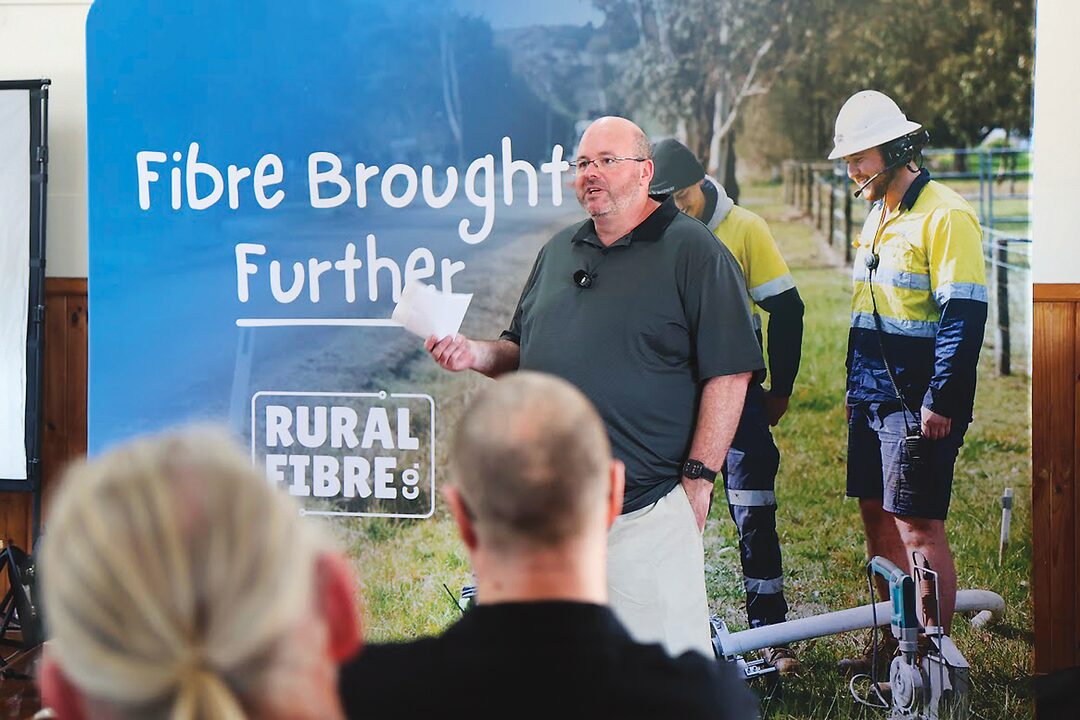
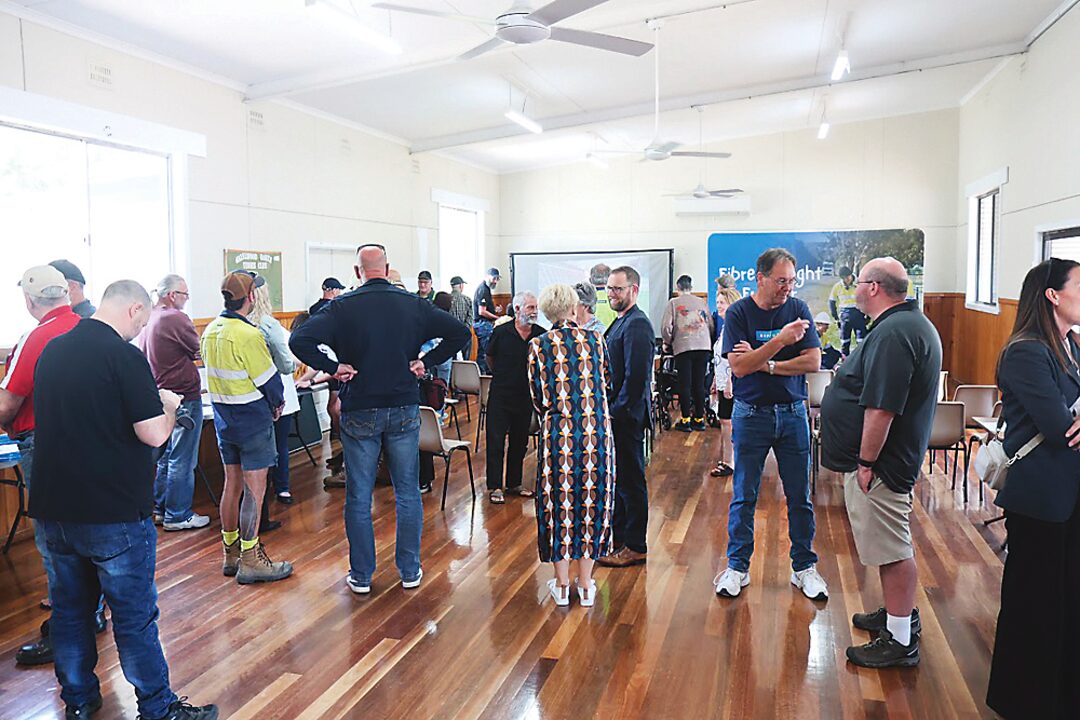
Rural Fibre Co (RFC) brought faster speeds and celebrations to the Hazelwood North Community Hall last month.
Launching its first network location, with one of the most hyper-connected services, RFC was ecstatic to share this milestone.
Welcomed with sausages cooked by the local scout group and a display of the tools used to install the network, about 30 people attended the event, able to ask questions and to celebrate the occasion.
RFC was established in March 2025 to deliver a vision to bring broadband fibre to underserved rural and regional areas of Gippsland.
Opening the event, owner Phillip Britt, one of the founders and former managing director of Aussie Broadband, welcomed attendees and shared his vision for RFC.
“I had planned to retire from Aussie Broadband, and I thought, I’m too young to retire,” he told the crowd.
“We think that Hazelwood North will have close to the fastest internet connectivity of any rural community in Australia, and will also be faster than many urban areas as well.
“It will make a significant difference to the people living and working in Hazelwood North – in fact, we’ve already seen that with our test customers.
“As an example, there are people who can work from home for the first time ever – thanks to their RFC connection.”
Mr Britt said that while he was at Aussie Broadband, he urged NBN to deliver fibre broadband into more areas, but NBN chose to develop Fixed Wireless into areas like Hazelwood North, Glengarry and Rosedale.
Fixed Wireless uses 4G/5G technology to transmit data over radio signals from a transmission tower to an outdoor antenna installed at the customer’s premises.
This technology will slow down during the peak periods in the evenings, whereas fibre won’t have that problem.
Customers connected to the new network are seeing speeds of up to 2500 Mbps, about 25 times faster than their previous average speed available through the NBN Fixed Wireless network, and about five times faster than the theoretical top speed for both fixed wireless and Space X’s Starlink.
Customers who sign up within the first six months receive a free fibre connection to their home. Connections are through retail partners, with Splice Internet – also owned by Mr Britt – the only partner currently signed on to the network.
RFC already has 55 customers connected to the network, with another 45 orders in the system.
Mr Britt thanked the attendees, with some being customers of the service, for “their patience” as they worked on the streets to install the fibre.
Over the next four to five years, Mr Britt said that he also aims to install further fibre throughout the region.
With a small team of 31 that’s mostly doing all the work rather than subcontracting, RFC is constrained by its limited resources. While Mr Britt has already invested millions of dollars into the business, government funding would go a long way into potentially speeding up the rollout.
A RFC spokesperson told the Express that Latrobe and Wellington areas will be the first on the rollout map.
“Ideally, Phil would like to do all of Gippsland,” they said.
“In fact, we’ve got people from South Australia putting in expressions of interest. So there’s an appetite for this right across the country, but we can only go so far at the moment.
“Our main focus areas at the moment are Latrobe Valley and Wellington. From here (Hazelwood North), next on the list is Glengarry.”
Other towns on the ‘rollout’ map include Churchill, Cowwar, Glengarry, Hazelwood South, Longford, Morwell North, Rosedale, Toongabbie, Traralgon East, Traralgon North, Traralgon West, Tyers and Yinnar.
Work is expected to begin on the Traralgon West network early this year.
Alongside the privilege of faster internet access, RFC aims to employ locally and keep most work in-house to ensure Gippslanders have ample opportunities in the industry. Mr Britt said it is making a significant difference to costs and helping to develop new skill sets for the region.
“This is really a business by Gippslanders, for Gippslanders,” he said.
“We want Gippsland to be at the forefront of connectivity rather than on the back burner. This is an investment in our region and our community.”
Some aspects of the job include laying ducts, laying fibre, reinstating worksites, software development, home installations and customer service.
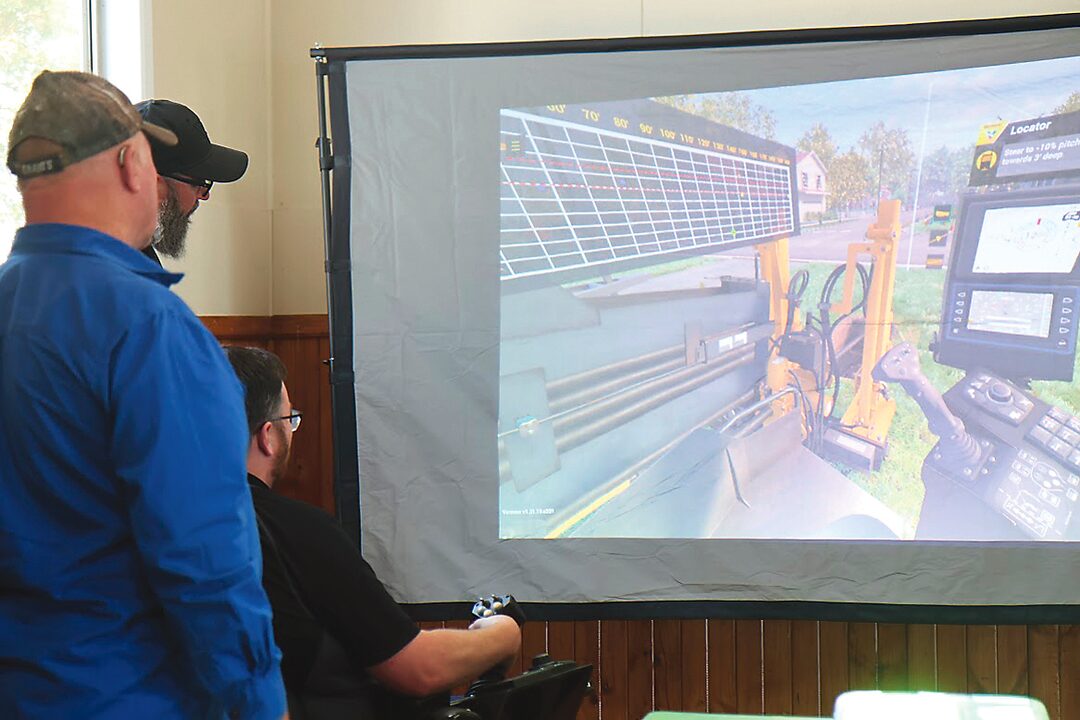
Due to the nature of the work, the company provides training, allowing those learning to drill to practice on a simulator and become familiar with the work.
“It’s been a learning experience for us,” the spokesperson said.
“We had picked up a couple of experienced staff – none of them really had experience with drills or other machinery, so they did a month-and-a-half of training to get them up to speed. From there, the machinery suppliers were very helpful with the training.”
Asked about connecting fibre to farming properties, the spokesperson said if their fibre network goes past the road outside they’ll be able to connect them. But as they are focusing on denser populations, it’s unlikely that remote properties in Gippsland can be connected.
Farmers who are able to connect to fibre can of course benefit from faster speeds and a more reliable connection to run their operations more efficiently or stream Stranger Things at home in 4K.
Further information can be found at: www.ruralfibre.co
NBN users on Fixed Wireless saw speed upgrades last year and increased the range of that network as part of a $750 million upgrade. It also moved a number of satellite customers onto Fixed Wireless. Despite the service boost, it’s not as reliable as full fibre connections.
There certainly is demand for faster broadband in Gippsland. According to NBN, Gippsland has seen a 9.5 per cent increase in average household downloads in the last year.
Gippslanders should enter their address at the NBN website to see which technology is available and if they’re eligible for free upgrades to a full fibre connection. Satellite users who haven’t been moved to Fixed Wireless will soon be moved to Amazon LEO (previously named Project Kuiper) sometime in the middle of next year, which uses similar technology to Starlink.