



By PHILIP HOPKINS
WITH Morwell earmarked for a $10 billion data centre at Hazelwood, a leading international businessman and investor has warned that renewable energy is incompatible with the power needs of modern digital infrastructure.
The chief executive of Black Rock, Larry Fink, told the World Economic Forum (WEF) in Davos that ‘clean’ generation cannot be relied upon to deliver the constant, high-load power required by data centres, The Australian newspaper reported.
“To supply these data centres, you cannot rely on intermittent sources like wind and solar. You need dispatchable power because these data centres cannot simply turn on and off,” he told the Davos forum.
The BlackRock Chief Executive, one of the most powerful men on Wall Street, is co-chair of the WEF and responsible for sharpening the 2026 event, The Australian said.
Mr Fink’s intervention reflects the shift among global investors towards what he has described as ‘energy realism’, The Australian reported – not opposition to renewables, which still attract capital, but concern that policy settings may be running ahead of the physical limits of weather-dependent generation.
Tony Wood, the director of the energy program at the Grattan Institute, told The Australian that renewables and data centres could coexist, but developers would face trade-offs.
“Australia already has large industrial users of electricity who need constant, 24/7 supplies,” Mr Wood said.
“If they want certainty of supply, there will be a cost.”
Keppel, a Singapore-based global asset manager, has the rights to lease a 123-hectare contiguous site near the old Hazelwood power station from the Australian energy and infrastructure landowner Lightwood Group Pty Ltd.
The data centre project has a gross power capacity of up to 720 MW, in phases and over time.
As part of the lease agreement, Keppel will pay Lightwood an annual access fee to gain early access to the site for pre-development works.
These include obtaining planning approvals and contracting power and water, before its private data centre funds take up long-term leases, thereby providing a capital-efficient approach to power banking.
The site’s great advantage is its location in the heart of the Latrobe Valley, Victoria’s largest electricity centre, and in the proposed Gippsland Renewable Energy Zone.
The site’s dedicated transmission connection to neighbouring power terminal stations provides the potential for power cost savings by bypassing the local distribution network.
Zoned to allow data centre development, the site also benefits from existing water infrastructure and proximity to inter-city dark fibre networks that will enable high performance connectivity to Melbourne, Sydney and Canberra.
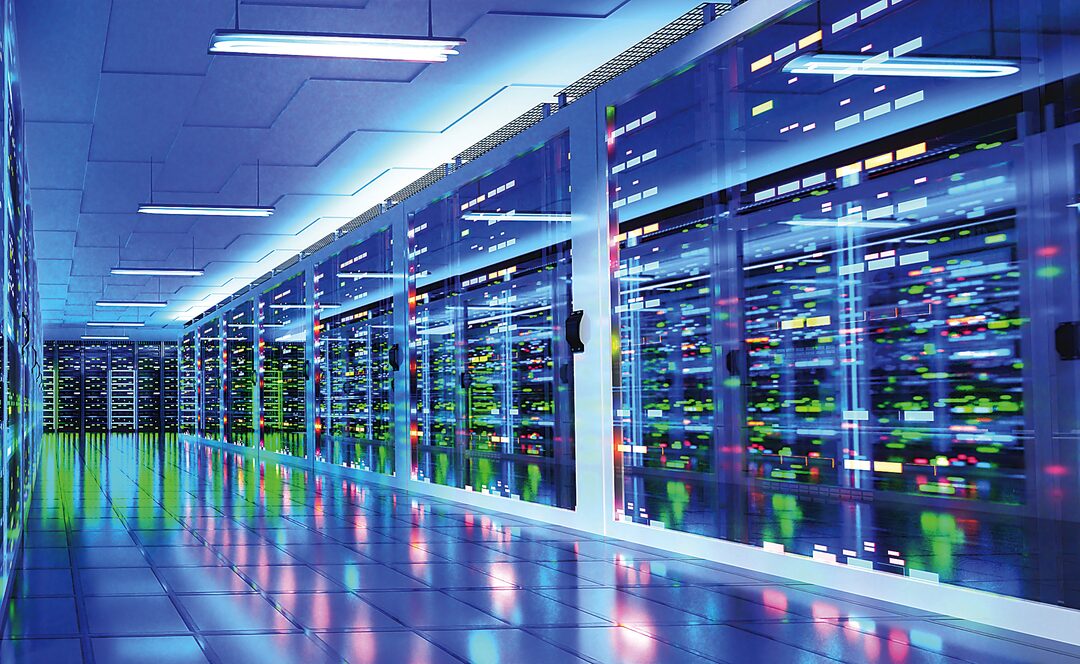
Data centres, unlike most industrial centres, operate continuously, consume vast amount of electricity and require near-perfect reliability. Even brief power disruptions can be costly, making firm, dispatchable supply essential for investment decisions in the billions of dollars.
Mr Manjot Singh Mann, Chief Executive of Connectivity, Keppel, said the company was in active discussions with hyper-scalers and neo-clouds regarding the future capacity provided by the site.
“Many have expressed keen interest in Melbourne – one of Australia’s fastest-growing data centre markets. The site near Morwell offers significant scalability, with clear pathways to securing competitively priced green power, non-potable water for cooling, and low-latency fibre connectivity, making it a compelling location to site next-generation AI campuses,” he said.
“Digitalisation and AI are reshaping global compute needs, and Keppel is positioning ahead of this megatrend by investing upstream to secure early and exclusive access to power, water, and fibre connectivity at strategic sites in key datahubs. Our power-banking strategy enables us to deliver shovel-ready capacity at speed and scale, significantly shortening time to development and service readiness, and without overburdening our balance sheet.”
Keppel maintains that Australia’s data centre market is underpinned by strong fundamentals – including a stable regulatory environment, reliable energy infrastructure and robust data security regulations – which are driving increasing consumer digitalisation and cloud adoption, as well as AI workload growth.
Melbourne, in particular, is rapidly emerging as a Tier 1 hub for AI and cloud workloads due to its relatively more attractive power and land costs compared to other markets in Australia.
The city recorded a co-location vacancy rate of four per cent in the fourth quarter of 2025, with demand forecast to grow at a compound annual growth rate of 29 per cent from 2025 to 2029, Keppel says.
Keppel’s move comes as Energy Australia aims to convert the Yallourn W coal station site into a low-carbon emissions hub supplying data centres, industry and households, a plan estimated to cost more than $5 billion.
The company’s ‘Yallourn Energy Security Precinct’ plan involves gas power and solar generation alongside large-scale battery storage on the huge site, which has access to water and connection to the electricity grid.
Ms Lee Hui Fang, Deputy Chief Information Officer of Data Centres, Keppel, who oversees investments for the company’s private data centre funds, said power-banking enhances the company’s pipeline of proprietary data centre development projects and supports the growth of Keppel’s Funds under Management (FUM).
“Our latest vintage, Keppel Data Centre Fund III, continues to gain strong traction with global institutional investors, with its funds under management exceeding $2.7 billion (Singapore dollars),” she said.
“Keppel’s deep operating capabilities allow us to execute power-banking at scale – securing strategic sites early, undertaking critical front-end work and committing capital only when customer interest is clear. This approach enables us to deliver disciplined growth and strong returns.”
Headquartered in Singapore, Keppel operates in more than 20 countries worldwide, providing critical infrastructure and services for renewables, clean energy, decarbonisation, sustainable urban renewal and digital connectivity.
Keppel has expanded its pipeline of data centre power-bank, from more than 300 MW to more than 1.0 GW of gross power capacity in the Asia Pacific, positioning the company to scale its data centre portfolio more quickly and competitively in key growth markets.
Keppel manages and operates 39 data centres with a total gross power capacity of more than 800 MW across the Asia Pacific and Europe, including projects under development.
Keppel says with more than 1.0 GW of gross power capacity in the pipeline, the company’s growing power-bank will further strengthen its growth over the next few years, with the potential to add about S$10 billion to its data centre funds under management.