


By PHILIP HOPKINS
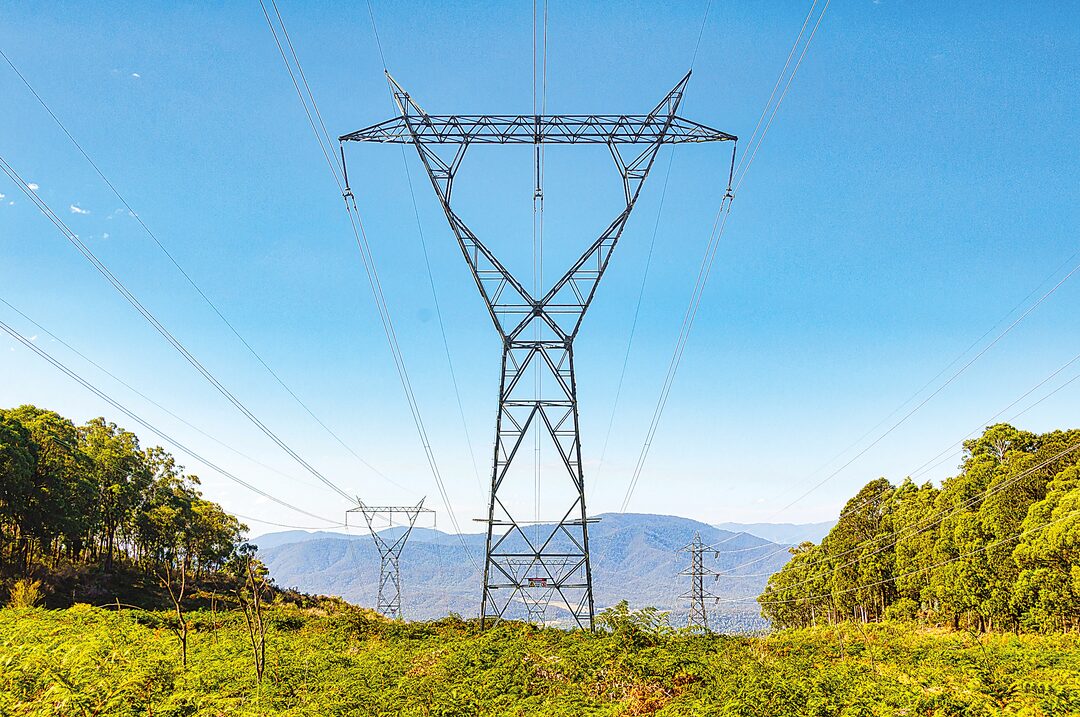
VICTORIA has recorded the lowest wholesale power prices in Australia, according to the state government, but Origin Energy maintains the cost of new towers, wires and substations will negate any enduring benefit from falling wholesale electricity prices.
Minister for Energy and Resources Lily D’Ambrosio, said record investment in renewables had helped Victoria consistently achieve the lowest wholesale power prices in the country.
Over the last year, Victoria’s average wholesale price was $78 per megawatt hour, compared to $103 for New South Wales, $96 for Tasmania, $87 for South Australia and $85 for Queensland.
Origin Energy’s boss, Frank Calabria, acknowledged stronger output from renewables and batteries had pushed wholesale prices down from the extreme highs triggered by plant outages and global gas shocks, but said benign weather and improved coal plant reliability were other factors, the Australian Financial Review reported.
“Those benign inputs will feed into the Australian Energy Regulator’s next default market offer decision – the benchmark that underpins how power is priced,” the AFR said.
Mr Calabria stressed that wholesale energy was only one component of the electricity system. He was less confident in the market’s ability to forecast the price of greening the grid by adding essential transmission and distribution infrastructure to move renewable generation to homes and businesses.
The warning lands at a politically sensitive moment.
After successive increases in benchmark electricity prices, the Albanese government faces mounting pressure to show its energy transition will ultimately deliver cheaper power, the AFR said.
However, Ms D’Ambrosio said Victoria had exceeded its 2025 renewable energy target, with renewables accounting for 44.6 per cent of the state’s electricity generation last year – well above the legislated 40 per cent target.
“Victoria is on track to reach 65 per cent renewable generation by 2030 and 95 per cent by 2035,” she said.
Victoria has nearly 100 large-scale renewable energy projects now operational across the state. These included 54 solar farms which, together with rooftop solar, supplied about 16 per cent of Victoria’s electricity in 2025, she said. Wind farms generated about 24 per cent of the state’s power.
“This capacity is set to grow, with 10 additional onshore wind farms approved for construction,” she said.
To accelerate delivery, the Development Facilitation Program is fast-tracking priority renewable energy projects.