


By PHILIP HOPKINS
A MAJOR consortium has abandoned a $2 billion project to make fertiliser from Latrobe Valley’ brown coal, blaming the state government and AGL for the loss of an industry that could have helped solve Australia’s fuel and fertiliser shortage and created thousands of jobs in the Valley.
The Minister for Energy and Climate Change, Lily D’Ambrosio, was singled out for criticism.
This comes as Australian farmers are facing a crisis due to shortages of diesel and fertiliser arising from the Iran war.
Allan Blood, the executive director and founder of Victorian Hydrogen & Ammonia Industries Ltd (VHAI), has been working on the Latrobe Valley project for 20 years, but has become so frustrated with AGL and government, he has moved his $2b urea fertiliser project to New Zealand.
VHAI is an unlisted public company with large world investment funds as shareholders.
Mr Blood, who has been involved in coal gasification for more than 30 years, blames a combination of AGL and the state government for the decision to drop the project, which he could prove with documentation.
“AGL let lapse a signed agreement we had with them and then tried to replace it with two nebulous agreements that meant nothing. Basically, they have refused to supply coal to third party projects,” he told the Express.
“We have spent $40-50 million in the Valley and nothing to show for it. We are sick of it and were welcomed in NZ with open arms. We would have much rather have done the project here.”
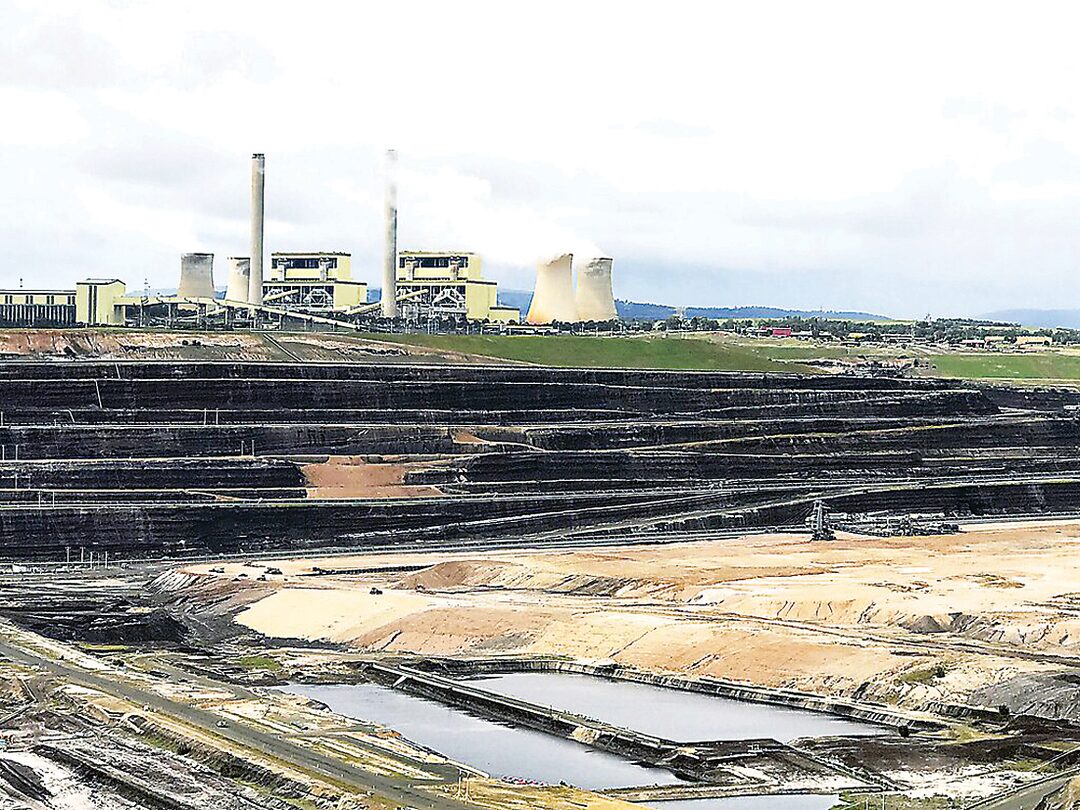
Latrobe Fertiliser project wanted access to brown coal in an area next to the Loy Yyang mine, which is owned by AGL.
“We were going to make 530,000 tonnes of urea for use by Victorian agriculture. We had a 25-year agreement signed to deliver urea to the farmers,” Mr Blood said
Due to the crisis from the war in the Middle East, the farmers had no urea.
“If they get it, it’s too expensive to be economic. They have got no diesel; they could have had diesel and petrol.”
AGL indicated to the Express that it was not in discussions with Mr Blood and could not comment on his business operations. Mr Blood said the attitude of the current government was in absolute contrast to that of the Bracks and Brumby Labor government. “They had a plan to develop the coal in the Latrobe Valley, with low emissions major projects. That’s why we came here – we were invited, the current Premier, Jacinta Allan, who was Regional Development Minister, launched the project,” he said.
“Now the current government, through Lily D’Ambrosio, is anti-coal, regardless of the environmental and economic outcomes. Our project was not just net zero, we had negative net zero emissions, as was shown by an independent CSIRO study.
“Lily D’Ambrosio, it seems, does not like carbon capture and storage, (CCS) does not believe in it. She is flying in the face of global science and flying in the face of the Paris Agreement, which spelt out that CCS was necessary for the world to reduce its emissions.
“She does not believe in it and clearly ‘does not know or chooses not to know’ and the Premier is the same if she does not stand up to her.”
Ms D’Ambrosio has been the Energy Minister for 11 years under the Andrews-Allan government, and before that, was Shadow Energy Minister for four years.
The Express asked the government for a comment but received no reply.
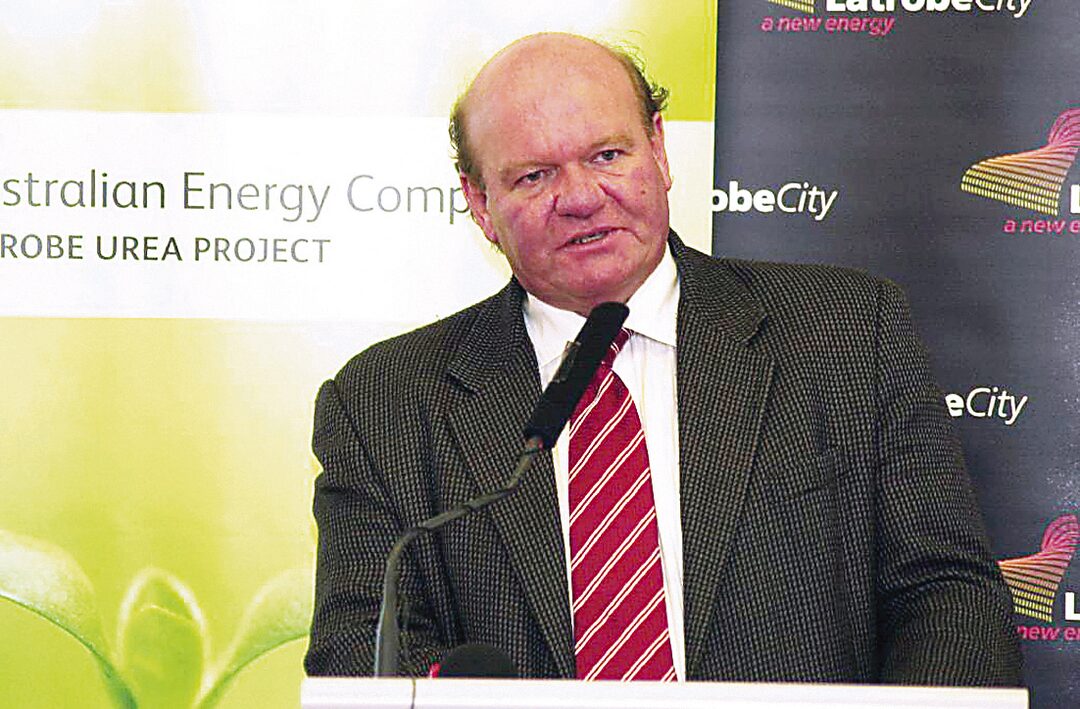
The Coalition Opposition at federal and state level, although still developing their energy policy, nevertheless strongly criticised the state government’s behaviour.
The Leader of the Victorian Nationals and Gippsland South MP, Danny O’Brien, said the state Labor government had put up roadblocks to this project at every opportunity.
“Martin Cameron (Morwell MP) and I took this to the former Treasurer (Tim Pallas) with Ms Allan two years ago but nothing changed. It’s sad that a potential opportunity for the Latrobe Valley has gone begging,” he told the Express.
Mr Cameron said he has met with Mr Blood several times, as had Mr O’Brien, and lobbied the state government for support.
“But the roadblock is Lily D’Ambrosio, who refuses to progress the project and won’t provide a response as to why,” he said. The Deputy Leader of the federal Nationals, Darren Chester, who is also the Shadow Minister for Agriculture and the Member for Gippsland, said the lack of support from the Labor government and an overly complex regulatory burden, was driving investment away from the region.
“Environment Minister Lily D’Ambrosio is the main offender,” he said.
“Projects like the proposed fertiliser plant and hydrogen from coal represented exactly the kind of investment we need, creating skilled jobs, supporting our agricultural sector, and strengthening Australia’s sovereign manufacturing capability by producing essential inputs for industry and agriculture. Instead, we are seeing opportunities slip away,” he said.
“The war in Iran should be a national wake-up call to make more critical goods in Australia like fuel and fertiliser. The current fuel and fertiliser crisis demands a coordinated national response to protect Australia’s interests and the brown coal in the Latrobe Valley should be seen as an asset and a huge opportunity for alternative uses.
“The Latrobe Valley should be leading Australia’s next chapter in energy and industry, but that won’t happen if governments continue to bury projects in red and green tape, then fail to provide the timelines and certainty investors need.”
Federal Member for Monash, Mary Aldred, said Australia imports more than half of its fertiliser, a critical input for farmers whose cost and availability had a flow on impact for farmers and families.
“We should be making more of it in Australia, and we had the opportunity to make it here in the Latrobe Valley. The fuel crisis has brought home how important sovereign capability is, and fertiliser is a prime example of that,” she said.
Despite years of negotiations in Victoria, “it had taken six months in New Zealand to progress this project, because Victorian Labor don’t want to know about using our coal resource for jobs and manufacturing,” Ms Aldred said.
Mr Blood told the Express that “anything you make from oil and gas you can make from coal”.
“The technology goes back to pre-WW2 when the Germans pioneered the process. Their diesel and aviation fuel came from coal,” he said.
“This state has billions and billions of tonnes and reserves, it could have billions and billions of barrels of oil equivalent. The coal is so chemically suited, using the same coal gasification process used to make urea fertiliser, the Valley could also make vast quantities of diesel, petrol and aviation fuel, plus every chemical you want that’s made from gas, such as plastics.
“There could be mega-industries in the Latrobe Valley and Victoria has the offshore CCS facilities – it could all be done with net zero emissions, all of it.”
Mr Blood said the state government had co-funded offshore sequestration through CarbonNet – and “yet stands in its way.”
“Some of the former ministers I’ve spoken to just roll their eyes in horror at what this government is doing,” he said.
Mr Blood said the energy content in the Latrobe Valley resource was greater than the entire energy content of the North-West Shelf gas projects.
“We have moved our project to NZ, where the government is welcoming and we will export back to Victoria. We have been driven offshore, we will manufacture offshore and export back here,” he said.
“NZ has lignite in the South Island, similar to Victoria, but has nowhere near as much. Their government asked me over there years and years ago to look at it; we always knew it was there. It’s nowhere near the quality of the LV coal, but it will do the job.”
Mr Blood said the other thing that annoys him is the program of AGL and the government to fill that Loy Yang mine with water.
“There are billions of tonnes of reserves left; they will sterilise that resource forever. That’s a crime,” he said.
“This would take away the great potential that this enormous energy asset has for the state and the nation and the billions of dollars of investment, the jobs and the energy security, that this natural asset can bring.
“This is all because Lily D’Ambrosio hates coal. She does not understand the science or the engineering or is badly advised.”
Mr Blood said the Liberal Opposition in Victoria had been pathetic.
“The new lady, Jess Wilson, if she wants to make something great in Victoria, she has a job to do. She has to wind back all this ridiculous stuff that is going on with AGL and the government in concert. AGL – we had an agreement, I can prove it, they let it lapse. AGL says it was not under pressure from the government, but I believe they were,” he said.
“There is enough brown coal to feed all Australia and all the fertiliser Australia ever wanted. They still can if they get their act together – and all can be done with net zero emissions. It’s the most perfect place on the planet to build these projects. CarbonNet will fizzle on the vine unless they do something.”
Mr Blood said his project could use waste heat in the gasification process to produce electricity – green electricity.
In contrast, “no one talks about what offshore wind is going to cost in terms of the consumer”.
“The price of electricity is never mentioned in their publications; it’s going to be astronomic, and it’s not the fact that the wind is free; it’s the installed cost, they’ve got to get a return,” he said.
“Japan is now blending ammonia with coal to reduce emissions. We have to make ammonia on the way to making urea. Our project would go ‘hydrogen, ammonia, urea’. Ammonia will become in demand, it’s becoming the global fuel of choice for the global maritime industry, so Victoria will need ammonia for bunkering for ships.
“All the ammonia eastern Australia should want can be made in the Latrobe Valley. That’s another big one where the government has its head in the sand. Frankly, I don’t think they have the technical scientific ability to understand simple engineering.”