


By DAVID BRAITHWAITE
GIPPSLAND offshore wind projects will lower wholesale electricity prices by reducing the amount of new transmission needed by more than 900 kilometres, a national electricity market study has revealed.
Reducing the amount of new transmission needed reduces total system costs, according to the report commissioned for the proposed Star of the South project.
Proposed off the Wellington Shire coast, Star of the South is Australia’s most advanced offshore wind project. Proponents claim the project, currently in the advanaced feasibility stage, will be able to provid power for up to 1.2 million homes.
The research measured the total system effects of offshore wind, such as reducing the need for new transmission to be built and reduced fuel costs, which are not typically included in the narrower assessments of technology build costs.
The study modelled having seven gigawatts of Gippsland offshore wind in the grid by 2040 against a scenario without offshore wind.
The study also found that with offshore wind:
There would be a $5 per megawatt hour reduction in wholesale price on average across the entire national electricity market between 2033 and 2040, rising to a $15/MWh by 2040 (a $5.2 billion total saving);
Lower household energy bills by $151 a year per typical Victorian household and $84 a year per typical east coast household from 2040 onwards;
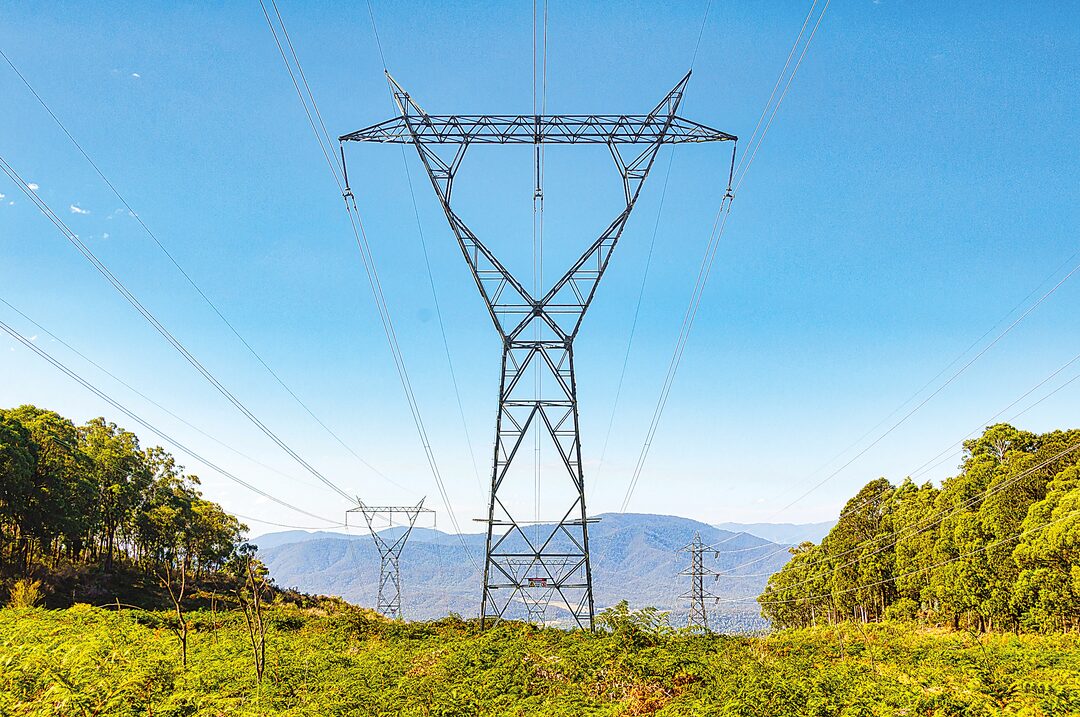
Between 500 and 2000km less transmission (likely 934km less) required to be built, meaning lower “social licence and landholder compensation costs” and cheaper electricity;
A reduction of $4.9 billion in transmission capital costs, and a further reduction of $1.2 billion in transmission operating costs;
Less backup gas in the grid, bringing wholesale electricity prices down;
Offshore wind is perfectly matched to the dinnertime energy use peak. Onshore wind comes online after the dinnertime peak and solar generation reduces before it, and;
Offshore wind can help fill gaps during winter and summer peaks to meet seasonal electricity demand.
The study found that without offshore wind, the electricity market must rely on an additional 8.3GW of onshore wind capacity by 2040, primarily built in “increasingly constrained renewable energy zones” in Victoria, New South Wales, and Queensland. This requires new transmission, in addition to all the transmission currently underway and planned to be built.
According to the study, an extra 3.4 terawatt hours of gas is required by 2040, costing $2.5 billion in fuel and raising the price of electricity (the true cost would be higher as the report’s figures do not include the cost of obtaining and maintaining adequate gas supply, only the running costs).
Victoria becomes a net importer of electricity from other states in the mid 2030s, the study claimed.
Nexa Advisory Chief Executive Steph Bashir said offshore wind could play an important role in strengthening system reliability and diversifying Australia’s renewable mix, “but projects need urgent cross-government support to move forward”.
“Delaying key infrastructure only forces Australia to rely on more expensive options like gas – and that ultimately costs families and businesses,” Ms Bashir said.
“Prioritising essential infrastructure is critical to ensure the clean energy transition is coordinated, cost-effective, and keeps power secure, reliable and affordable for Australians.”
Farmers for Climate Action Chief Executive Verity Morgan-Schmidt said transmission on farmland had become the toughest part of the clean energy shift.
“While many farmers are eager for the diversified and drought resilient income that hosting solar and wind projects provides, transmission presents unique challenges and as an essential part of the clean energy shift, needs to be done in a way that works for farmers, rural communities and nature,” she said.
“Gippsland’s offshore wind zone is close to existing transmission in a region where coal is closing over the next decade. If offshore wind means we build less transmission and get projects built faster, then great. We need big-scale generation in the mix to replace coal and gas during the dinnertime energy use peak and into the night, and, done well, offshore wind is really well suited to that.”
Aaron Hochwimmer, senior director of energy and power at Jacobs, which conducted the study, said it found Gippsland offshore wind could reduce the need for new transmission and gas while helping lower electricity prices.
“With strong evening and winter generation and proximity to major demand centres, offshore wind can play an important role in supporting a reliable and affordable electricity system,” he said.
Star of the South Chief Executive Charles Rattray said the study showed offshore wind produced big benefits for the entire grid.
“Offshore wind is a steady hand which generates power most strongly during winter and evening peaks, and when families need it most,” he said.
“Using Gippsland’s natural strengths can boost our energy security and prevent overusing our backup gas by 3.4 TWh by 2040, saving $2.5 billion in fuel costs.
“We know gas is a finite resource. Offshore wind helps give our national electricity market independence from volatile global gas and oil prices.
“As the owners of coal power stations close them down, we need a mix of energy supplies all doing their bit for the national electricity market.”
Clean Energy Council Chief Policy and Impact Officer William Churchill said offshore wind was a key part of the mix of clean energy needed to generate at different times of the day.
“Offshore wind would supply lots of electricity at dinnertime when lots of people are using it, as well as creating thousands of jobs for tradies, concreters and truck drivers in Gippsland as coal hands over to clean energy,” he said.
However, local group No Offshore Turbines Ninety Mile Beach claimed the report relied on “optimistic modelling, selective assumptions and delivered minimal real-world benefit to Australians”.
“This is a classic case of modelling delivering the answer it was designed to produce,” a group spokesperson said.
“When you strip away the assumptions, Australians are left with higher costs, higher risks, and very little benefit.
“This modelling doesn’t factor in the massive subsidies required – from port upgrades to manufacturing and transmission – that taxpayers will ultimately fund.”
Better Transmission Gippsland (BTG) says a report shows why Victoria must properly compare underground HVDC transmission with the current overhead proposal for offshore wind energy in Gippsland.
BTG is not opposing offshore wind projects, but is campaigning for tranmission lines to be placed underground.
“This report says transmission savings matter. It says cost of living impacts matter. It says landholder impacts matter,” BTG chair Kirra Bott said.
“Transmission shouldn’t be judged only on what is cheapest to build now. It should be judged on what makes most sense for the long term.”
BTG said the report showed the real cost of transmission went well beyond construction, and includes reliability, future expansion, land access, community impact and delay.
Ms Bott said that was why Victoria could not push ahead with a large overhead transmission proposal in Gippsland until it had properly compared it with underground HVDC.
“If Victoria gets this wrong now, we will all end up paying for it later through more disruption, more conflict, more delay and more cost,” she said.
According to BTG, the report does not directly compare underground HVDC with the current overhead proposal in Gippsland, but it clearly showed smart transmission planning saved money over time, while poor planning created extra costs later.
“The lesson here is simple, what costs more at the start doesn’t always cost more in the long run,” Ms Bott said.
“We’ve all had experiences where spending more at the start has avoided much bigger costs later.”
According to BTG, if less transmission across the wider grid could lower costs, then the transmission which needed to be built should be built in the smartest and least harmful way possible.
“That’s why the Gippsland connection should be built for the long term, not just for the cheapest upfront price,” Ms Bott said.
“This isn’t minor infrastructure, this is part of Victoria’s future energy backbone. Backbone infrastructure should be built to backbone standard, not to the cheapest upfront price.”
BTG said that included properly valuing the savings underground HVDC could bring by reducing disruption, conflict and future costs.