


By LIAM DURKIN
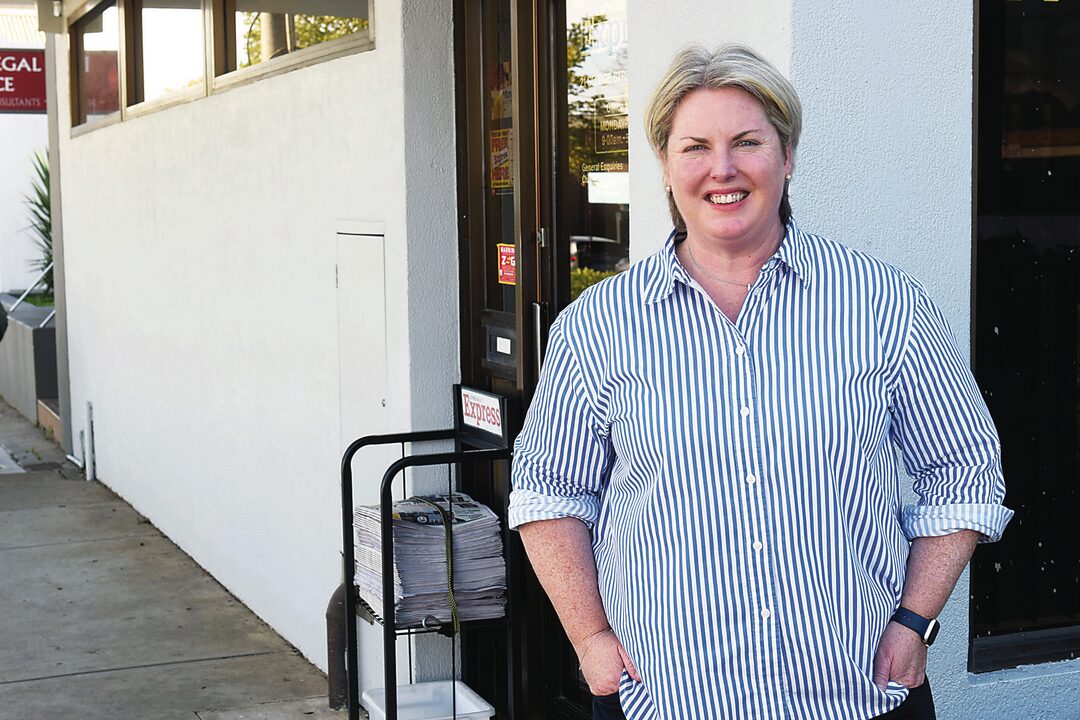
FEDERAL Member for Monash, Mary Aldred recently ticked over 12 months in office.
Her victory in early May 2025 returned Monash for the Liberals.
The race to the top was not without incident however, with her team needing to stave off a long-time incumbent and a cashed-up independent.
Once elected, there was a few firestorms, not least two Coalition splits and just as many changes to the Liberal leadership following Peter Dutton’s wipe out and the virtual vote of no confidence in Sussan Ley.
Ms Aldred sat down with Express editor Liam Durkin to reflect on her first year in Canberra, and outlined her vision for the future.
Liam Durkin: A year since the election, how’s it been 12 months on?
Mary Aldred: It’s an incredible privilege, but I also came to this role understanding the clear expectation to take an early, strong and effective stand on behalf of my community in Canberra – working every day with local residents and community groups and being vocal and proactive in Canberra.
LD: Has it been what you expected?
MA: A bit of both. I’ve been, in Canberra, really privileged to take on some new roles like Deputy Opposition Whip, and very grateful for the opportunity afforded to me by Angus Taylor, the Opposition leader in co-chairing the illegal tobacco taskforce in recognition of the work I’ve done on the need to reform policy in that space. I think the unexpected part in a wonderful way is the great privilege of people sharing their stories with you, that can be a really lovely moment, people sharing really personal stories of their family members, at their most vulnerable when they come to you as a local member for help, and that really spurs me on to do my best possible job for this community.
LD: It’s been a tumultuous time for the Coalition with two splits in a year. How has it been on the ground?
MA: Look, it’s been a challenging 12 months but I think you’d expect that after a really disappointing federal election result. I don’t think that’s unusual for any party to take stock of where they are and where they need to head to, but I think with Angus Taylor, everyone in the team feels united and focussed on representing the concerns that constituents are raising and getting Australia where it needs to be, because the feedback I get every single day from people is that they’re hurting financially, they feel we are heading down a bad path nationally and they just don’t have a great level of confidence in the job that the Prime Minister and this government are doing.
LD: Casting your mind back to the election, how was it for you on the night? Bittersweet I guess winning your seat but seeing Peter Dutton getting rolled in record time?
MA: On the night we didn’t have a clear result in Monash but I was quietly confident that things were looking good locally. Just to be able to recognise what an enormous privilege the community had entrusted to me, giving me their confidence and trust to serve as their local member. It was not lost on me. We had a very tough campaign, we had a long-term incumbent recontesting, we had the Labor party on the rise nationally, we had a Climate 200 Teal campaign that had a nearly $2 million war chest, so it was not an easy election. With the great privilege the community have entrusted to me, I just want to work my heart out every single day for people in Monash.
LD: Was there any key areas you felt got you across the line?
MA: Certainly in Moe, I remember a couple stopping me at one of my listening posts, and they said ‘we’re from Moe, we’ve been lifelong Labor voters, and we just don’t feel that the Labor party represents our values and working people any longer’, and so they said ‘we’re going to vote Liberal for the first time’, and I said to them ‘thank you, I will not let you down’.
LD: Well Moe is a very strong Labor town so to hear that must have been very encouraging. Were you always confident as the votes started coming in?
MA: I never take anything for granted. I never took the election campaign for granted. Other candidates spoke about when they were the MP – I never spoke like that, I always said ‘if I have the great privilege of serving as the elected representative here’ and so I think, never taking anything for granted and realising that I will continue to have to work for that trust and confidence and repay that trust and confidence by achieving effective outcomes for this region, which I am so passionate about, jobs, investment, a secure future, roads, services, all of those things really matter to local people here, and I just want to do my best job possible for local people.
LD: Did you speak to the candidates after? Were they gracious enough?
MA: I spoke to the Labor candidate (Tully Fletcher) and he was very gracious and I appreciated that very much. I’ve spoken in the Parliament about my predecessor (Russell Broadbent) and paid tribute to the legacy of service to the region and his contribution and wished him well.
LD: Did you get a sense on prepoll there was a good appetite for change?
MA: I think there was an appetite for change. I detected, especially closer to election day, that there was a real rejection of a very expensive, highly funded campaign by outside vested interest, which people seemed to wake up to, with the Climate 200 funded Teal campaign, and just said ‘we don’t want this in our electorate’, you can’t just cookie-cut a campaign from capital city areas and transplant it here. We’ve got a pretty good bulldust detector I think in this region, so that came through, and I had a lot of blue collar workers in areas like the energy industry, who I’m so grateful for their strong support and I will continue to stand up on their behalf to make sure that we’ve got highly paid, highly skilled jobs in this region. I’m very concerned about having an energy future, we’ve got a proud history here, I want to continue to represent a region that grows, makes and manufactures things the rest of Australia relies on.
LD: How was the mood in the Liberal camp afterwards? They wouldn’t have expected such a one-sided result?
MA: It was a deeply disappointing result. Across Australia, a lot of really good people are no longer serving in the federal Parliament, and I think that’s a loss for their communities. But the number one thing I’m always focused on is this community and doing the best job I can here and taking the needs and concerns of people in Monash to Canberra to get outcomes on roads (and) cost-of-living relief.
LD: You’ve been working closely with Darren Chester as not only the Federal Member for Gippsland but as Deputy Leader of the Nationals. What have been the main focus areas for you?
MA: I’ve known Darren a long time. He’s such a passionate advocate for this region, I was just so happy to see his appointment as Deputy Leader and as Shadow Agriculture Minister. I’ve already met with Darren a couple of times since that appointment because I care very deeply about our agricultural sector, standing up for farmers, they’ve got a lot of challenges ranging from the ongoing encroachment on prime agricultural farmland, the reckless rollouts of renewables in areas that should be prioritised for agriculture, through to increasing cost impose. I know Darren’s going to take a strong national stand on behalf of farming families and agriculture across Australia.
LD: We’ve got some pretty powerful politicians in Gippsland with Danny O’Brien leader of the state Nationals. What will your role be for the state election as the federal member?
MA: I’m part of a strong Coalition team in Gippsland. We always talk about ‘Team Gippsland’ because that’s our first priority, my colleagues and myself, and so supporting Martin Cameron (Member for Morwell), supporting Wayne Farnham (Member for Narracan), we’ve got a terrific candidate in Rochelle Halstead in Bass, Tim Bull does a great job in East Gippsland, and obviously Melina in the upper house, and Danny in South Gippsland, just working as part of a strong Coalition team. I think people are very ambitious for a change of government in Victoria, and I know Jess Wilson is going to do an amazing job of leading this state. Look forward to working with my state colleagues to get the best outcome possible for our region.
LD: You would be under no illusions it’s going to be very difficult, there’s probably 16 seats that need to be won?
MA: It’s a huge challenge, but if anyone can do it, Jess Wilson can do it. I’ve known her for many years. She’s someone of very high capacity, intellect, she’s a passionate Victorian, she’s got the real-world, real-life skills and experiences to get this job done and I’ll do whatever I can to support her and her team.
LD: The battle in Bass is looking like it’s going to be a knife-edge?
MA: That is a very marginal seat. Labor have put up a candidate not from the community, and I have no doubt that the Climate 200 Teals will put up a candidate as well.
LD: You fought hard for Korumburra’s bank. That didn’t quite work out as you would have liked?
MA: I think the closure of banks in regional communities is a huge issue. It’s something I’ve taken a big stand on because I see it as an essential service – that bricks and mortar banking facility – so I’ve taken a big stand on that.
LD: Politics is a moving beast but just forecasting the next six to 12 months, what are your priorities?
MA: At a local level, continuing to work with local organisations to give them all the support they need to attract funding and investment in roads and services. I think local infrastructure is something that I will continue to fight very hard for. And then, people doing it really tough. People with a disability, our veterans and our farmers.
LD: West Gippsland hospital would have to be number one surely?
MA: Yes. I’ve been advocating for a new West Gippsland hospital since 2011 actually when I was founding CEO for Committee for Gippsland, which started up in Moe, I worked out of an office in Moore Street. Securing a new hospital for West Gippsland was the number one priority on the Committee for Gippsland’s strategic plan when I was there, and something I’ve continued to advocate on in the federal Parliament, working very closely with my colleague Wayne Farnham who’s equally passionate about getting that over the line.
LD: I had my appendix out when I was eight in that hospital and I don’t reckon it has changed since.
MA: Parts of it go back pre-World War 1. Warragul and Drouin are the fastest-growing towns anywhere in Australia, the infrastructure hasn’t kept pace with the population and so, along with fixing our roads, getting investment for aged care for hospitals in our region is top of my list. It’s really disappointing that the state government have just continued to ignore the urgent need to get this done.
LD: There was a great photo of Darren and yourself on the frontbench recently. Team Gippy is certainly a united front?
MA: We go to Canberra with ‘Team Gippsland’ and it’s great to be part of a strong Coalition team that has a track record of delivering in government I’m certainly deeply passionate about our region because when our region succeeds, the rest of Australia thrives, and so that’s why we need the attention, and investment and support to be able to continue to deliver on all those areas like food, power, water, the rest of state and the nation look to us for.
LD: Do people talk about Gippsland in Canberra?
MA: They do. We’ve got a great reputation for all of the things that we grow, make and manufacture here. Very proud of that. I’m quite an evangelist about what we make and grow here, and always proud to show that off, always proud to invite people to my electorate – Shadow Ministers, ambassadors, and look forward to continuing to do that.
LD: Yourself personally, you’ve got the job for at least another two years. You could have it for another 20 if things go your way?
MA: I don’t take any single day for granted. I’m 43, so I think the good thing about that is, I’ve had a career outside of politics. I’ve worked in small business, I’ve advocated for small businesses, I’ve worked in a number of community organisations across our region, so I come to my current job with a strong background of experience dealing with many issues from small business to agriculture to technology to cybersecurity and the last 12 months, it’s been a real benefit to be able to draw on those skills and knowledge in my current role and in two years’ time I’ll be asking for the confidence and support of this electorate to recontest the next election, but I never take anything for granted.
LD: There’s a view that the Liberals can’t win a federal election unless they move closer to centre-right. Do you share that view?
MA: I think we need to accurately reflect and represent the everyday needs and aspirations of the Australian people. So for me, that’s cost-of-living number one, better roads, making life a bit fairer, easier and more convenient for people in my community and across Australia. If we can make sure that we do a good job in reflecting those challenges and aspirations, then we have every chance of changing government in two years’ time.
LD: Can you tell us anything about the Prime Minister when the cameras aren’t rolling?
MA: I don’t like to criticise people personally, but I will say I think people in the Monash electorate have a pretty good authenticity radar and they will make their own judgement about him. More importantly, they will also judge whether he is taking Australia in the right direction, and whether people are better off than they were under the previous Coalition government. When you look at inflation and interest rates and the cost-of-living, when you look at access to services in regions like ours, compare that to city and metropolitan areas, my sense based on the feedback I get every day from local residents is that, certainly in this electorate, they’re looking for change.
LD: I don’t think there’s one ag show you’ve missed in the last 12 months?
MA: No, there’s not. I think I’ve pretty much hit all of them, as well as supporting the show, because the volunteers just do an amazing job, they literally put hundreds of hours into preparing, and pride in the community is a really special thing. It’s great for me to be able to speak to people locally because that’s where I get an understanding of what this community wants me to stand up on and really advocate strongly for, and then I take those concerns to Canberra. It’s very important to remain engaged with local residents, and one of the best ways to do that is to support local events, local agricultural shows. I genuinely love it.
LD: You played a bit of basketball in your time?
MA: I haven’t played for a few years. I used to play long time ago in Pakenham for a team there. It’s just a great game, it’s one of the fastest growing participation sports in our region, and so I really enjoyed my time there, as well as serving in quite a number of other organisations. I was chair of the Gippsland United basketball league. I’m really passionate about community sport, I think it’s a great opportunity for people to get involved to learn teamwork, coachability, life skills to feel like they are contributing, and for people of all ages and all abilities to have social engagement and good company. Sporting clubs in our region do an amazing job and I’ll do whatever I possibly can to support them. Very passionate about being able to secure better services and facilities for local sporting teams and that’s what I’ll continue to do.
LD: What was your go-to? Power forward?
MA: (laughs) Look, I was pretty versatile.
LD: Leaving school at 15 and having worked your way up to being the federal member, have you had a chance to reflect on your life journey?
MA: I’m grateful for a loving family, and the opportunities that my parents afforded me, but also in my journey in this community, over 20 years, people have just been so generous to me in their encouragement and their mentorship. I’ve got so many people to thank. I am the product of people in this community who have taken the time to invest in me and encourage me and show me a good path.
LD: Your dad didn’t get to see you become elected, but you must be so proud you’re able to follow in his footsteps?
MA: I hope so. He was a good man and while I had that time with him, very grateful for all I learnt from him. He had a real sense of fairness, he had a very strong belief in putting back into your local community.