


By PEACE IJIYERA
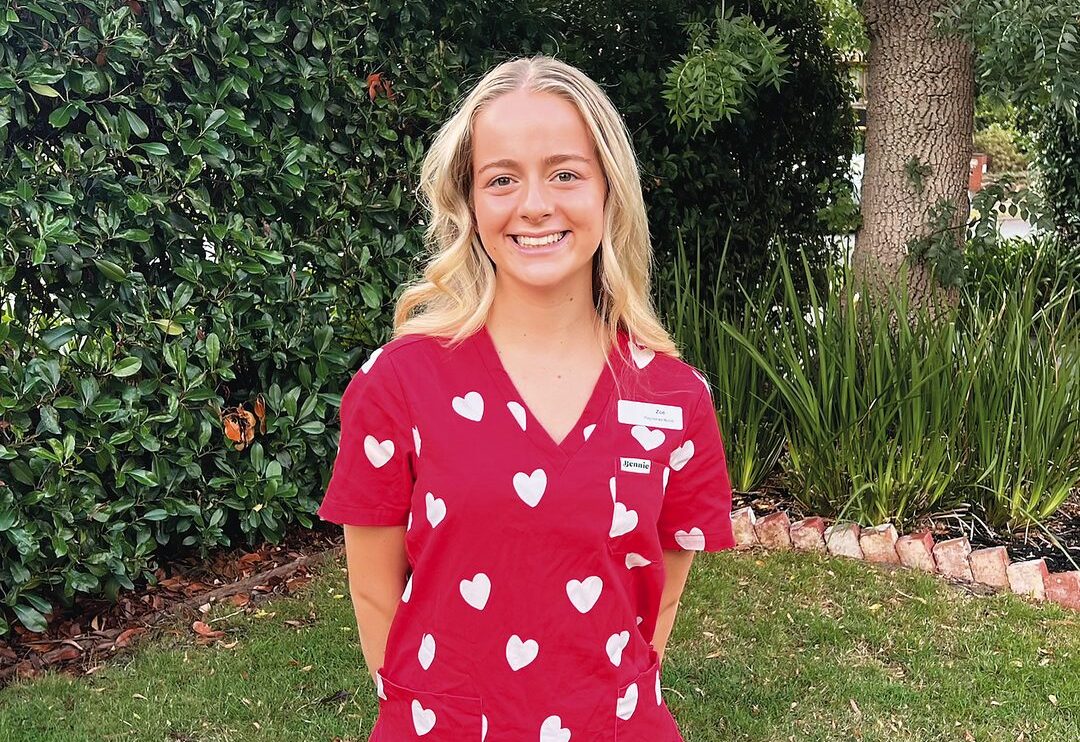
NURSING graduate from Federation University, Churchill, Zoe Kapolos, saw her petition presented to the House of Representatives recently.
The petition requests menstrual leave per month for women suffering from endometriosis and adenomyosis.
The petition closed on April 29 and went viral, gaining nearly 30,000 signatures.
The 21-year-old, who works in women’s health, was inspired to present the petition because of her experience living with endometriosis. She described her periods as “heavy” and “life altering”.
“I just couldn’t go on with day-to-day life. I was taking a lot of time off school … heavier flows … extreme period pains and I was experiencing just consistent iron deficiency and consistent infusions,” she said.
“I thought, you know what, if I put this out to the world and the worst thing that happens is they decline to publish it, I’ll just move on and advocate in another way.” Fifteen days after submitting, she received an email stating the petition had been confirmed and published on the federal government’s website.
“I was like ‘oh my god, no way’,” she said
“It went all over social media … which was expected because so many people are affected by these conditions, but also unexpected cause I was not expecting it at the same time.”
Living in Bairnsdale at the time, Ms Kapolos explained that it was difficult to access women’s health specialists. She was finally diagnosed with endometriosis at 18 years-of-age.
Ms Kapolos highlighted fatigue and diaphragm pain as symptoms she experienced.
After trialling several gynaecologists in Melbourne and being placed on a myriad of contraceptives that Ms Kapolos found ineffective, she underwent a laparoscopic surgery at 19. The surgery removed lesions around her uterus and bowels. Though the surgery did help, Ms Kapolos still feels the toll of endometriosis on her body, fatigue being something she still struggles with.
“Thankfully my surgery actually did end up giving me quite a significant amount of relief,” she said.
“I’m definitely enjoying my improved quality of life.”
Clocking out of a night shift earlier this year, Ms Kapolos had the idea to present her petition to advocate for all the women, some being her patients, who were anxious about their bosses not believing that they were taking time off work for genuine reason. Or those who were more paranoid about receiving a medical certificate on time than fully recovering.
Ms Kapolos realised that “this is not right” and “there’s some sort of gap that needs to be fixed”. She spoke about Queensland public sector workers being entitled to 10 days of reproductive health leave per year. This leave covers chronic reproductive health conditions including endometriosis and adenomyosis. It also covers PMOS (polyendocrine metabolic ovarian syndrome, formally known as polycystic ovary syndrome PCOS), menopause symptoms, fertility treatment, hysterectomy and vasectomy’s.
In the midst of positive comments and support for the petition, there was some concerns.
“While the petition was open, I definitely had very valid questions such as other reproductive conditions being involved in the petition,” Ms Kapolos said.
Other concerns were around whether proposed menstrual leave would have a negative impact on women’s employability and confidentiality.
“Of course there’s some people that are more than willing to let their employers know their conditions and if your workplace is lovely enough, they’ll support you. But a lot of cases people don’t want to disclose that information,” Ms Kapolos said.
Ms Kapolos agrees that finding the balance between benefiting women as well as not affecting their employability and privacy is difficult, and suggests that like in Queensland, reproductive leave as a whole would work to benefit everyone.
At the recent Sexual and Reproductive Health forum, held at the Gippsland Performing Arts Centre (GPAC), the Express asked keynote speaker and gynaecologist, Dr Elizabeth Farrell AM about the proposed menstrual leave.
“I think that women with endometriosis and chronic pain have need for good care and they need good pain relief,” she said.
“Yes, the condition can impact on their employment, and I think its appropriate from that point-of-view. However, because we know that women are discriminated against … I think that there will be some backlash, and that’s my concern, that these women are not disadvantaged by something like that coming in and there isn’t undercurrent discrimination.
“It’s about women actually being able to access good healthcare. And the problem is that it’s very hard when you look at what services are available … the government may make clinics available, but are they run properly? Do they have an appropriate protocol? Is there a standard protocol? And I think that is where women get let down.”
With these concerns also came critics. Social media trolls and keyboard warriors had a field day in the comment section across multiple posts.
Ms Kapolos read some of the comments left like “this is why we have sick leave”, “what about testicular pains?” and “you can just have a hysterectomy, fix it and get on with life rather than being a drain to society”. Ms Kapolos described these comments as “horrible”.
Ms Kapolos is expecting a response within 90 days from when the petition closed from Minister for Disability, National Disability Insurance Scheme and Minister for Health and Ageing, Mark Butler.
While she awaits the verdict, she continues to work to see women’s health more understandable and accessible. She is currently working on publishing downloadable PDF files on women’s health and creating women’s health community events. Founder of The Ovary Office, she posts educational content online about women’s health.
The petition’s description reads, “in a world where women’s health remains underfunded and under-research, it is not okay that women are forced to use their annual or sick leave to manage chronic conditions that have no cure”.
“Across Australia, women diagnosed with Endometriosis and Adenomyosis live with severe, ongoing health complications that impact every aspect of their daily lives. These women show up and push through but there are sometimes days within each cycle that are truly debilitating and life-altering.
“These women are not only fighting their conditions, but they are also fighting to be seen and supported. With action from the Australian government, they can feel acknowledged through realistic, compassionate support, for living with chronic pain.
“An estimate[d] one in seven Australian women live with Endometriosis, and one in five with Adenomyosis. Both conditions causing emotional distress, serve pain, fatigue, inflammation and impacts in participation within society.
“Current flexible workplace arrangements and existing workplace adjustments are not enough. They place a burden on these individuals rather than addressing the systemic gap in support.”
Endometriosis is a condition that sees tissue like that of the uterus lining growing on the outside of the uterus. This lining behaves like that of the uterus lining, thickening and shedding each month; however since it grows in a foreign area, it cannot fully leave the body. The remnants cause inflammation, scarring and severe pain. Adenomyosis occurs when the tissue lining the uterus grows into the muscle wall of the uterus. Causing the uterus to enlarge, resulting in heavier flow and pain.