


By BLAKE METCALF-HOLT
SHADOW Minister for Energy and Emissions Reduction, David Davis used the final minute of his speech at the Gippsland New Energy Conference to note the leading example the region is setting for Victoria.
After putting forth the concerns the state Coalition has about the energy transition, their intentions with gas, and a dramatic pivot to the alleged corruption on Big Build sites, the Liberal MP finished by saying Gippsland has been “exemplars of how community engagement should be undertaken.”
Mr Davis stated that this has not been seen across other renewable projects in Victoria, due to the state government and its relevant bodies such as VicGrid.
“I counterpose the approach in Gippsland, where many of the proponents have actually genuinely engaged and developed levels of community support,” he said.
“(It) shows you an example of how projects can actually be conducted constructively and how projects can be brought forward.”
Mr Davis pointed to the importance of the Gippsland New Energy Conference itself, showcasing the “united nature of Gippsland” with local council, Regional Development Australia and other groups coming together.
Bar those few remarks, Mr Davis used the bulk of his time on stage to present the Coalition’s energy plans and hit out at the state government.
Perhaps most notably, Mr Davis raised the cost-of-living pressures through the blowouts on energy projects, connecting it to the “frank and outright corruption” on Big Build sites.
“Where money has been siphoned off an unknown amount, somewhere north of $15 billion, into bikies, criminal groups, certain union groups, strippers,” he stated.
“There’s a broad problem with construction costs in Victoria, and we need to be aware that the electricity sector, both renewables and traditional projects, are not immune from this.”
The main point of contention used by Mr Davis in regards to the state’s energy transition was through the Victorian Auditor-General’s report published in December 2025 titled Managing the Transition to Renewable Energy.
“He said that the energy transition had proceeded well in many respects to this point, he then pointed to a number of risks ahead,” Mr Davis said.
“He looked at the state’s register, and that’s not a public document, but he reached into the risk register and pulled out the facts that the government itself regards the transition as a significant risk for Victoria.”

While the report did highlight that meeting future targets will be more difficult due to the incoming risks, it was not stated that the Victorian government acknowledge those risks, rather that it needs to be managed to ensure electricity supply meets demands.
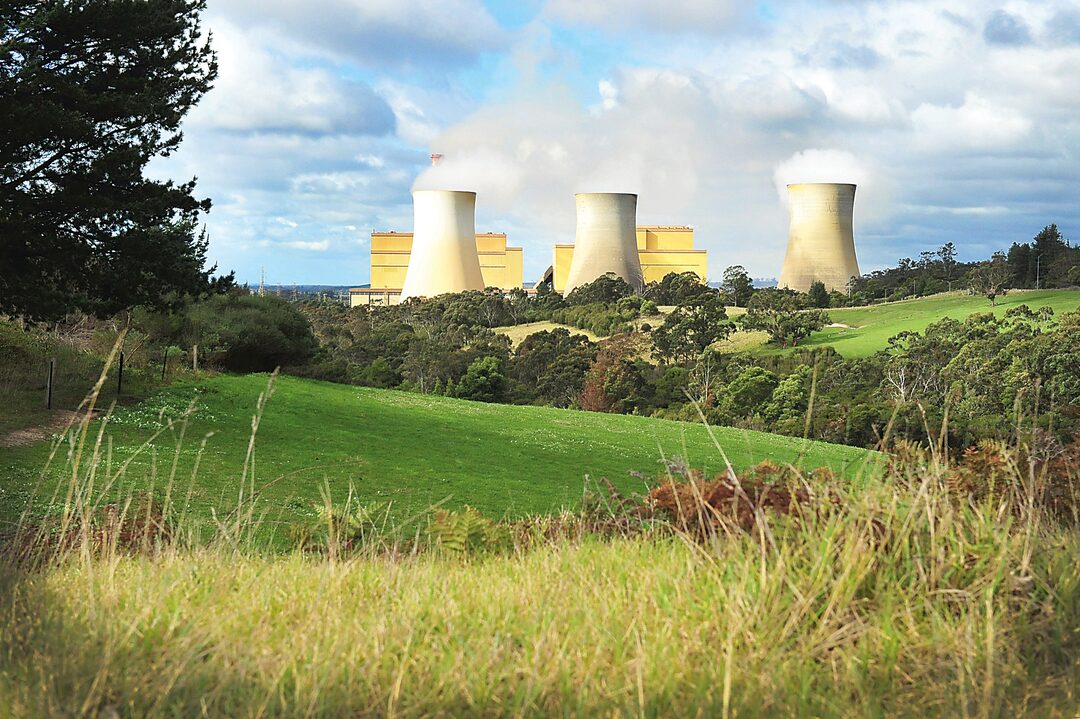
Yallourn Power Station’s closure in mid-2028 was key throughout the report, indicating the delays to the VNI West transmission project and the Western Renewables Link, as well as concerns over EnergyAustralia’s Woreen Battery Storage not being enough to offset the necessary generation to replace Yallourn.
Mr Davis, in pointing out Member for Morwell, Martin Cameron in the audience, who has issued concerns regarding Yallourn’s closure this year, said that the Coalition wishes to see the documentation of the agreements in place for Yallourn.
“That makes it very difficult for opposition parties, and indeed the broader community, and indeed the sector, to undertake the planning and steps that they would need,” Mr Davis said.
He further stated that Yallourn’s situation “stands in stark contrast to the way Eraring (Power Station, set to close no later than April 2029) was managed in New South Wales.”
Mr Davis continued by saying that offshore wind targets “will not be met”, noting challenges of security of supply, cost and reliability, claiming that state government commissioned modelling regarding winter periods is being withheld.
“Extraordinarily, the government and the Minister refused to provide (the Auditor General) with those documents,” he said.
“It’s the first time … that I can recall that when the auditor has asked for information, he has not been provided with it.”
The MP suggested that the findings would indicate a significant risk for offshore wind during the winter period, but the Australian Energy Market Operator (AEMO) stated in its 2026 Integrated System Plan that performance is strong in the shorter winter days.
There are risks around the impacts of potential severe weather and freezing conditions, which drives up maintenance costs.
Mr Davis questioned the planned offshore wind auction announced last year, which new Energy Minister Jaclyn Symes highlighted in her video recording on the first day of the conference.
Mr Davis said he had inquired with simple questions about the date the auction would go out and close, as well as the financial support behind it, for which none were answered.
The state government will only say it plans to commence sometime in August – still not opened by the time of writing.
Australia’s first of its kind auction seeks financial backing of up to two gigawatts of offshore wind capacity, planned to be instated by 2032.
“This will create thousands of jobs, attract billions of dollars in investment and ensure reliable energy,” Ms Symes said in her message.
Mr Davis said that the Coalition supports “the idea of offshore wind”, but seeks to understand definitively the cost it will bring to Victoria.
If elected, Mr Davis said he will “judge fairly” on renewables, but “demand from the government some information about how the auction is to be conducted and about some of the parameters around it.”
Mr Davis also articulated his view on gas power generation, saying that Victoria is uniquely set up due to “a very large gas distribution network.”
“That is a challenge on one hand and a strength on the other,” he said.
“We’ve said that more gas needs to be found, and I’ll make the point that there has been no new gas exploration permit issued in Victoria since 2013.”
The state government announced in December 2025 two gas exploration licenses had been approved in the Gippsland and Otways basins.
Mr Davis further urged that more gas exploration onshore must become available, which he is confident about following discussions with key figures in the sector, believing that gas can be “brought on relatively quickly.”
Mr Davis also noted, which preceded him naming VicGrid, that the Coalition would pause and review the current transmission plans, and take a look at the REZ (Renewable Energy Zones), which he said the government has not managed well.
The Wednesday (August 19) address by Mr Davis came the same day the Coalition pledged to scrap the VNI West transmission project.
More on the Gippsland New Energy Conference will feature in coming weeks of the Express.