



By PHILIP HOPKINS
GASIFICATION of the Latrobe Valley’s brown coal is the economic way forward for the region: it is one of the long-term cheapest and most efficient way to produce electricity from the coal in a world constrained by the need to cut greenhouse gas emissions, power the state and create mass jobs in the Valley, according to a Gippsland energy expert.
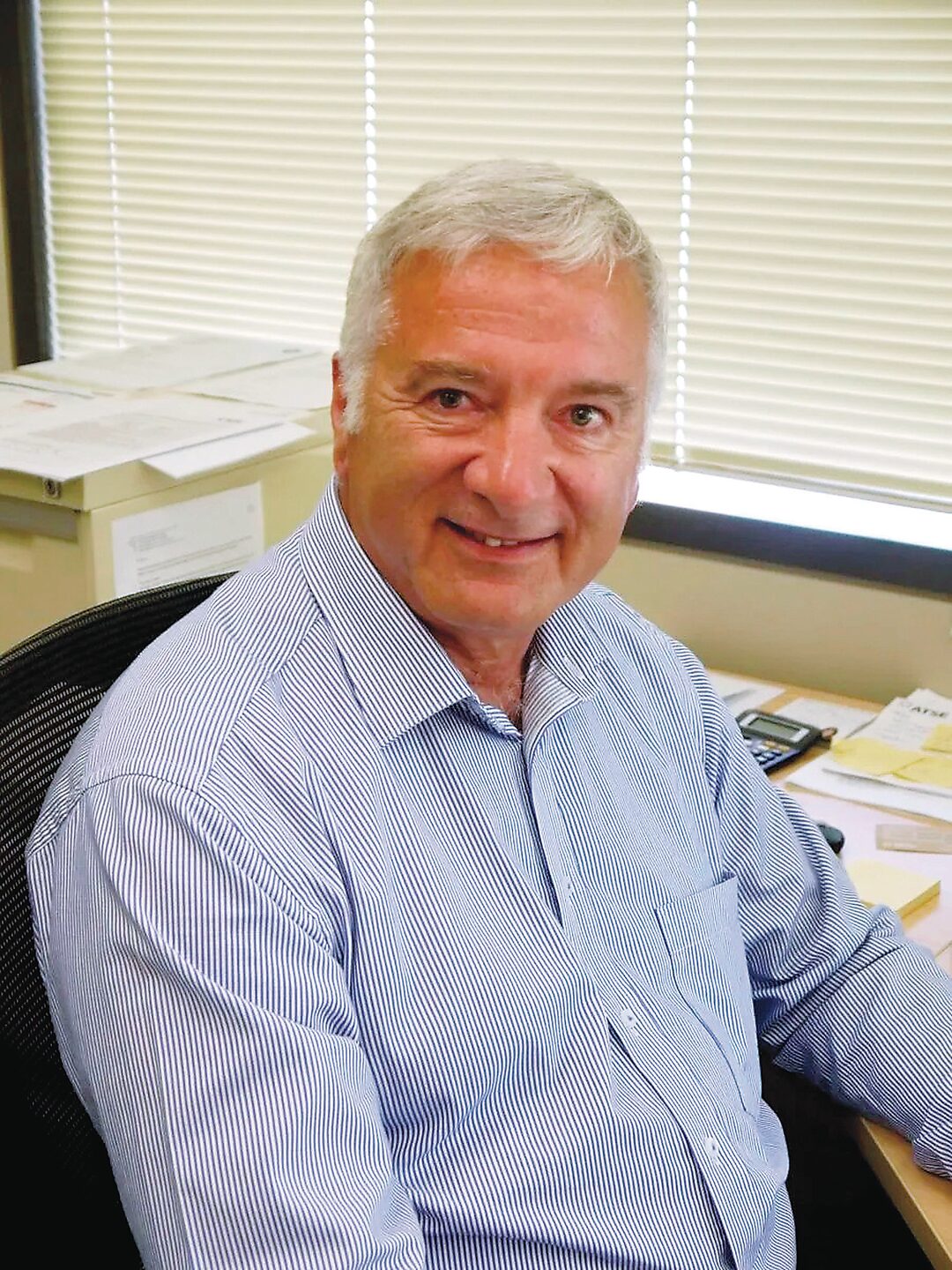
The process, using the most up-to-date version of Japanese and German gasification technology, can produce not just electricity, but diesel, jet fuel, hydrogen, ammonia, urea and other industrial products, depending on plant configuration, says Brian Davey, who has 40 years’ experience as a brown coal technology expert with the SEC and in university research.
These products can be produced with zero emissions through carbon capture and storage in Bass Strait.
Mr Davey told the Express that gasification was a better way to use the brown coal compared with the traditional Rankine cycle technologies used in the Latrobe Valley.
“We have the ‘Neanderthal’ technology currently. It’s very low efficiency at low temperatures and pressures. To improve on that cycle, you need to increase temperature and pressure,” he said.
“This comes at an escalating cost and requires exotic alloys to handle the increased heat and pressure.”
Current brown coal stations use subcritical technology, with a power production efficiency rating of about 29 per cent; the next level is supercritical with about 35 per cent and then ultra-super critical, at about 42-45 per cent.
“The increased efficiency is needed if you want to capture the CO2 with some sort of cost efficiency. To capture CO2 out of a traditional power station, you have to process huge amounts of gas … you have a very large capital cost, and a large energy penalty so your efficiency goes down,” he said.
In contrast, gas from the gasification of brown coal using the Brayton cycle is cheaper and more flexible, “because it’s quick and very responsive in that process”.
The Brayton cycle can be operated as a combined cycle power plant: a gas turbine that combines with a steam generator that captures the waste heat from the gas turbine and heats water to feed a steam generator.
“This is called a combined cycle – they can get efficiencies up to 60pc,” Mr Davey said.
“If we had unlimited gas, you would probably go to a combined cycle for baseload power production; if not, use gas power plants as single cycle peaking plants which we already have in operation. They are not efficient, but can provide rapid responses to system demand.
“If you didn’t have CO2 and potential global warming issues, you would probably develop super critical and ultra-super critical plant without carbon capture. But because we have all of the pressure of CO2 emissions and the potential of global warming, it is difficult; you would more than likely not get anybody to finance a traditional Rankine cycle power station anywhere in Australia now, whereas I think you could potentially finance a gasification plant, particularly if you have optionality. It gives you significant more flexibility to produce other products.”
Mr Davey said this was shown by the brown coal industry in North Dakota, which was featured in a recent series in the Express.
The Dakota Gasification Company Great Plains Synfuels Plant, which has been operating for more than 40 years, produces not just natural gas, but thousands of tonnes of fertiliser – urea and ammonia – commercially sold carbon dioxide and many other products for industry.
These alternative products now make up more than half the synfuel’s plant’s income.
The plant uses well established German Lurgi technology to gasify the brown coal.
This same Lurgi gasification technology was used in the Morwell Lurgi plant in the 1950 and ’60s to supply Melbourne with medium heating value town gas. It employed 200-300 people before the advent of Bass Strait natural gas, whose supply is now dwindling.
However, the Valley could use more modern technology than that in North Dakota, Mr Davey said.
“Now, we have much more efficient and more effective in terms of carbon conversion and efficiency in terms of product per tonne of coal,” he said.
Mr Davey said the brown coal could be gasified with modern technology gasifiers such as the one proposed by JPower from Japan and then using technologies such as the Fischer-Tropsch (FT) process. This is a proven technology developed in Germany in the early 20th century and refined since then to convert the syngas (the gas produced from brown coal) produced to liquid fuels.
“FT has been commercially used in South Africa, China, Malaysia, Qatar and a number of other countries,” he said.
“Japan has very good gasifiers. They have done a huge amount of work in understanding the characteristics of our local coal on the gasification process, HESC (Hydrogen Energy Supply Chain project) in particular; they have probably got the most up-to-date knowledge of how our coals behave. One of the counter-intuitive issues with our coal, is that it’s too clean. You need a certain amount of ash in the coal to provide an insulating slagging layer in the gasifier.”
It is unclear how much it would cost to build such a modern plant.
“It is technically feasible, there are no new technologies that you need to do this at large scale. It would be some billions, but if you take a new refinery, they are talking in the order of $10 billion. I would suspect the cost would be somewhere around that,” he said.
“This appears to be a lot of money, however if you consider it in the context of $350 billion for a railway line and the fact that it will generate income and jobs for 40 years, it is really a low-cost option.”
Mr Davey said gasification and the significant amounts of products it allows, gives security to investors and the state “because we will never export that coal”.
“The raw material costs of that coal will be the same now as they are in 50 years in relative terms. They are not subject to commodity pricing. You can plan your financial position with absolute confidence for the next 50 years,” he said.
“One of the key benefits of a local gasification plant is that we will be able to reduce the reliance on importing products that our economy relies on, and we can cushion any impact of overseas supply chain shocks. We will never be able to supply the whole of Australia in diesel, petrol, urea, but we would have a significant base that would prevent us being badly exposed, as we currently are.”
New mining of brown coal could be done with a much smaller profile. Rather than the current deep mines, Mr Davey said the mining methodology could be changed to create a quite wide and shallow mine, which could then be progressively rehabilitated. This approach was used in brown coal areas in North Dakota from necessity; they have small coal seams and large overburden.
“If you don’t do it on a progressive basis, you end up where we are today, with massive holes. Germany also has a much more developed progressive rehabilitation process than has been used in the Latrobe Valley,” Mr Davey said.
“To avoid the danger of water contamination and aquifer depletion, no deep mining need take place.
“There should be no contamination problem if you do not go deep and not tap into the aquifers; try and avoid them so you do not have to dewater the mine.”
In North Dakota, mining companies are legally obliged to progressively rehabilitate the mines so they are again suitable for agriculture.
Mr Davey said in the Valley, it was traditionally cheaper to mine more deeply because the quality of the coal from a power perspective was better because it’s drier and a shorter transport distance to the power station.
“They get more energy out of it on a per tonne basis, but for the gasification process, you are going to have to dry the coal anyway and particularly if you are making hydrogen, you want to capture that water and convert that water you have captured into hydrogen. There’s lot of good reasons why this (gasification) is a good idea.”
Mr Davey said the gasification and FT process does produce CO2.
“However, this can be separated from the gasification products, such as hydrogen, ammonia and urea, and captured and stored, through proven technologies, in Bass Strait where some in the industry estimate there are billions of tonnes of storage capacity,” he said.
“It’s easy, proven technology, the cost is as cheap as you will ever do it in the world. Some of the reasons it’s cheap – the short distance – about 66 kilometres and the permeability and porosity of the storage sites mean that on a per tonne basis it’s very inexpensive.
“Also, Bass Strait is one of the best geology locations to store CO2 in the world, the subsea storage locations are fantastically porous and permeable; you put it in there, it goes in easily and stays.”
Victoria has one of the largest brown coal (lignite) deposits in the world, with a total estimated resource of about 430 billion tonnes. More than 80 per cent of the resource is in the Latrobe Valley, with around 65 billion tonnes of measured resource identified, concentrated mainly in the Yallourn-Morwell and Loy Yang coalfields.
Of the Valley resource, only about two per cent – about 1.3 billion tonnes – has been extracted over the past 100 years. About 98 per cent, or about 64 billion tonnes, remains underground, with 10 per cent of the economic resource of the Valley utilised to date.
Regional Development Australia and the Committee for Gippsland, in Gippsland’s Clean Energy Future’, quoted the 2020 AEMO Gas Planning Report Update: “Gippsland’s large and accessible brown coal deposits enable low-cost and large-scale mining with 33 billion tonnes being potentially economically viable.”
Despite the Valley’s low energy density due to high moisture content (typically 48–70 per cent), the coal is noted for its high purity, featuring low ash yields (less than three per cent on average), low sulphur content (generally below one per cent), and minimal heavy metals and nitrogen, which distinguishes it from many other lignites and has supported its use in local power stations with reduced emissions.
Brown Coal in North Dakota is 38 per cent water – less than the Latrobe Valley’s average 66 per cent – but has higher emissions of sulphur, mercury and ash than the Valley.
Burning wet brown coal increases carbon dioxide emissions.
Mr Davey made a final comment: “If you don’t want to be held to ransom by needing to import critical energy and fertilisers, then invest in local capability that provides both insurance against supply chain shock and long-term, well-paying jobs in a region that desperately needs them.”