



By KATRINA BRANDON
A FLOOD of warnings came in over the weekend, just as temporary disaster roaming comes into effect.
Last week, warnings came throughout the week for a potential storm with minor to moderate flooding to start on Thursday, October 1, through to Sunday morning (October 4).
During the flooding event, according to the Bureau of Meteorology (BoM), Latrobe Valley saw upwards of 61 millimetres, with most low-lying areas beside waterways experience flooding. According to BoM records, the weather event brought about a month’s worth of rain.
“There’s plenty of rain around, with tropical moisture drawing into a low pressure system across south-east Australia,” BoM Meteorologist David Crock said.
“Heavy rainfall and severe thunderstorms are possible in the afternoon (on Thursday), thickening up as the storm moves along.”
As the storm swept through on Thursday afternoon, Mr Crock said that State Emergency Service (SES) responded to a lot of callouts throughout the first band of the storm.
Before the storm, Mr Crock forecasted potentially anywhere between 20 millimetres of rain to 150 millimetres to hit the Latrobe Valley and eastern Victoria area. Particularly concerning areas came from Wellington Shire and East Gippsland.
Friday saw the highest recorded rainfall with 32.6 millimetres.
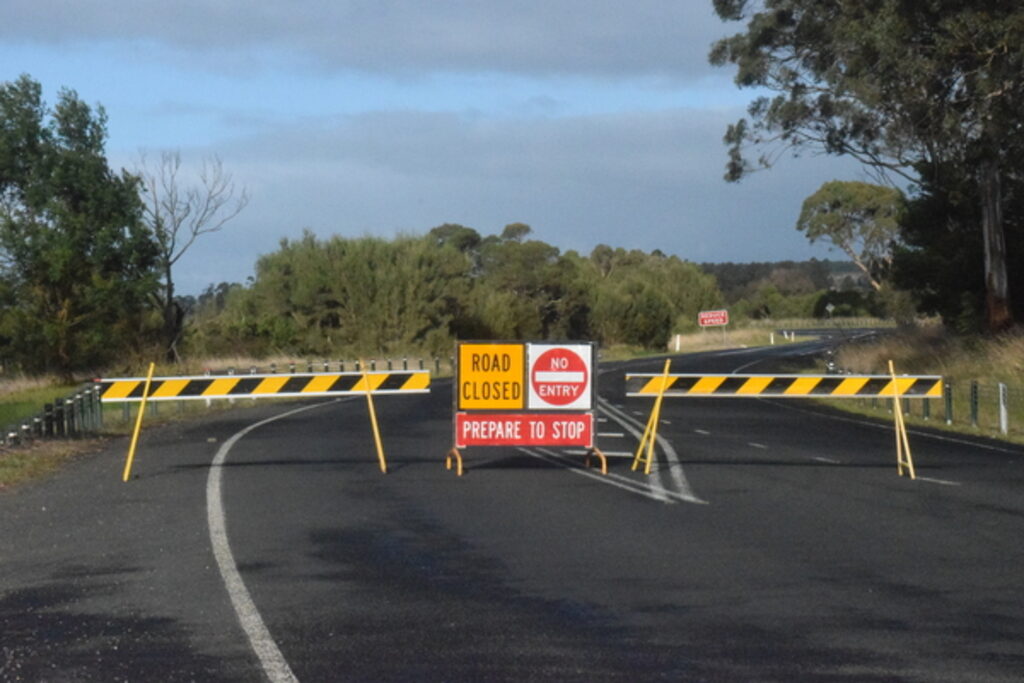
On Saturday, many roads such as Stringers Road, Toongabbie, between Henderesons Rd and Guyatts Rd; and Cairnbrook Rd, Glengarry were closed due to floodwaters.
Throughout the event, authorities warned that people should not drive through floodwaters no matter how much you know the road or are determined to get to your destination. They said that in the underlying water, you don’t know how deep it is, whether the road has been swept away or has many potholes.
The first example of floodwater driving over the event came out of Melbourne, where two vehicles were strandard under Montague Street Bridge in South Melbourne.
Authorities also warn road users to drive to conditions and turn headlights on for increased visability.
AS emergencies were starting to appear across the state, the new Temporary Disaster Roaming (TDR) service came into effect on October 1 (Thursday).
The TDR allows for Australians impacted by severe weather to be able to stay connected when mobile networks fail.
The Australian Telecommunications Alliance welcomed the new connection.
Australia’s three mobile network operators are ready to activate Temporary Disaster Roaming (TDR) to help keep regional and remote Australians safe, informed, and connected should natural disasters cause mobile network outages.
TDR is designed for specific disaster scenarios, and may be activated in designated areas where another mobile network is available and has sufficient capacity to safely support additional customers. The priority is to help communities stay connected to essential communications and information without putting the network services that people rely on at risk during an emergency.
“Temporary Disaster Roaming has been developed by telcos to provide another way for regional and remote Australians to stay connected during natural disasters,” ATA chief executive Luke Coleman said.
“If your usual mobile network is impacted by a natural disaster, TDR will enable you to make calls, send texts, and use basic data via another mobile network where there’s one available. There is no additional cost to use it, and for most customers, connection will occur automatically once TDR has been activated and is available.”
Through TDR, users will be able to use any available mobile network to call Triple Zero (000), even when their usual network is impacted by an outage and is designed to allow customers to stay in touch with family and friends via voice calls and texts, and basic data to use emergency service apps, such as WhatsApp and iMessage.
Limitations for the system include not being accessible in metropolitan areas, when a power outage has occurred and there is no safe access to a generator, or where damage has taken down all networks nearby, to older handsets (intended for handsets from 2022 onwards), and non-smartphone connected devices such as EFTPOS.
The Coalition welcomed the government’s TDR announcement and activation, but said that disaster-prone areas should not have been forced to wait two years.
In 2022, the Coalition put it forward in a Regional Telecommunications Review with the ACCC.
“For regional Australians, communications during a disaster can be a matter of life and death. Temporary disaster roaming is welcome, but regional communities deserved this capability a long time ago” Federal Shadow Minister for Communications and Digital Safety, Sarah Henderson, said.
“During times of natural disaster, temporary disaster roaming can provide a lifeline where a mobile network fails, allowing customers to roam onto another network to make calls, send texts and access basic data such as emergency apps and websites.
“This industry-led scheme is currently voluntary which is inadequate. That is why the Coalition will move an amendment to the Outdoor Universal Mobile Obligation bill to mandate temporary disaster roaming during times of emergency.”
Federal Shadow Minister for Regional Communications, Anne Webster, said that while TDR is a great idea, there are still areas without towers, who might need the service, but won’t be able to use it.
Dr Webster said that the service is welcome but this step is only the beginning for assisting regional communities with better emergency connectivity.