


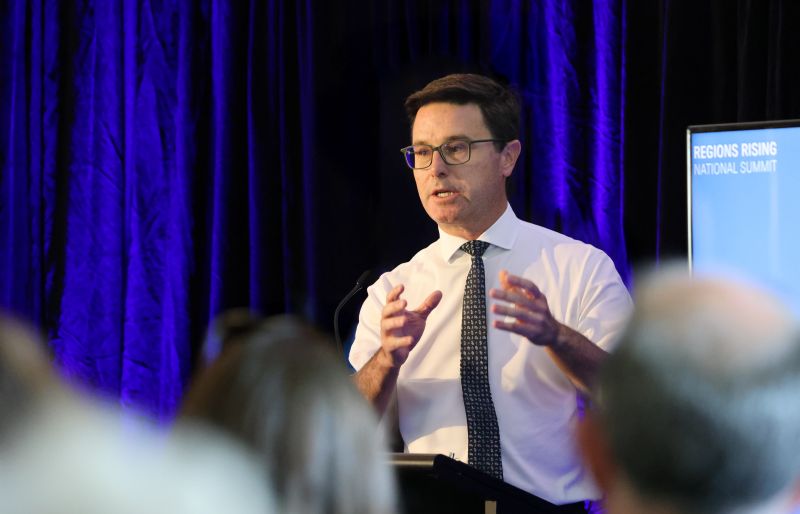
By AIDAN KNIGHT
ALIENATING not only from allies, but now also each other. Following the Nationals’ divergence from the Coalition, leader David Littleproud was challenged for his role, in criticism of the very same decision.
The challenge marked the 12th change to the Nationals’ cabinet or frontbench in 2026, following a series of resignations after the Liberal Party backed bipartisan hate speech legislation alongside Labor.
The Nationals were yet to complete portfolio allocations following their departure from the Coalition, which now required a separate frontbench from the Liberals where previously combined. This is something “my partyroom is more than capable of permanently fulfilling”, Liberal leader Sussan Ley said in the announcement, warning of permanency if the country party does not retreat homeward.
Ms Ley issued an ultimatum at 12pm last Friday (January 30), announcing a Liberal-only acting shadow ministry set to run for a week – after which it would no longer be acting, should the Nationals not return to the Coalition.
The Coalition has split seven times since its formation in 1923, originally involving the Nationalist and United Australia parties. The 2025 separation was the shortest on record, lasting just eight days.
Mr Littleproud had informed the Coalition leader that the whole party would likely quit if her party voted in line with Labor over hate speech laws. Now, he was being ousted from the head of his own party, as Queensland backbencher Colin Boyce announced a spill movement against Littleproud at noon last Wednesday (January 28).
The Flynn Division politician, who serves in the House of Representatives, is a member of the Liberal National Party in Queensland, an amalgamation of the parties that is merged only in his state, and while the Coalition existed, those sitting federally were required to choose to sit with one or the other in Canberra.
Mr Boyce always aligned with the National Party, but was vocally critical of any separation from their partner in politics, which he reasoned as his decision in running against Mr Littleproud.
Mr Boyce viewed the split as party self-destruction, and made it clear his first intention as leader should he win the fight.
“The door is open to re-establish the Coalition, and I believe that is what we should do.”
Claims from unnamed Nationals MPs had since emerged alleging Mr Boyce did not attend partyroom discussions on gun reform and hate speech laws prior to the vote.
Those claims have not been independently verified. If true, this carries the same weight as a donkey-voter complaining about who is in government, not participating in the process of the party he’s claiming is being undermined by the result.
Despite earlier comments suggesting a reunion would be impossible while Ms Ley remained Liberal leader, Mr Littleproud said The Nationals had not refused to meet with the Liberals.
“It would be inaccurate to suggest that The Nationals rebuffed a meeting request by the Liberal Party,” he said in a statement on January 28.
“Once the spill motion is determined in our partyroom meeting, a time will be scheduled.”
Mr Littleproud described the split as “an opportunity for some time apart”, saying the parties remained aligned on many policies, but not all.
The ‘not forever, just for now’ attitude of the party may have been the root of it’s instability, however polite it be, as Mr Littleproud said verbatim in the same televised appearance “it is an opportunity for some time apart”.
This trivialised the Express’ comparison in last week’s issue of the Coalition breakdown to a divorce – which may proof to be more of a temporary lovers spat – while the rest of the country listens with an ear to the door.
The spill turned out to die at the first hurdle for Boyce, after The Nationals announced at 2.25pm on Monday that the motion was unsuccessful.
The pressure then returned to Ley, as her leadership remains as under fire internally as it was in 2025.