



By AIDAN KNIGHT AND KATRINA BRANDON
A GIPPSLAND man has helped successfully developed a world-first technology to allow clean emission fuel use without carbon output.
Yinnar local Steve Monkhurst, who worked closely with Malcolm Bendall, a Tasmanian geochemist specialising in plasmoid energy, has been working in test sites located in Thorpdale and Neerim to test and develop a cutting-edge process he calls ‘thunderstorm generation’.
Named as such because it is based on the same process that allows thunderstorms to form in the atmosphere, as hot and cold elements meet together at an exact degree within a vortex, creating a tremendous amount of power.
Once this process of ‘lightning in a bottle’ is recreated, it creates energy prominent enough to create a suction to compress pistons, which is then fed into the engine.
The initial ignition must be completed using conventional fuel, as any motorist should know; turning the key uses the most energy, but the plasmoid process of the thunderstorm generator carries the rest of the load. If implemented widely, this will drastically reduce emissions and fuel usage.
“The initial ignition has to be done with normal fuel – turning the key is always the hardest part,” Mr Monkhurst told the Express.
“But once the system is up to temperature, the plasmoid process in the thunderstorm generator is designed to carry much more of the load.”
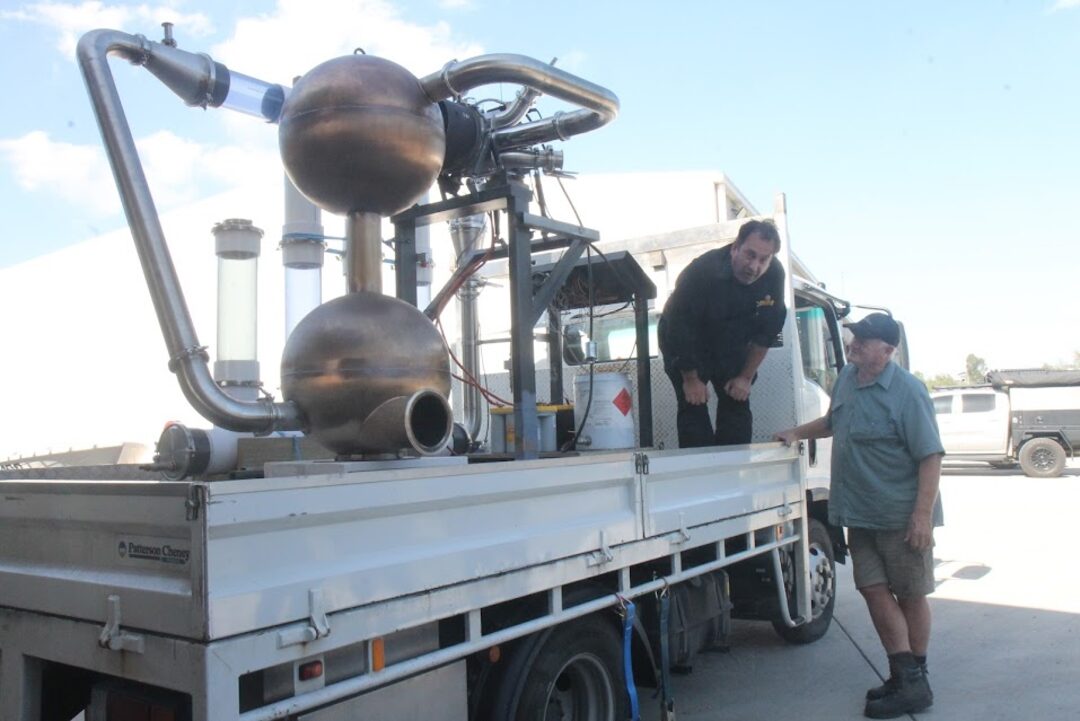
In practical terms, the retrofit:
- Captures exhaust heat (often hundreds of degrees Celsius) that would otherwise be wasted;
- Feeds exhaust gas and intake air through a water-based bubbler, where cavitation and micro-discharges are said to occur;
- Creates charged ‘bubbles’ and plasmoids, which the team claims help restructure the combustion process, and;
- Returns a cooler, more oxygen-rich stream to the engine intake or exhaust system.
The project began in conjunction with the Indian Navy, with whom Mr Bendall test-fitted the prototype to aircraft carriers, before being adapted to small petrol generators and jet engines at the Gippsland sites.
This follows on from a 2021 Express story (Thursday, May 13), in which Mr Monkhurst tested an earlier prototype on a 2006 Ford Falcon in Morwell. The Yinnar man was quoted at the time to say it “runs rings around electric vehicles”.
Speaking to him now, it’s been estimated to be around 60 per cent more economical than the current fuel setup in Australia, and as strong an alternative to battery power as well.
“Data centres want it,” Mr Monkhurst said, “so the chances of seeing it used in the new centre near Morwell are up there.”
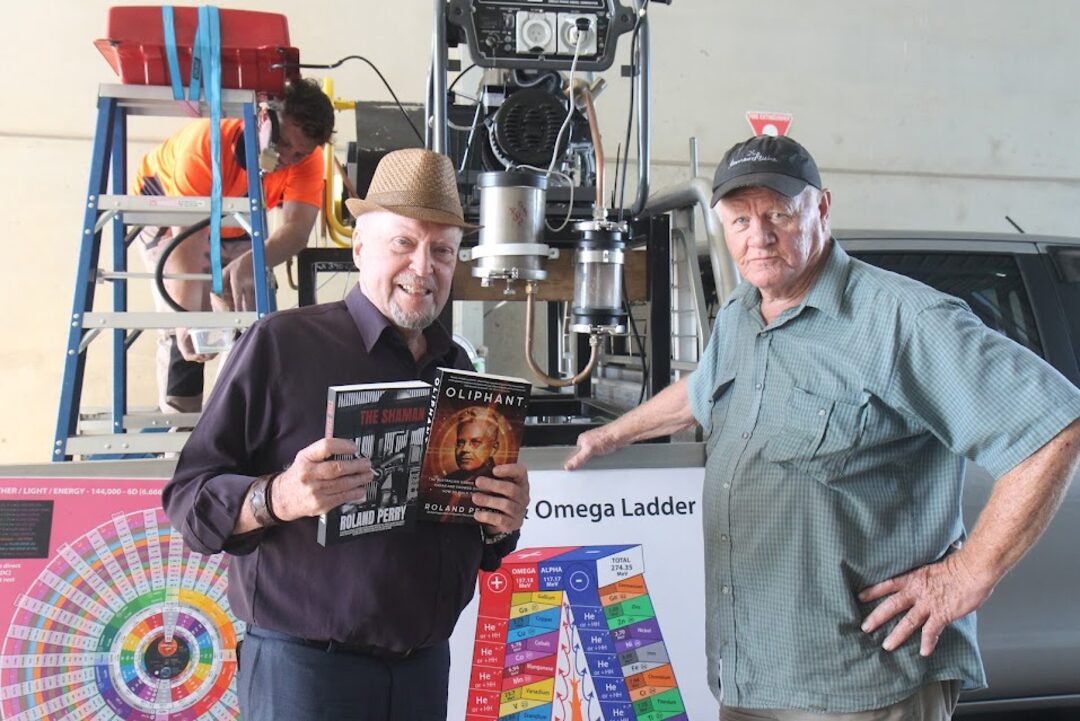
Speaking at a demonstration in Korumburra earlier this month, Mr Bendall told the Express the project began in India, but the agricultural-engineering applications in Gippsland were crucial to the progress.
At the Gippsland test locations, the team has focused on retrofitting Honda GX-series generators and heavy vehicles. The goal is to prove that the system can be added to existing equipment, rather than requiring bespoke engines.
At Korumburra, the team used a Kane EGA-5 exhaust gas analyser to compare emissions from a standard control engine and a generator fitted with the thunderstorm unit.
First, an unmodified GX 390 generator was started as a baseline. Observers were invited to view live readings showing typical levels of CO, CO₂, hydrocarbons and NOx from a small petrol engine. They then started a near–identical generator equipped with the thunderstorm generator. As the system warmed up and stabilised, the analysis screen showed oxygen levels rising towards atmospheric levels (around 20.9 per cent) and very low or near zero readings of CO and CO₂ at the sample point.
“That’s what we’re breathing now,” one presenter told the crowd. “Twenty-point-nine per cent oxygen, with no CO, no CO₂, and very little hydrocarbons.”
The demonstration drew an audible reaction from the onlookers. However, independent experts not connected with the project caution that single-site demonstrations are not a substitute for rigorous, third-party testing under controlled laboratory conditions.
While some in the team have talked about future use in cars and utes, they are quick to stress that the first major targets are large, fixed–RPM engines, such as those found in:
- Power stations;
- Mining equipment and haul trucks;
- Ferries and cargo ships, and;
- Landfill gas and biogas generators.
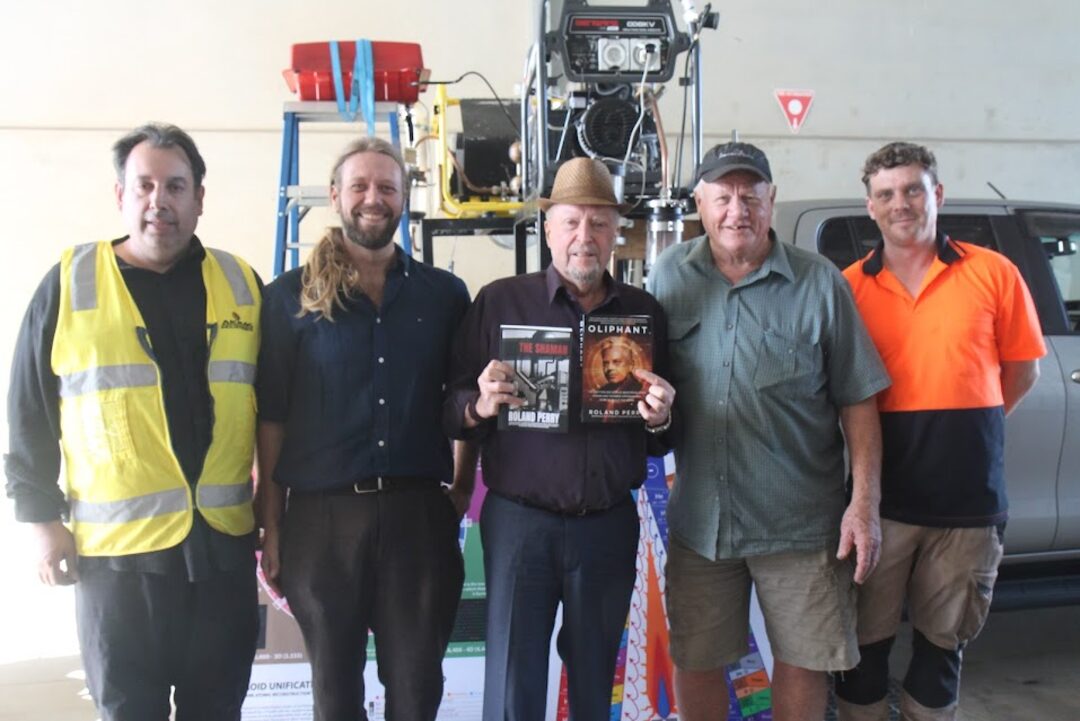
Apprentice to Mr Bendall, Jordan Collin, was enthusiastic about the project, saying that the local implications could benefit the area.
Noting that there is still three main coal stations left in operation in the Latrobe Valley, he said that the generator could save and refurbish the coal infrastructures at a fraction of a cost to alternatives, and utilise it for decades to come or “until the next real transition of power generation happens” and hit carbon neutral figures years or decades ahead of political targets.
“The thunderstorm generator can save Gippsland, save Victoria’s energy crisis and completely shift the political carbon narrative towards a solution rather than more false targets and expensive and inefective solutions,” he said.
Fixed-speed generators are mechanically simpler to tune than modern vehicles, which rely on complex engine management computers.
“It’s easy to tune a generator because the revs and the load are fixed,” one engineer said. “In a car, the airflow and the computer are constantly fighting you.”
The team said they already have projects or factories underway in the United States, United Kingdom, Thailand and India, including a large manufacturing facility in India dedicated to modular ‘plug-in’ thunderstorm units.
Indian automated manufacturing company Rockpecker are the main representatives and licensees of the technology in India – through their director of innovations, Kieron Swords, who attended a demonstration at a conference in North Carolina.
Rockpecker executives then conducted their own feasibility study on the technology and presented it to local academic, government and industry partners and contacts for further validation and collaboration.
Rockpecker are now in the process of preparing facilities for mass production of the base parts for the thunderstorm generator system, which will be distributed in India and globally, working ongoing with Indian academic, government and defence bodies.
Team members say they welcome independent academic testing, and invited universities and engineers at the Korumburra event to take away data and proposals for further study.
For now, the thunderstorm generator remains a promising but unproven addition to the long list of technologies aiming to make fossil fuel use cleaner as the world grapples with energy demand, climate pressures, and the cost of transition.
Whether the Gippsland-tested invention will find its way into local data centres, trucks, or power stations may depend less on the drama of a live demonstration and more on what future independent testing and regulators conclude.