




By BLAKE METCALF-HOLT
ONE of the most life-threatening heart attacks can now be treated at Latrobe Regional Health – a first for Gippsland.
People suffering a St-elevation myocardial infarction (STEMI) will no longer have to make the prolonged, additionally excruciating transfer via road or air ambulance, with the STEMI service now available at LRH.
A STEMI is a major heart attack where the coronary artery blocks oxygen flow to the heart’s tissue.
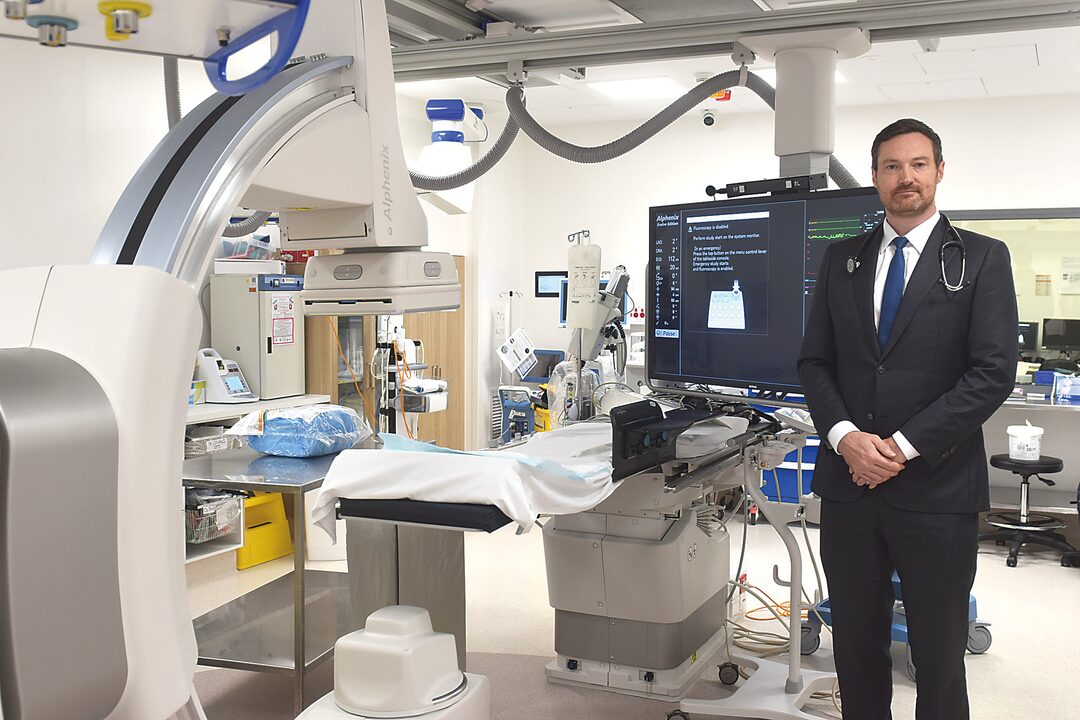
The culmination of four years of work, building up its cardiology team and the introduction of a first-of-its-kind catheterisation lab in Victoria, the most recently opened STEMI service provides rapid treatment for a heart attack which carries a 10 per cent risk of death.
To the surprise of LRH Director of Cardiology, Associate Professor Derk Pol, the Traralgon hospital had four patients come through its door in the first week of its availability.
Assoc Prof Pol explained the importance of this new service, which works to deal with a heart attack where the coronary artery blocks oxygen flow to the heart’s tissue.
“These types of heart attacks, we try and open the vessel as quickly as possible. The stemi service is specifically designed where we get patients in as quick as possible and open up the vessel as quickly as possible,” he told the Express.
He further explained how Gippslanders from Moe and Traralgon, and all the way back to Sale and Bairnsdale, would be forced to travel to Melbourne services at the Victorian Heart Hospital or the Alfred Hospital.
“That’s time when the tissue of the heart is dying, and there’s an increased risk of
death the longer we wait,” Assoc Prof Pol said.
“Minutes can mean the difference between life and death. We’ve got national targets that we have to meet … originally, it was 90 minutes and now it’s been brought down to 60 minutes, and that’s something called ‘door to balloon time’.
“So, by the time you hit the ED door, we have to have you up in the (catheterisation) lab, wired the vessel that’s occluded, and have it opened up.”
The first two cases since the STEMI service opened were done in 28 minutes and 21 minutes, well below national standards.
Since 2022, LRH has been steadfast in recruiting among its senior medical staff, which includes a majority of staff from both the Victorian Heart Hospital and the Alfred Hospital.
Last year, the cardiology unit added a new artificial intelligence catheterisation lab, which is specifically designed to support LRH cardiologist dealing with major heart attacks.
Specifically regarding the developments over the last 18 months, this was all done without additional funding at LRH, with Assoc Prof Pol saying it all came down to will.
“It’s been training the right staff and that’s why we’ve had (to) wait,” he said.
“We’ve had the cardiologist that could do it, but we’ve been training nurses to help support the unit and get the rest of the hospital ready as well.”
Assoc Prof Pol added that Gippsland has a larger percentage of heart attacks reported compared to other public health networks across the state, which comes down to higher rates of smoking, potential Type 2 diabetes and sedentary lifestyle.
The most recent data shows Gippsland with around 150 major heart attacks per year, which has dropped by about 50 since its peak in 2022.
Until now, locals did not have a cardiologist to see, contributing to the rising frequency of major heart attacks.
Alternatively, more screenings and preventative cardiology being available regionally has led to its significant decrease.
“The number of stents that we have done have probably saved heart attacks … and we’re catching people before their major heart attack, which is what we want to do,” Assoc Prof Pol explained.
“We’d rather do prevention than treatment after the fact.”
Assoc Prof Pol expects to treat around 50 patients under the new service in its initial phase.
The STEMI service is available five days a week, Monday to Friday, from 8am to 4pm, with the expectation that it will become a 24-hour service within the next few years.