




By PHILIP HOPKINS
ENERGY Australia is planning investments that will total billions of dollars and hundreds of jobs on the Yallourn W power station site after the station closes in 2028.
Dan Nugent, Energy Australia’s Trading and Transition Executive, foreshadowed billions of dollars in investment and thousands of jobs as the repurposed Yallourn power station site – dubbed the Yallourn Energy Security Precinct – evolved.
Mr Nugent said however it was too early to assess what the total cost of the project would be.
“What we are planning at Yallourn is to transition the site into a future site for power generation and co-located data centres,” he told the Express in an interview.
“Combine those two – you are speaking of billions of investment, it’s quite significant.”
With the Yallourn power station retirement due in mid-2028, Mr Nugent said the company was building replacement capacity through the Wooreen battery in the Latrobe Valley.
“The Yallourn site offers an opportunity for incremental generation and power, along with data centres. We will be able to target incremental power generation by 2030, and certainly that will align with data centre alignments as well,” he said.
Mr Nugent said the proposed 300MW gas power station was neither just a peak load or base load station, but something in between.
“We are looking at CCGT – combined cycle gas-turbine plant – it’s a little bit more efficient as part of any data centre. We would package up new renewable energy along with firming power,” he said.
“You need back-up firming for renewables – battery storage is good for that. There is an opportunity for large-scale battery storage on the site. Storage is still constrained by the duration of the battery – two or four-hour battery, that’s its limitation – that’s why we see gas playing a pretty critical role as back-up.”
Mr Nugent acknowledged that data centres bring big loads on the power system.
“People are concerned what that might mean for them, their bills. We are bringing a data centre, huge investment and jobs, but also adding incremental power to the grid, so it’s not taking away power from the grid,” he said.
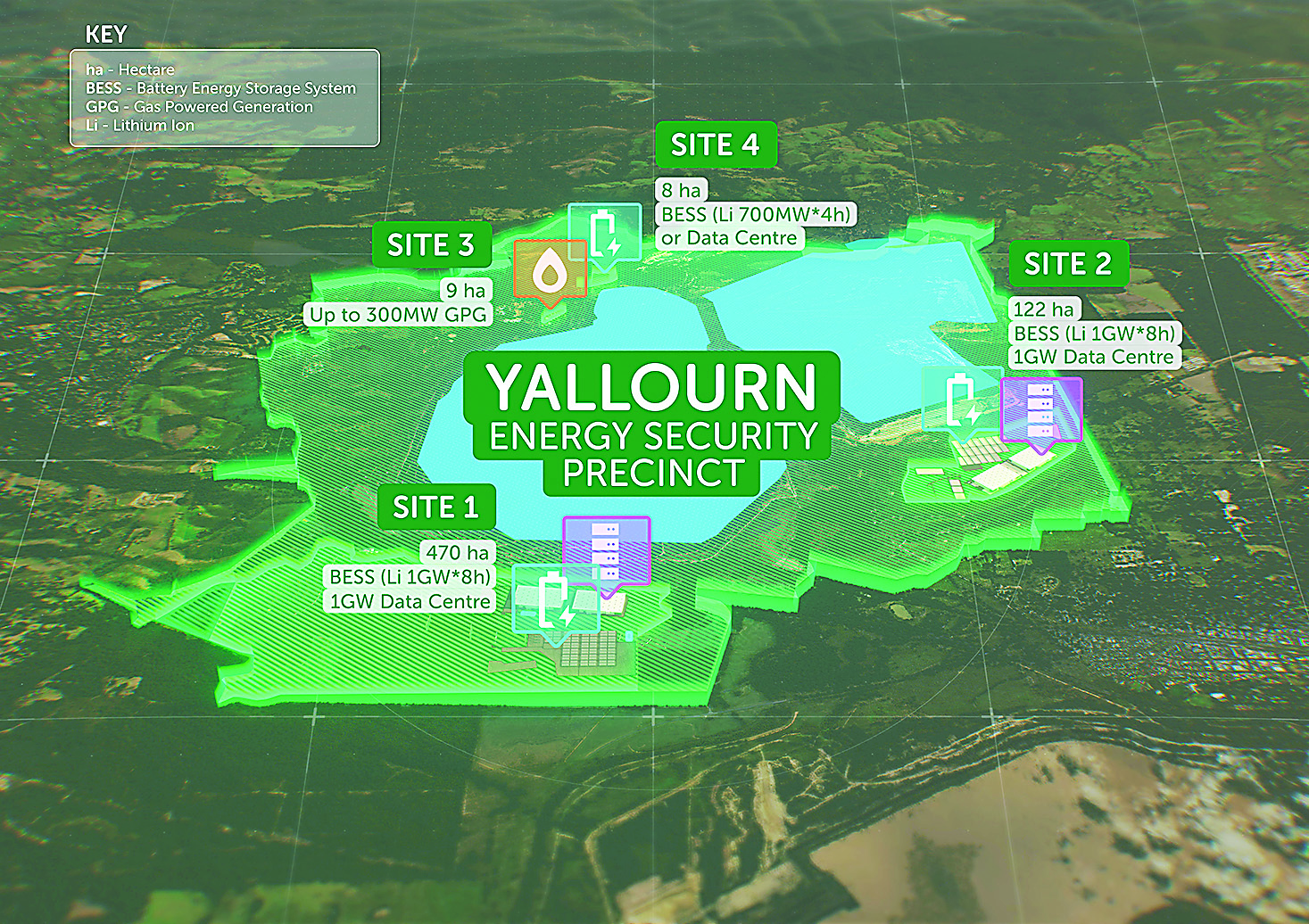
Energy Australia’s plans envisage up to 2.7GW of utility-scale battery storage – almost eight times the size of the Wooreen battery being built near the Jeeralang gas turbine station.
“That’s the potential for the site. The right mix of technologies will continue to evolve. We are really conscious of, and aware that people are concerned with data centres and what that means for how power hungry they are. We are focused on incremental power coming onto the grid as we bring on this data centre load,” he said.
“It’s a mixture – a combination of renewable energy, battery storage and gas-fired generation. Exactly where that mix lands is still under way.”
Where will the gas come from?
Mr Nugent said there are still gas opportunities upstream in Victoria.
“There is no question, as a state, we need to do more work to access more of these gas reservoirs,” he said.
“We are mindful that the federal government has released its gas reservation policy. That has implications for gas availability from the north, but what’s important is the ability to transport that gas from north to south, we have been advocating for that, but you still need to transport it to the south.”
There were pipeline issues and other challenges “we are mindful of”, he said.
Gasifying the coal had been suggested, but “we have looked at that, and do not think it’s the most economic solution”.
Mr Nugent said a combination of outcomes was better – more upstream investment in Victoria and southern regions – “there is still potential gas there” – and the import terminal at Port Kembla, which could be considered an effective pipeline.
“We don’t want billions of dollars spent on a new pipeline. We think there are alternatives. Once you get the gas from Queensland to Port Kembla, it is connected to the southern network,” he said.
Mr Nugent said the importance of gas’s role for data centres and the energy system – not as base load on a daily basis, but as back-up and insurance, was shown last week in Victoria.
“There was very little wind – gas has played a meaningful role this week (speaking on Friday). Fast forward 15 years with less coal base load is why gas is so critical to step in and play that backup role,” he said.
Mr Nugent said data centres would create thousands of jobs in construction.

When in five to six years there was a one-plus GW scale data centre, that would create 800 long-term jobs – “more than what we have at Yallourn”.
“That really attracts us to capture opportunities. We are mindful of the legacy of power generation in the region and the employment opportunities it has provided,” he said.
There would be opportunities for the current workforce through retraining.
“That will be a big focus in talks with workers in the next two years,” he said.
Mr Nugent said there was a perception that data centres were water hungry.
“There are different designs of data centres, and some designs do use more water than others, but there are closed loop systems that don’t have a significant drain of water,” he said.
“But it’s also important to recognise that with Yallourn, there are some bulk water arrangements through power generation, so we think this is a natural transition. There is access to waters and through existing infrastructure connection facilities. There is also obviously plenty of land.”
Importantly, Mr Nugent said the data centres at Yallourn did not require new transmission infrastructure; it had been a power generation site for more than 50 years.
“The site is well suited, and the Victorian government is aligned with that. From a social licence perspective, it is as good a place as any for data centre load and an important investment for the region,” he said.
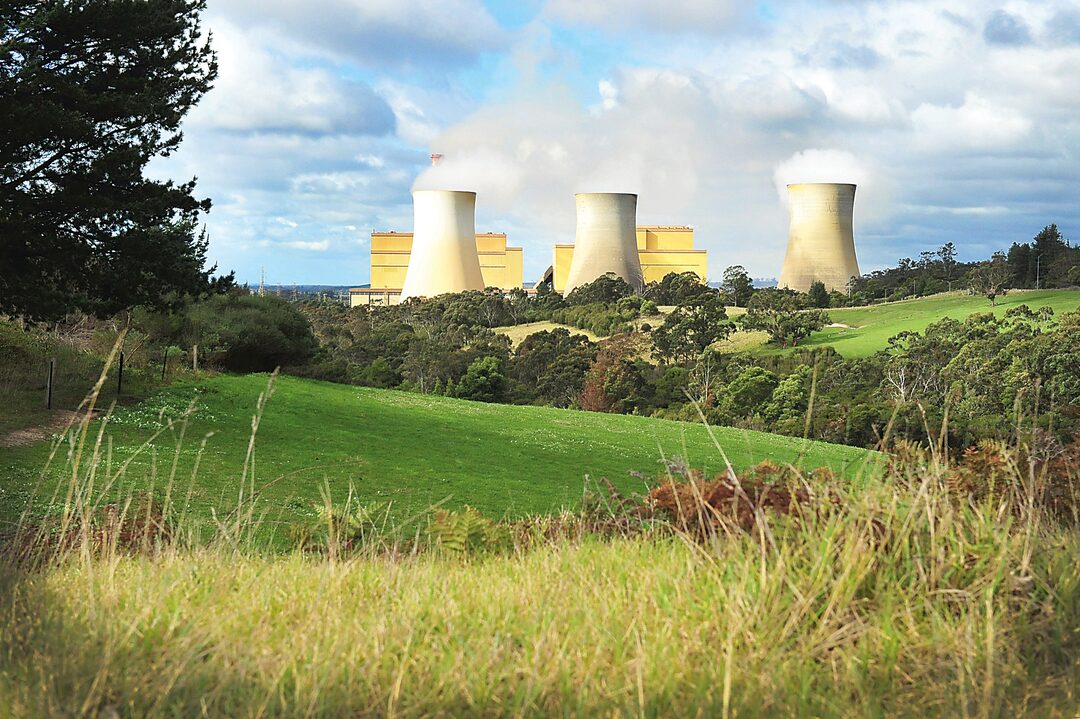
The existing power station and cooling towers would make way for the new developments.
“The repurposing is around the transmission connection; to talk about a 1GW data centre – $20b of investment – it’s all brand new kit, quite intricate. What they need is access to infrastructure – the ability to connect to the grid, but also add incremental power to the grid. There will be no net drain on the Victorian energy system,” he said.
Mr Nugent said the new precinct was also tied up with the environmental effects statement to rehabilitate the Yallourn mine.
“Multiple strings of that approval pathway are happening now. We have a big mine rehabilitation exercise in front of us – not just to rehabilitate a mine, but to turn this site into not a liability but something really important, an asset for the region for many years to come,” he said.
Mr Nugent said renewables were the cheapest form of power.
Battery storage was coming down in cost and came with a 20-year guarantee, he said.