


By PHILIP HOPKINS
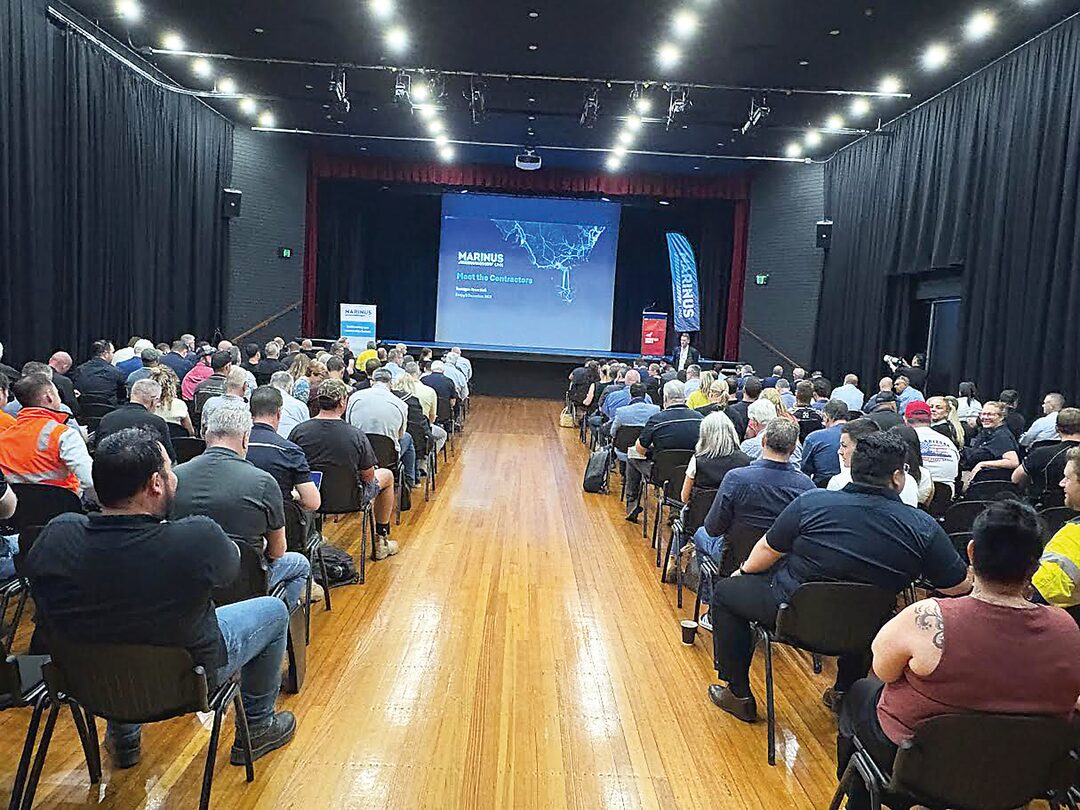
A PACKED Traralgon Town Hall last Friday sent a big message: large numbers of Latrobe Valley and Gippsland businesses want to be part of the action for the construction of Marinus Link, the power and communications cable that will be built between Victoria and Tasmania.
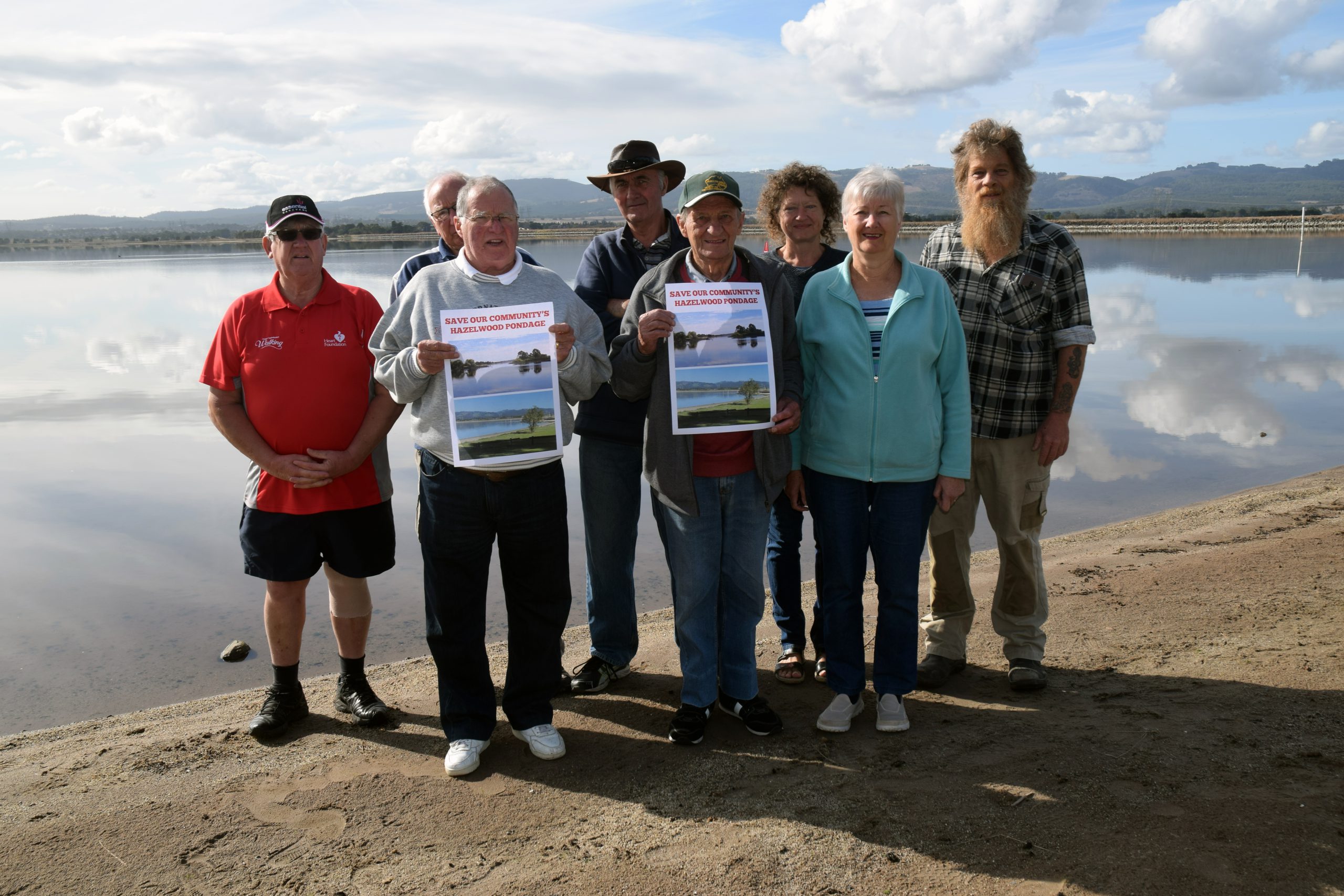
The cable will go under Bass Strait, coming ashore at Waratah Bay and travelling through the South Gippsland countryside, entering the Latrobe Valley near Mirboo North and connecting to the power grid at the former Hazelwood power station site.
The Project Director for Marinus Link, Mike Carter, said it was fantastic to see such a strong turnout from local businesses, industry groups and community representatives.
“Your active interest and involvement are absolutely critical to helping us maximise the benefits of Marinus Link to the local economy,” he told the gathering.
A similar meeting was held in Leongatha on Thursday (December 3).
The lead contractors for the project – Hitachi Energy, Prysmian, and the TasVic Greenlink joint venture – gave presentations about their role in Marinus Link and the skills they were looking for from Gippsland businesses.
“Early works are planned to start in March next year,” Mr Carter said, emphasising that the meeting was the chance for businesses to apply for the work.
He made “a special call out” to the Industry Capability Network team in Gippsland, headed by Colin Young.
“They have been our key partners in local industry engagement and to make sure all of your details reach the right people at the right time,” he said.
Mr Carter said Marinus Link aimed to combine Victoria’s wind and oversupply of daytime solar with Tasmania’s flexible hydropower and geographically diverse wind.
“During the days when Victoria has an oversupply of renewables, Tasmania can import this lower-cost energy and conserve its hydro storage. Then, in the evening, when demand peaks in Victoria, Tasmania can export that stored hydro energy, providing value to both regions,” he said.
“For Victoria, hydropower then displaces higher-priced peaking alternatives like gas, pushing down wholesale energy prices with a clean alternative.”
Mr Carter said the capability in Gippsland was strong.
“We want to make sure you’re all well-placed to compete for upcoming work packages. We know our lead contractors are already engaging with local businesses, and we’re seeing a real depth of capability across Gippsland and North West Tasmania,” he said.
“We have a strong focus on maximising local content. However, there will be areas where local capacity can’t meet every requirement, and some elements of the works will need to be sourced more broadly. That’s the reality of a project of this scale and technology.
“We are ensuring that we run an open, transparent process where every local business has equal access to information, and equal opportunity to put themselves forward, so together we can maximise the benefits of Marinus Link for the local economy.”
Mr Carter said it had been a monumental year for Marinus Link, with several major approvals, decisions and contracts now locked in.
Highlights included:
- Positive final investment decisions in August from the shareholders – the Commonwealth, Tasmania and Victoria, followed by financial close with the debt provider – the Clean Energy Finance Corporation;
- Together, these commitments completed the financing needs for Stage 1 of Marinus Link. This enabled the company to give notices to proceed to the technology suppliers – Prysmian for the cables and Hitachi Energy for the converters.;
- Primary approvals under both Victorian and Commonwealth legislation, which were both major landmarks for the project;
- The permit for the shore-crossing and submarine cables, with the end of the process near for the converter station permit, both under Tasmanian legislation;
- Strengthening the relationship with Jacobs through the formation of an Integrated Delivery Team, ramping up resources and systems in preparation for construction;
- Announcement of the preferred lead contractor for the civil and construction works – the TasVic Greenlink JV, a joint venture between DT Infrastructure and Samsung C&T, and;
- The final milestones ahead are the final permits and the Australian Energy Regulator’s final revenue determination, expected in February.