


By PHILIP HOPKINS
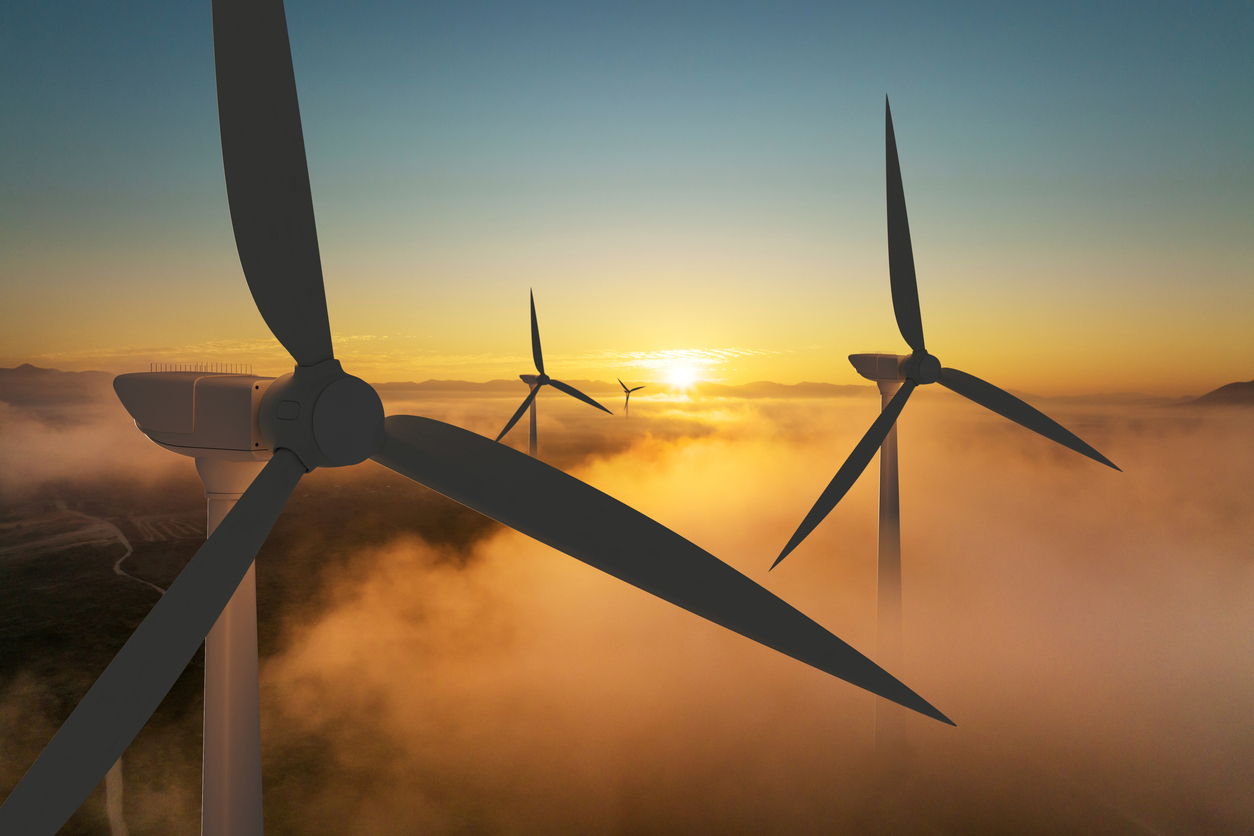
ENERGY giant AGL, which owns the Loy Yang A power station, has abandoned its proposed multibillion-dollar offshore wind project in Gippsland, a move that casts fresh doubt on the economics of an industry that is central to the Allan government’s energy plans, the Australian Financial Review reported on the weekend.
The AGL-backed consortium behind the proposed 2.5-gigawatt Gippsland Skies offshore wind project has given up its licence to develop the project, citing poor economic prospects relative to other forms of renewables in its development portfolio.
It is the third Gippsland offshore wind project to collapse this year.
The pullback comes less than a week after the state Auditor-General, Andrew Greaves, found Victoria would not meet its near-term offshore wind targets, in a damning report into the government’s management of the energy transition.
The report prompted Morwell Nationals MP, Martin Cameron, to call for the resignation of the Minister for Energy and Climate Change, Lily D’Ambrosio.
Victorian opposition energy spokesman, David Davis, said AGL’s decision was a “body blow” to the state government’s offshore wind plans.
“Jacinta Allan and Labor’s mismanagement of energy in Victoria is shambolic,” he said.
“Supply is less secure [and] energy prices have surged, hitting businesses and families for six.”
Under the state government’s energy plan, Victoria has a target of two gigawatts of offshore wind generation by 2032, which underpins its target of 95 per cent renewable energy by 2035, when Loy Yang A is scheduled to close. Yallourn W closes in 2028, while LoyYang B has an open-ended closure date.
“Gippsland Skies has made the decision to discontinue feasibility studies for a potential offshore wind project off the coast of Gippsland,” AGL said in a statement.
“AGL will prioritise options in its development pipeline of onshore wind, batteries, pumped hydro and gas firming projects, including an expectation of taking a final investment decision on 900 megawatts of grid-scale batteries in the next 12 to 18 months.”
The pullback was a sharp turnaround for AGL, which previously pushed the project’s potential to power more than 1.4 million Victorian homes – or 17 per cent of the state’s energy demand – as well as provide replacement power for the company’s Loy Yang coal power station.
Gippsland Skies is the third project to collapse in Victoria after receiving approvals to conduct feasibility studies, with developments backed by BlueFloat Energy and RWE handing back their licences earlier this year.
Another backed by Origin Energy recently put its development on ice and cut back staff numbers.
The Victorian government is a strong backer of the industry, but has been locked in a stand-off with the federal government about how to fund the electricity offtake contracts that are needed to give the projects enough certainty to begin construction, the AFR said.
Earlier this year, Ms D’Ambrosio was forced to delay a planned offtake auction slated for September after failing to secure a guarantee from the federal government that it would help fund it. An updated timeline is expected at the end of the year.
In an attempt to keep projects going through the impasse, the Albanese government lowered expensive fees, thought to exceed $1 million per year, for feasibility licence holders.
Labor originally awarded 12 feasibility licences to offshore wind projects in the region. The most advanced is Southerly Ten’s Star of the South, which is part-way through its own attempt to secure environmental approvals under federal laws.
Ms D’Ambrosio said offshore wind was “important to the nation’s energy security and pushing down energy bills for Victorian families.”
Gippsland is widely acknowledged as the best location for offshore wind in Australia due to its shallow waters, good wind conditions, nearby grid connections and a supportive state government.
The abandonment of the offshore wind farm comes after AGL’s biggest shareholder, software billionaire Mike Cannon-Brookes, voted against the company’s climate plan, at the company’s annual meeting.
Grok Ventures, which owns about 10.4 per cent of AGL, strongly criticised the updated Climate Transition Action Plan at AGL’s annual meeting as an “only incremental” increase in ambition from the 2022 version.
Grok said it was out of step with Paris climate goals, and urged the board to take stronger steps to cut emissions and boost renewable energy.
The opposition from Grok made up the majority of the roughly 30 per cent of AGL shareholders voting by proxy that opposed the climate transition plan. The 2022 climate plan, under which Loy Yang A’s closure was brought forward to 2035, was opposed by 30.69 per cent of voting shareholders.
Grok, which forced AGL to drop its 2022 demerger plan and brought about an overhaul of the board and senior executives, urged the company to act faster on its climate goals.
AGL said in a statement that it was understandable there were various perspectives on the climate transition plan given its complexity.
“Our focus continues to be on the execution and delivery of our strategy of which we have made significant progress over the last three years,” the company statement said.
Within days of the AGL annual meeting, the federal government approved a $2 billion wind farm near Deniliquin co-owned by AGL. The Pottinger Wind Farm, a joint venture between AGL and Someva Renewables, an Australian renewables energy company, is located between Hay and Deniliquin. It is proposed to have 247 wind turbines across 1069 hectares that the government says at full capacity will generate enough energy to power about 590,000 homes.