


By GIL TIPPING
WHEN I arrived in Traralgon with a young family in 1974, the Valley was humming with barely contained excitement.
A new power station, at a place called Loy Yang, south of Traralgon, had been announced, with construction to commence later in the decade. It was the latest in a long chain of major construction projects for the Valley (mainly power stations) which looked likely to continue far into the future.
Because of course, the Latrobe Valley was where the vast majority of Victoria’s electricity was produced, something the locals were very proud of. They knew from experience that Loy Yang would bring with it another economic boom, and it put a spring in everyone’s step.
Geologists of earlier times had discovered extensive seams of brown coal that lay quite close to the surface under the Valley floor.
The coal could be mined, then burned to heat water, producing steam, driving giant turbines to spin and produce electricity – lots of it.
By the time of my arrival, all this had been going on for half-a-century, having been managed into existence by the legendary war hero Sir John Monash, as head of the original SEC.
Power stations had been built at Yallourn (seven stages), Morwell, Hazelwood, and now Loy Yang was coming down the line.
I remember local real estate agent Russ Billingsley excitedly showing me a map which must have come from the SEC, showing four or five future power stations dotted round the Valley, all with names, which were planned long into the future. One I remember was called Bennett’s Creek.
Unending prosperity stretched ahead, life in the Valley was good, but it was all about to change.
In a short few years, all talk of future coal fired power stations would cease; Russ Billingsley’s map would be quietly shuffled away into a drawer somewhere.
So what happened?
In the 1970’s, from among the world science community, the term “global warming” emerged, and gradually started to seep its way into our consciousness.
This global warming was not good, the scientists said, and it’s being caused by us; homo sapiens.
Further, it can be remedied, but only by us.
It is caused, the scientists told us, by we humans overindulging our deeply ingrained practice of burning fossil fuels; wood, peat, oil, coal and gas, producing energy to power the world, supporting the rising prosperity of our existence.
All this burning releases carbon dioxide into the atmosphere, where it collects and causes accelerated heating beyond existing cycles.
If the scientists were right, the extra heat would completely upend just about every aspect of human existence, not least the closure of many large, lucrative, long term industries, and it is no surprise that, from the first emergence of the term “global warming” to this day, the scientists and their contentions have been fiercely repudiated.
To me, the issue of global warming belongs in the realm of physics, but it has sadly descended into a raging, world-wide argument hopelessly mired in politics, in which anyone, regardless of scientific background, may have a view.
So what was the remedy the scientists spoke of?
Well, they said, we need to find other ways of doing all the things we now do by burning fossil fuels. Anything we do needs to be sustainable, something which doesn’t create ongoing problems.
I must say here that beyond making rotten egg gas and dissecting rats in Year 10 at Camberwell High School, I have no science background whatsoever, so I’m not going to venture into the debate.
I must also say I have become attached to the idea of leaving a healthy and thriving planet for the generations who follow us, a purpose which I have not found to be controversial, in fact, it is widely shared. Within this, the idea
and practice of sustainability sits naturally.
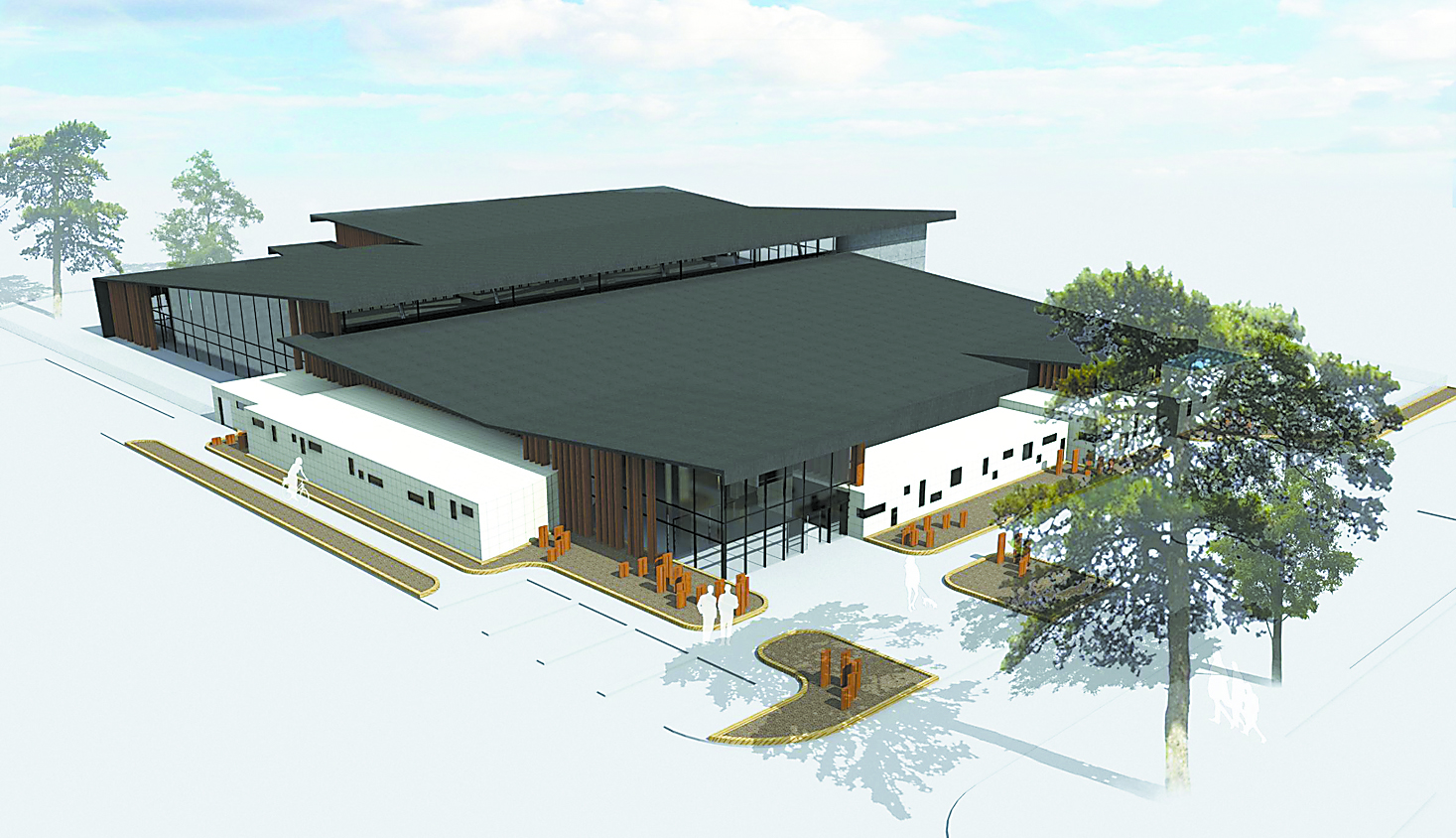
I became interested in the Gippsland Regional Aquatic Centre (GRAC) in Traralgon, where, I had heard, the pools are heated by underground water.
I approached Latrobe City Council to find out more, and, to my pleasant surprise, I discovered that when it comes to sustainability, Latrobe is actively involved, with many projects planned, under construction, or complete and functioning.
Designed with sustainability in mind, GRAC is the first facility of its kind in Victoria to use water from an underground aquifer to warm the pool water.
Groundwater of about 68 degrees celcius is pumped more than 600 metres to the surface, passes through a heat exchanger, which draws off its heat to the pool water, then back down to the aquifer with little effect on the aquifer temperature.
The heat obtained also supplies the facility’s heating system; on the bleakest of midwinter days, you can walk around the centre in a t-shirt.
This project alone saves council 22,000 GJ of gas, more than $600,000 annually, reducing carbon emission by about 840 tonnes, and it’s all from a sustainable resource that was sitting there waiting to be used.
At the landfill station in Hyland Way, Traralgon, known locally as the ‘tip’, there is a council-owned and operated renewable energy project.
Biogas (methane) is captured from wells bored into the landfill. It is then cleared and used as fuel for an electricity generator, which offsets the electricity council consumes. The generator produces up to 4000 MWh electricity per year reducing electricity bills by $300,000 each year.
Council has also completed “a major light replacement project, installing about 2500 high performing and energy efficient streetlights in current lighting infrastructure across the region. Not only does this save ratepayer money and provide better visibility at night, but is also reduces greenhouse gases by 900 tonnes every year, saving $260,000 in electricity, over $100,000 in maintenance, and 950,000 kWh of electricity each year.”
Latrobe City also has an ongoing project installing solar panels and batteries on their buildings across the Valley, including leisure centres, GRAC, Moe Outdoor Pool, Churchill Hub, Kernot Hall, and the Gippsland Indoor Regional Sports Stadium.
Currently, about 1200KW of electric power from solar is produced, which will increase by 680KW by the end of this financial year, up to nearly 2MW when the project is completed. When all projects are complete, solar will generate around two million kWh each year.
The installation of 1100kWH of battery storage this financial year will further cut costs by time-shifting solar energy to evening peaks, saving around more than $45,000 annually.
Council are committed to achieving net zero by 2035, with a 10 year project plan in the Sustainability Action Plan which was endorsed by council, and has targets including:
Generating 100 per cent of our day time electricity needs from renewable sources by 2028;
Electrification of all Latrobe City facilities to remove reliance on natural gas (excluding aquatic centres) by 2030;
Transition council fleet to electric vehicles by 2035, and ;
Electrify Latrobe City Council aquatic centres if required by 2040.
I was nothing short of delighted and amazed at finding all this on council’s website.
It gives me hope.
My youngest (of seven) grandchild has just turned 16, and my fondest hope is that when, in 2088, he reaches my current age of 79, the planet is in good shape for him.
I want this for everyone’s grandchildren, for all humanity, and all the living things going along.
Learning to live sustainably seems to offer the best chance of this being achieved.