



By AIDAN KNIGHT
VICTORIA’S butchery sector is witnessing a rise in “micro-meatworks,” as small and medium-scale farmers look to slaughter and process their own livestock to cut costs, boost market access and shorten the paddock-to-plate chain.
The state government moved to support the trend in August, announcing it would lift planning requirements for purpose-built on-farm slaughter facilities.
Farmers wanting to construct a micro abattoir will no longer need a planning permit – a change designed to remove a major barrier to compliance and encourage producers to move away from makeshift or unsuitable buildings.
Supporters argue the model gives farmers greater control, keeps more profits local and strengthens regional “food sovereignty.”
Industry figures however say the practical realities make it far from simple.
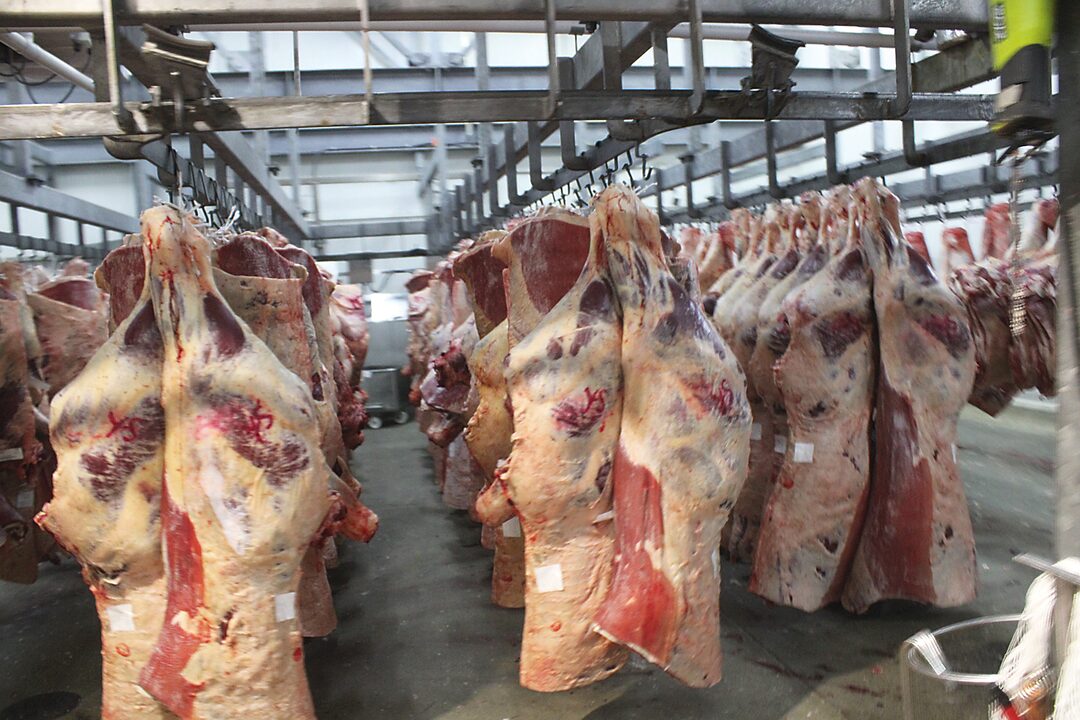
Robert Radford, owner of Radford’s Meats Warragul – one of Victoria’s most decorated beef and lamb abattoirs – believes micro-meatworks face significant hurdles.
“No one wants them on their back doorstep,” he said.
“They’re going to have trouble getting meat inspectors. They’re going to have trouble with animal welfare because they’ve got to restrain the animal prior to slaughter, and carry out proper procedure with effluent and waste material, which also require EPA certification”.
Mr Radford said inspectors are unlikely to travel to farms to oversee the slaughter of only a few animals at a time, calling the economic model “unfeasible without the owner-operator becoming a hands-on slaughterman, butcher and meat inspector.”
He believes the only viable alternative for small producers is direct-to-consumer online sales, where “farmers direct” meat packs are delivered to customers going through a registered meatworks or butcher shop
“If someone gets food poisoning and they trace it back to one of these micro abattoirs, the whole industry will suffer,” Mr Radford said.
One of the most notable in the race for micro meatworks, prior to the recently introduced legislation, has been Jonai Farms & Meatsmiths, who specialise in heritage breed pigs and shorthorn cattle in Eganstown, Victoria.
While not exactly a small operation, Jonai gained some notoriety in the meat industry by raising money to build a vehicle-based abattoir at $150,000. This was driven by the vision to “feed local communities rather than banks and shareholders”. The “vehicle-based” design for Jonai Farms’ micro-abattoir isn’t about being a mobile butcher in the classic sense (driving from farm to farm). Instead, it’s a regulatory and practical workaround.
Mobile butchers are not an uncommon occurrence in regional areas, as pointed out to the Express by Latrobe City Jeeralang Ward Councillor, Joanne Campbell.
“What I’m worried about is the health inspectors being able to maintain proper compliance,” she said.
Cr Campbell grew up within the meat industry, similar to Mr Radford, through her family’s business – Campbells Quality Meats Traralgon.

It’s generally easier to ensure compliance for mobile butchers than for farmers running their own micro-meatworks, because mobile units are standardised, centrally regulated, and operate under existing licensing frameworks, whereas a farmer-run facility requires full abattoir-level compliance, infrastructure, and oversight.
Mobile slaughter units are typically licensed as a single entity, with one set of approvals covering multiple farms. This means regulators only need to audit and certify the mobile operator, not every individual farm.
Farmers must meet the same standards as commercial abattoirs – including structural design, waste disposal, water quality, and HACCP food safety systems.
Cr Campbell mirrors Mr Radford’s view, and doesn’t see a Victoria where inspectors and regulators happily trek to every individual farm that may theoretically become a micro meatworks, for what is (in the scheme of things), a minuscule amount of production (compared to the current abattoirs established).
Building and maintaining compliant infrastructure is expensive, often prohibitive for small–scale producers.
While Cr Campbell supports the concept of “keeping it local” that the micro concept provides a township if run successfully, she sees that mobile butchers consolidate compliance into a single, professional service that regulators can monitor efficiently.
In contrast, farmer-run micro meatworks decentralise responsibility, requiring every farm to meet complex abattoir standards individually – making oversight far more difficult and resource-intensive.
While small producers explore micro-meatworks, the opposite end of the industry is also shifting.
O’Connor’s Beef – a major Victorian exporter supplying more than 30 countries including the US, Japan, the EU, Southeast Asia and the Middle East – has been put on the market.
The family business, started in East Gippsland in 1930 and now run by brothers Tim and Matt O’Connor, is expected to fetch between $300 to $400 million.
The Australian Financial Review published details on a prospective buyer in Chestnut, an Indonesian-owned office with investments in Australian pork product and biscuit manufacturers. Chestnut’s bid was not accepted, leaving O’Connor’s with an uncertain foreseeable future.
As farmers weigh the appeal of hyper-local processing against steep regulatory demands, Victoria’s meat landscape is set for change at both the smallest and largest scales.
Victorian Farmers Federation Livestock President, Scott Young said the organisation will be monitoring the reforms closely, stressing that any shift toward micro-meatworks must uphold the same food safety, animal welfare and traceability standards expected of traditional abattoirs.
Whether micro-meatworks can overcome the hurdles of inspection, infrastructure and safety – or remain a niche aspiration – will help determine how power and production are shared across the state’s meat industry in the years ahead.