


By KATRINA BRANDON
RECENT bushfires have highlighted the importance of planning ahead.
While there are no localised fires in the Latrobe Valley region, authorities warn that people should be prepared if one occurs nearby and should know the Fire Danger Ratings (FDR) in hot, dry conditions.
From January 7 to January 12, a Total Fire Ban (TFB) was imposed throughout the state.
Despite it being a TFB, two fires were lit at campgrounds near Walhalla.
“The days of excuses of ‘I didn’t know it was a Total Fire Ban (TFB)’ are long gone,'” Erica and District Fire Brigade Captain Russell Wright told the Express.
“If people are unaware of the fire danger rating, make sure they download the Vic Emergency app to stay up to date. It’s people’s responsibility to stay informed about what’s happening around them.
“We have lots of signs … warnings are promoted heavily on social media and throughout mainstream media. We have apps and everything that forecast this stuff.”
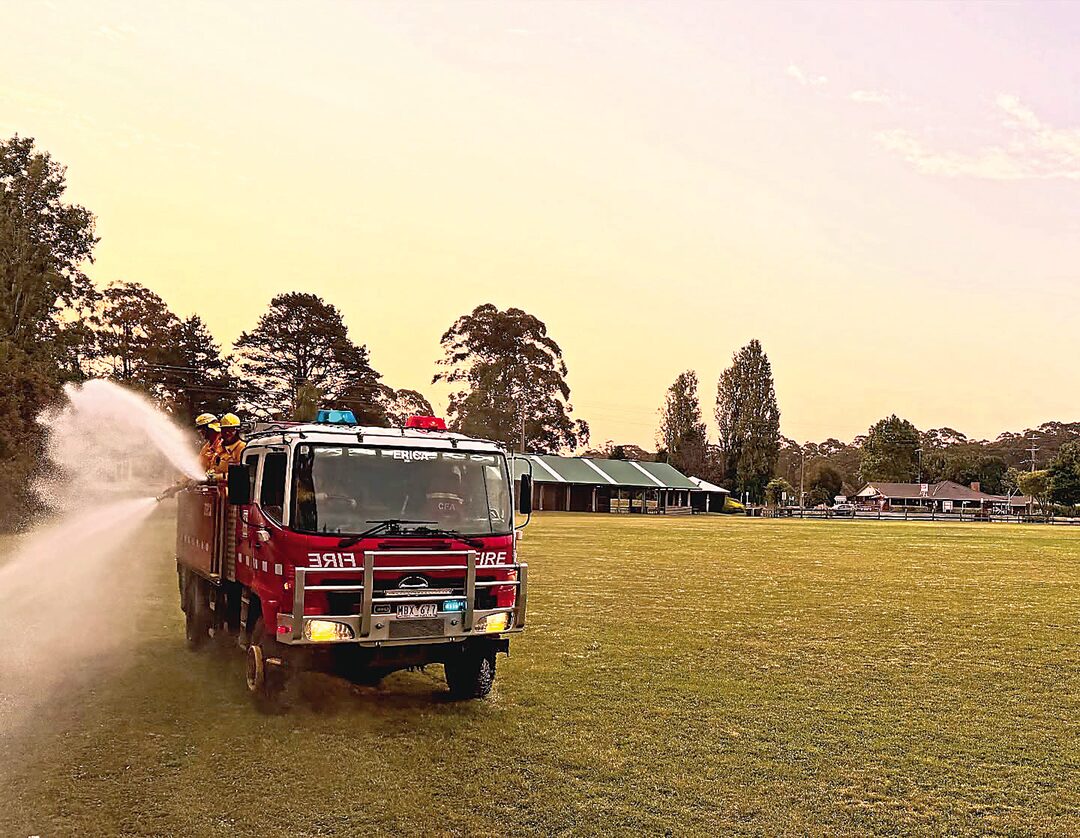
The Erica and District Fire Brigade, celebrating its 80th anniversary this year, comprises 20 members who work in the bush rather than in town areas. The team generally covers events such as campfires on TFB days, motor-vehicle incidents, and large-scale bushfires.
Working in rugged terrain, the brigade has collaborated with neighbouring services to prepare for the season, with all hands on deck on extreme-risk days.
“We work with our neighbouring brigades to ensure that we’re all prepared,” Capt Wright said.
“We know sort of the availability of each brigade and their members’ availability, so that we can prepare in response to our neighbours’ preparations as well.
“We prepare days in advance. With advanced forecasting, we can start preparing a week ahead, when we can see what the weather is likely to do, and prepare our team and ensure everything’s ready and operational to respond.
“We’re very fortunate in that we have our neighbouring agencies, Forest Fire Management Victoria, DEECA and Melbourne Water in proximity to us, and so we always can rely on them to support us on those hot days.”
Keeping an eye on forecasts and conditions, Capt Wright said is crucial. While conditions can change quickly, travellers are urged to have plans to stay safe in case “things go south”.
Locals are also urged to monitor conditions, ensure they have plans in place, and make their properties fire-ready in case there is a sweep through. Capt Wright advised that people should have multiple plans in place and that everyone needs to be aware of them.
“People should have a bushfire plan. A plan in your head is not a plan. It’s a plan for failure,” he said.
“A well-written, well-rehearsed practice and revised bushfire plan is what we’re advocating. Everyone should have more than one plan. Have a backup plan for when people are home and when they are not, and have a plan in case you are trapped and unable to leave, such as road closures that prevent you from leaving the area.
“The best plan is to leave early, (such as) on a day of extreme or catastrophic fire danger. You know, we obviously advocate that people leave early, either the night before or very early in the morning; leaving it to the last minute is very dangerous. Fires aren’t predictable, particularly in the rugged landscape that we live in.”
When preparing your property, he also said that people should make sure that the grass is cut, make sure that weeds are down, cut overhead branches from homes, and cut away shrubs and bushes from the side of the house to help give you the best chance of survival in the event of a fire.
In addition to environmental clippings, it is crucial to reduce or store anything that could add to the fuel load, such as outdoor furniture, doormats, wood and gas bottles.
On TFB days, activities such as lawn mowing and other mechanical work should be avoided due to the increased risk.
For more information, go to: https://www.cfa.vic.gov.au/warnings-restrictions/fire-bans-ratings-and-restrictions/