


By BLAKE METCALF-HOLT, KATRINA BRANDON AND PEACE IJIYERA
TO continue teaching the next generations in Victoria, teachers across the state last week rallied for change.
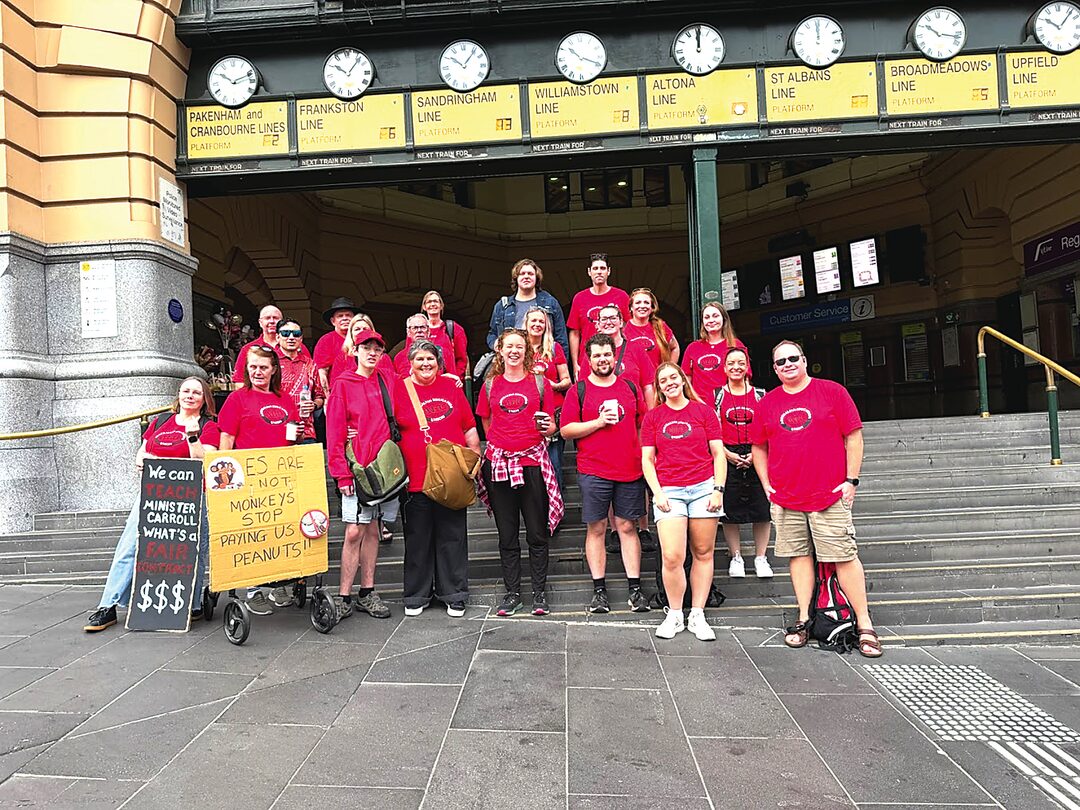
Joining in on state-wide action, schools from around the Latrobe Valley set off to Melbourne to share their voices for better pay and work conditions.
Forming a red sea, passionate Victorian teachers gathered outside Victorian Trades Hall, demanding a 35 per cent pay increase over four years from the Allan government.
An offer of 17 per cent was presented, but was swiftly rejected by teachers – marking the first time in 13 years Victorian teachers went on strike.
The Department of Education was forced to scramble, ensuring that students still arriving at school last Tuesday (March 24) would be under supervision.
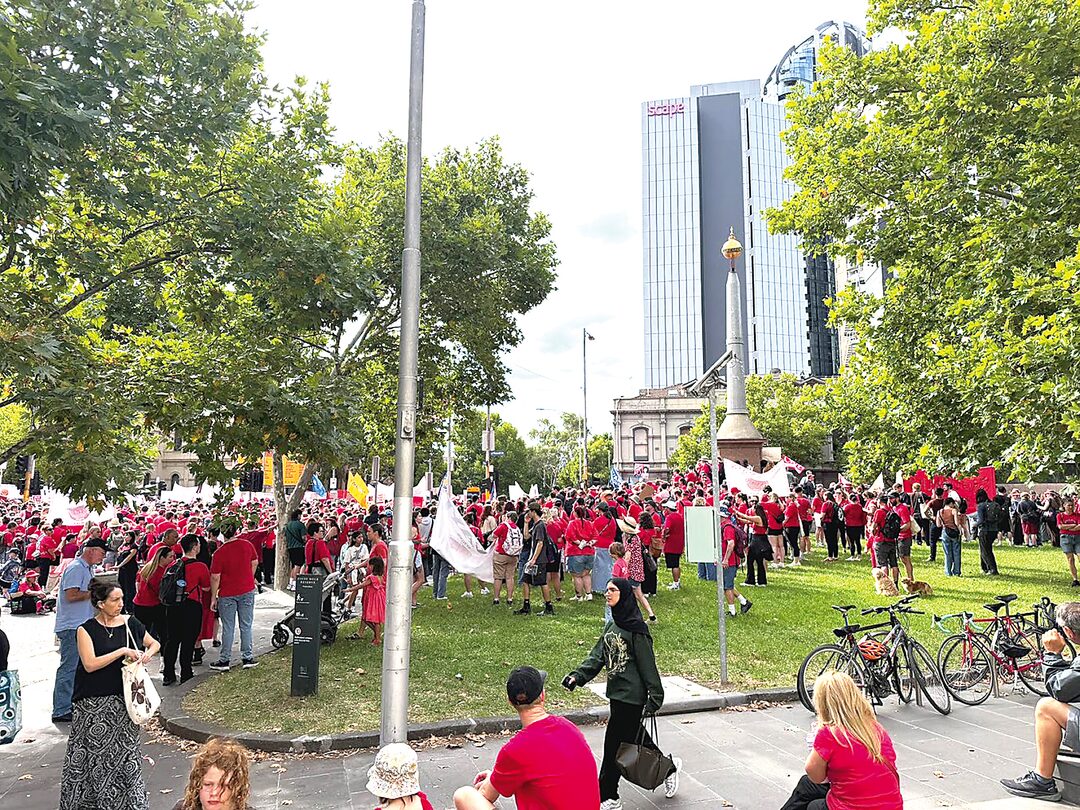
The Express understands that during the course of the day’s strikes, many local schools did not feel they were adequately supported to see that schools remained open, as promised by Education Minister Ben Carroll.
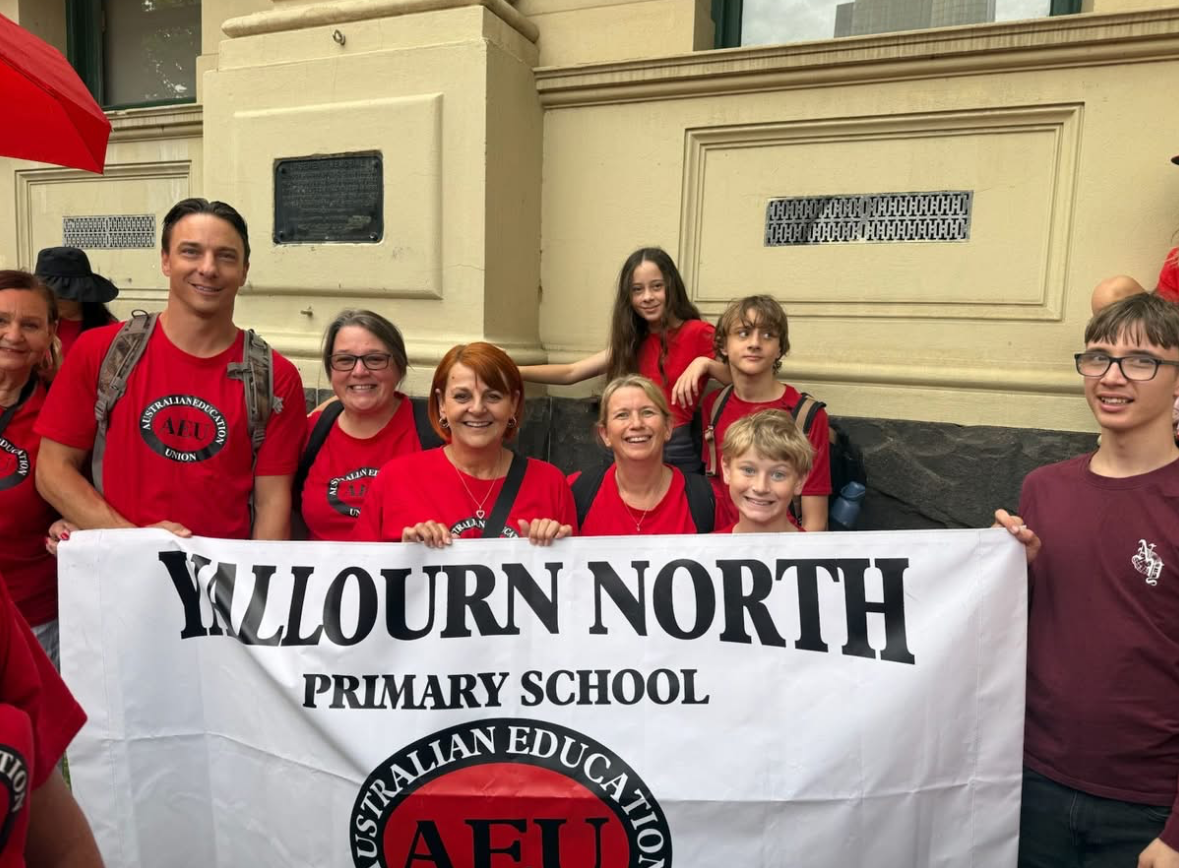
Many teachers and school staff ventured to Melbourne to passionately voice their frustrations regarding the recent offer, including Yallourn North Primary School, which houses an uncommon 100 per cent union base among its staff.
The small rural primary school conducts weekly union meetings, and discussed who would take part in the protest.
Seven staff went down to the city, while also having the full support of all back home by not going to the school on the day.
YNPS Education Support Officer, Kelly Bounds described the experience as “electrifying” and “positive”.
“It was a really good show of solidarity, and then when we got down to Melbourne, it was an absolutely amazing atmosphere,” she told the Express.
“It just felt so good to be around people, everyone there experienced the same problems that we are currently experiencing in the education system.”
Ms Bounds, who serves as the YNPS union representative, added that it had been easy to get staff to join the Australian Education Union, due to mounting fear over workplace violence.
“Many teachers have been hit, kicked, bitten, verbally abused, and there has been times where you don’t feel like you have the support of the department in that,” she said.
“We feel safe being a part of the union (because) we know that the union will stand up for us.”
Victorian teachers are the lowest paid in the country. Ms Bounds said this was discouraging people to join the industry across the state.
“There’s no attraction here, so we’re actually having a really bad shortage,” she said.
“Any given day, you can go on the employment website and there’s 900 jobs vacant in Victoria.
“So, our biggest thing is make it appealing, so that we can get people to get back in the workforce. Nobody’s going to want to work in Victoria when you can go across (interstate) and make $15,000 more for the same job.”
Ms Bounds said that despite the state government’s offer of a 17 per cent pay rise, staff workload will actually increase significantly given it’s a kickback. The offer also includes the removal of the time in lieu agreement, which was fought for previously.
While schools were still open throughout the strike period, schools sent out messages via social media and other school portals, warning of widespread impacts throughout the community, asking students to stay home due to being under ‘supervision-only programming’.
“Teachers are working for an employer who has not increased school funding since 2023,” a local school said.
Educators were not the only ones demonstrating last week, with local ABC journalists also holding stop-work action (Page 11).
“The decision to make all parent payments voluntary has impacted schools budgets by hundreds of thousands of dollars. The cost of time in lieu has also not been funded by the Department of Education, so it is coming out of existing school budgets.
“Parents need to understand that there was a landmark case which made it clear that staff cannot be expected to work for free – it was illegal, therefore the Department of Education had to make this change – it was not teachers pushing for this.”
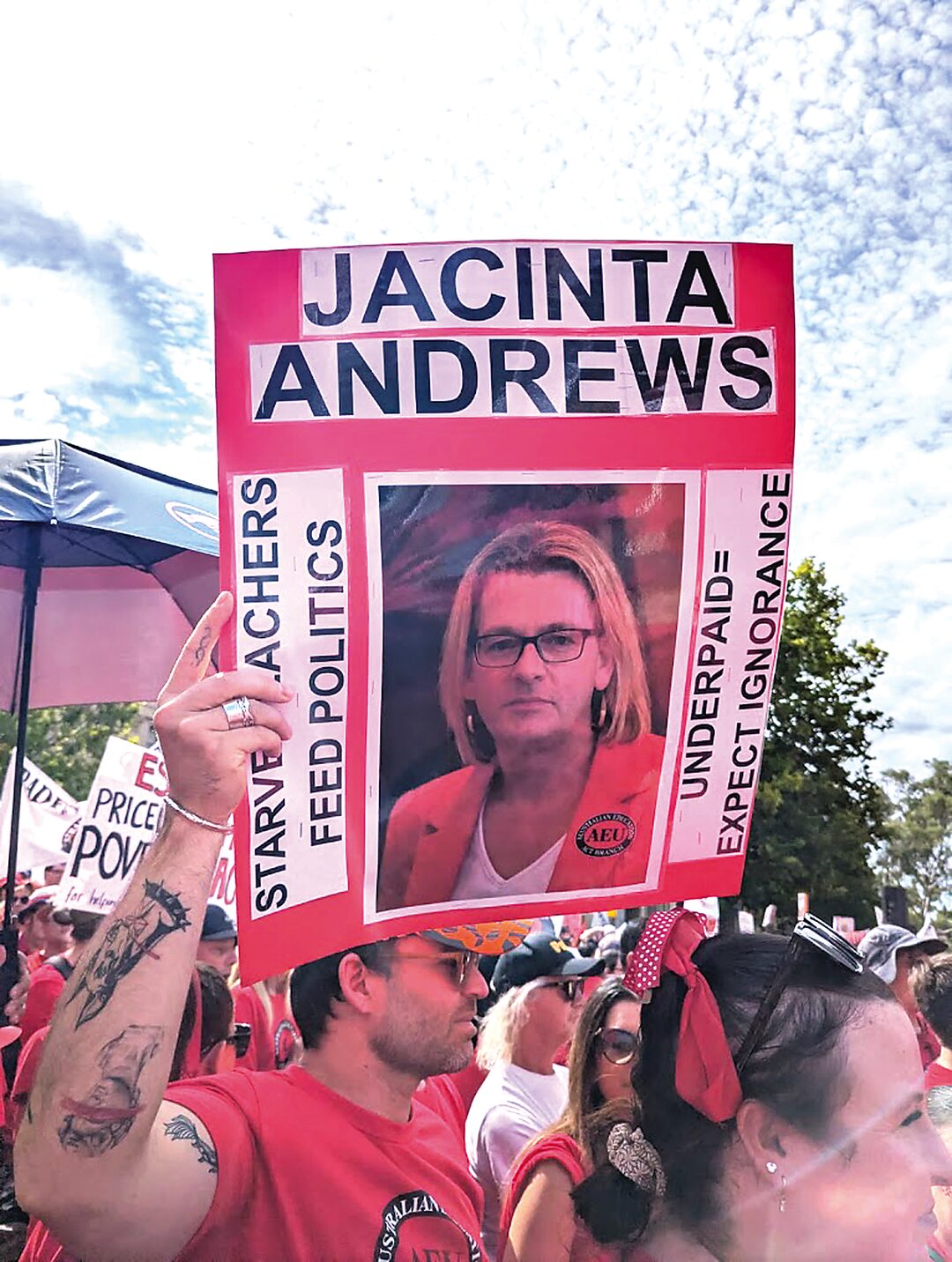
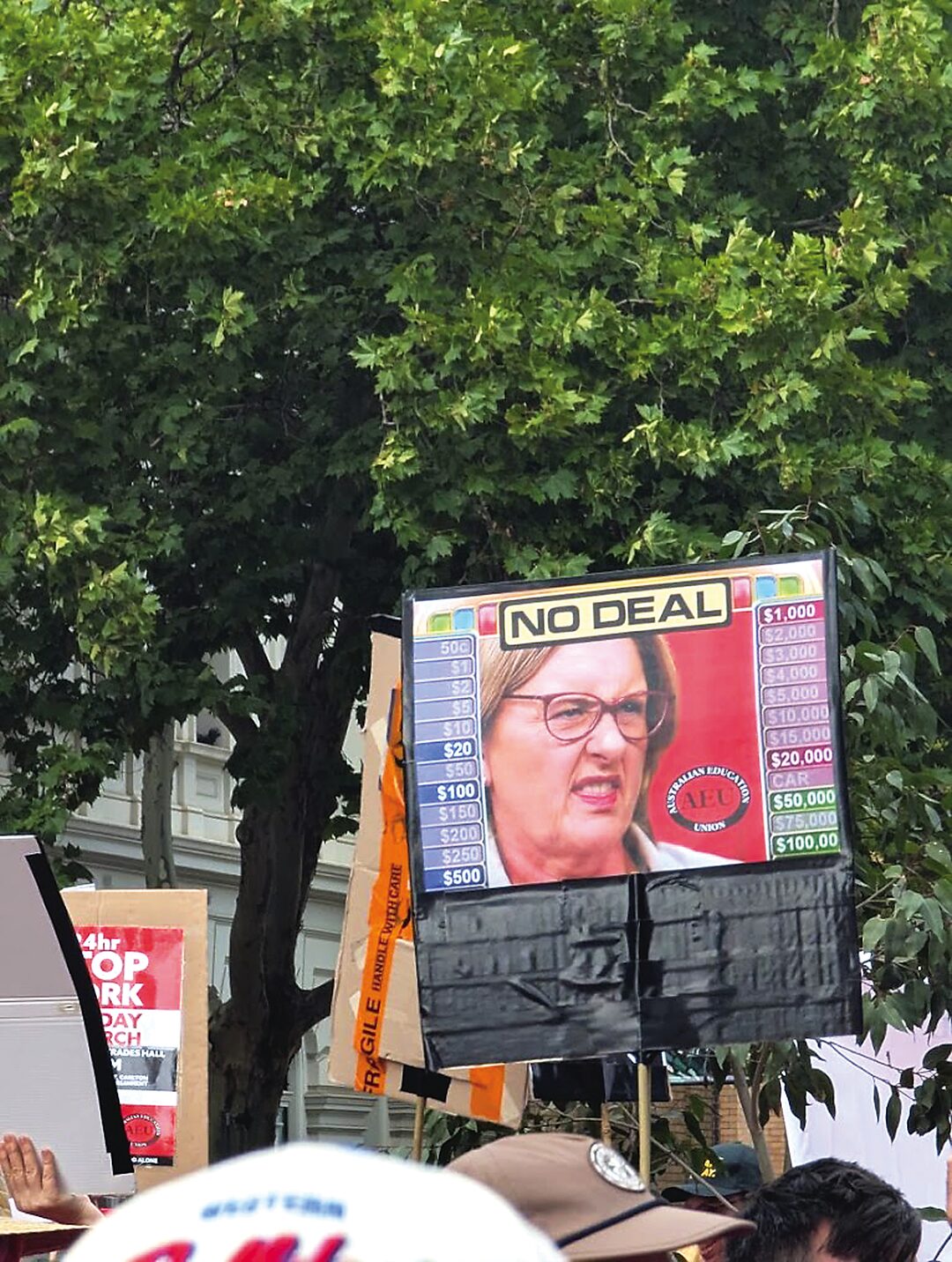
With red seen throughout V/Line carriages, signs reading “Teachers just want to have funds” and “Sopport Edukation or more signs wil lok lyk dis”, in reference to the famous Ralph Wiggum “Me fail English? That’s unpossible” quote, were carried throughout the protest.
In search of solutions, one teacher told the Express that the thought of going interstate wasn’t too far off.
“We’re striking for better pay, especially considering New South Wales gets paid a lot more money than we do, and every other state,” the teacher said.
“I’ve thought about it, but all my family is here.”
The teacher went on to cite examples of friends within the industry who had moved to the top end of the country and islands “off the coast” of Australia for better pay.
Another teacher said the proposed 35 per cent pay increase would make teachers feel “validated … just to know that they’re trying to see us for what we’re worth.”
“Teachers do so much work outside of school. The ones that really love it, you don’t do it for the money, you do it for the love of the game, but it would certainly make it easier”.
A spokesperson from the Victoria Trades Hall said the strikes were “an incredible show” from all Victorian teachers.
“I think that the state government really needs to pay attention to the level of passion that people are showing and why all of our community thinks that they deserve better pay and conditions,” they said.
“Victorian teachers are the lowest-paid teachers in the country. And this is an amazing opportunity for the state government to show that it genuinely values the work teachers do and pay them fairly. That’s all the teachers are asking for, to be paid fairly and for their major contribution to our community to be recognised.”
Currently, teachers in Victoria sit below the average starting salary for teachers across Australia.
By the end of the year, it is reported that there will be a $10,000 to $15,000 pay gap between Victorian teachers and teachers in other states.
Across the country, Northern Territory teachers are paid the most, with a starting salary of $92,215. Australian Capital Territory follows closely behind, with a starting rate of $92,186. Victorian teachers sit way below that, with a starting salary of $79,589.
Australian Education Union Victorian Branch President, Justin Mullaly said the decision to reject the government’s 17 per cent increased offer was not taken lightly.
“We keenly understand the impact this can have on parents, but we have arrived here because the Allan Labor government is continuing to disrespect public school teachers, principals, and support staff by not putting any offer on the table, let alone a decent one,” he said.
“The Victorian government has deliberately denied Victorian public schools $2.4 billion in funding through to 2031, cementing our schools as the lowest funded in Australia by a long way.
“It is a joke for this government to call Victoria the ‘education state’, when teachers, principals and support staff continue to be undervalued and underpaid.”
A state government spokesperson told the Express that they recognise that public school teachers and school staff have always deserved a pay rise, and that they have made “strong offers” that “deliver nationally competitive wages and conditions”.
“The significant offer we put to all unions reflects the important work our educators do every day, teaching and shaping our youngest Victorians,” they said.
“We will continue to negotiate in good faith.”
In solidarity with their public counterparts, Catholic school staff across the state followed with rallies before and after school hours.
The actions also highlight a wider issue in Victorian Catholic education: staff in Catholic schools are the only major cohort of educators in Australia who are denied basic bargaining rights, and cannot take the same protected industrial action as their colleagues in government schools without risking serious fines.
The Independent Education Union (IEU) is currently involved in a legal dispute in the Fair Work Commission to secure those bargaining rights for members.
Like AEU members, IEU members in Catholic schools are seeking a new agreement that improves pay (currently among the lowest in the country) and tackles vital workload and staff wellbeing issues.