



By PHILIP HOPKINS
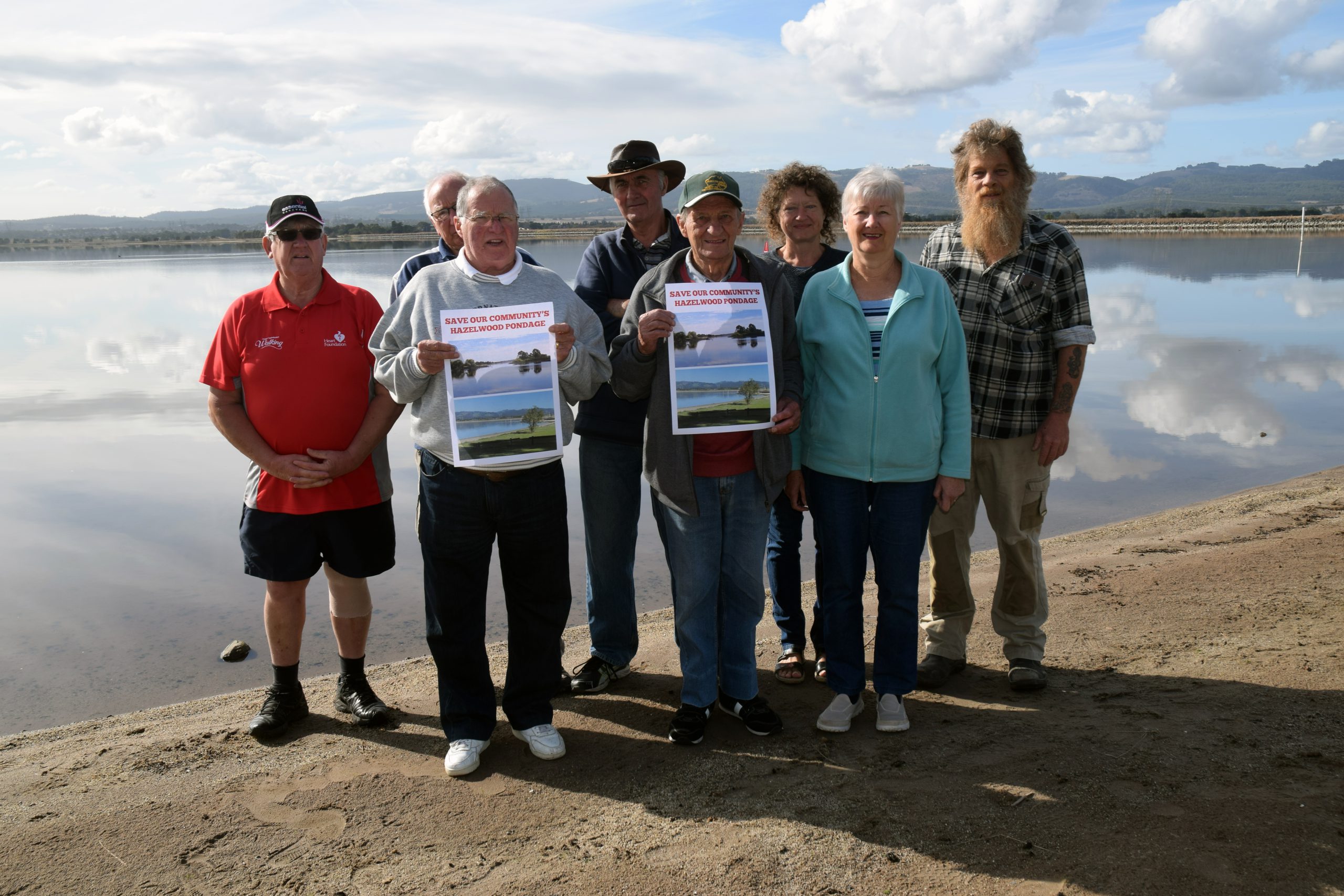
THE old Hazelwood brown coal power station, with its eight chimneys, dominated the Morwell skyline for six decades, and became a symbol of the Latrobe Valley electricity industry that powered Victoria’s development.
It’s now gone from the landscape.
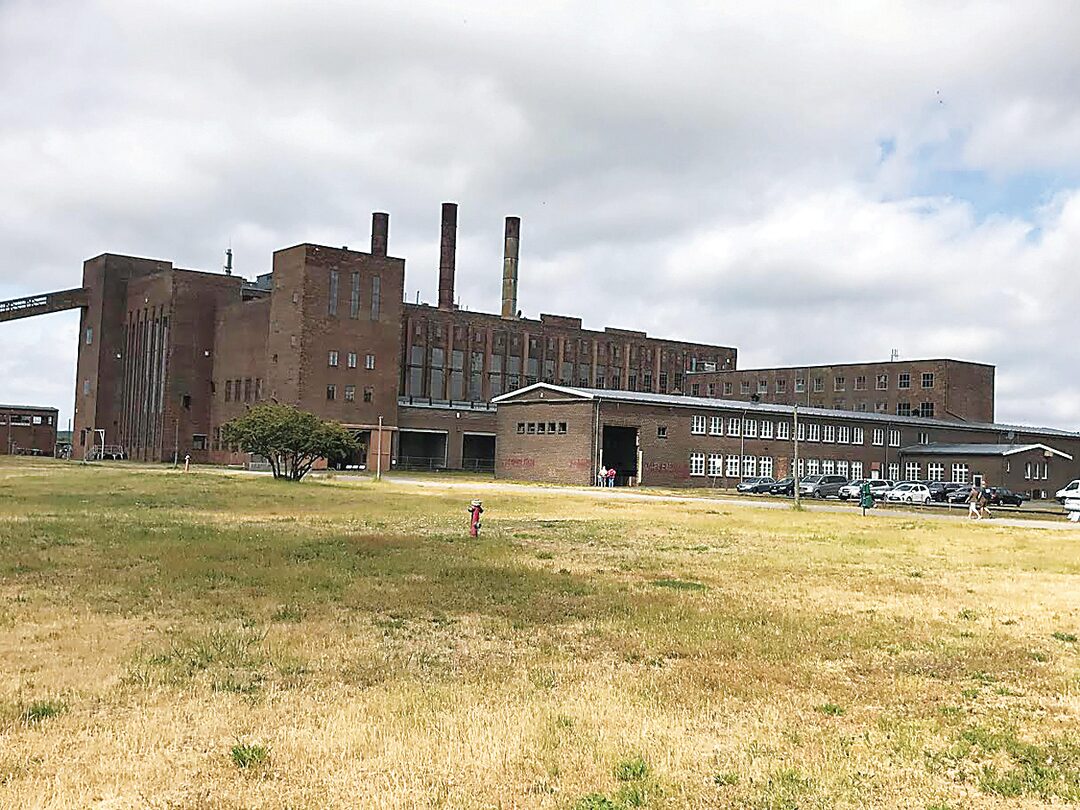
In contrast, a remote north-east corner of Germany at Peenemunde, on the island of Usedom in the Baltic Sea, celebrates a European project that marks a key chapter of World War 2 – a preserved and restored coal-fired power station that is a historical technical museum.
This power station, now a celebrated tourist destination, underpinned the research and development of the infamous V1 and V2 rockets that bombed London and other European cities. It was the weapon Adolf Hitler hoped would turn the war in Nazi Germany’s favour.
The power station continued to operate as a thermal resource and a source of heat energy in communist East Germany after the war, closing in 1991 after German reunification.
Restauration of the power station and the surrounding complex took place as part of an investment program by the German government in the province of Mecklenburg-West Pomerania between 2010-2011 at a cost of 3.6 million Euros. In 2013, the project, under the carefully chosen mantra, ‘Memory and Warning’, won the European Union Prize for Cultural Heritage in the Europa Nostra Awards.
The award citation noted that the restoration and ongoing interpretation of the Peenemunde power station was a project of exceptional thoughtfulness and sensitivity.
“Avoiding the temptation of bright paint and shiny surfaces and dealing successfully with problems raised by the presence of asbestos, it succeeds in guaranteeing the future of the building,” the citation said.
Above all, the jury felt it struck the right balance between the different and difficult elements within its history. The excellent dossier described this ambivalence well. Peenemunde was a pioneering industrial plan generating electricity from the 1940s to the 1990s, but it was also a key component of the Nazi regime’s hegemonic ambitions, with their concomitant exploitation of forced labour and concentration camp prisoners.
The jury had to note too that it was the birthplace of rocket science.
The restoration of the power station was completed with the building and technical expertise of companies in the local region. The museum includes extensive documentation of the complex’s involvement in World War 2 and the subsequent post-war development of rocket science that had its origins in Peenemunde.
The vast turbine hall has featured concerts and musical festivals with well-known artists and directors. Visitors wander around its vast expanse, which has a ghost-like appearance. Werner von Braun, who subsequently led the American rocket project that landed men on the Moon, was a driver of the original project.
Usedom was in the 1930s – and is still now – a popular seaside tourist destination, but its northern end was an isolated, sandy corner of wooded dunes and marshlands, and peopled by a few fishing villages.
Werner von Braun’s mother lived in a village 20 kilometres from Peenemunde; he discovered the site during a visit in January 1936, which led to the establishment of the new military research centre.
Peenemunde offered a 400-kilometre testing range off the German coast well away from population centres.
The state bought the area for the test centre in April 1936. Preliminary construction began four months later in August.
Forests were cleared, fields were drained and the necessary infrastructure, including train line that brought in people and materials, was put in place.
Construction of the power station began in 1939 and was completed in 1942.
A dike was built to prevent flooding from the Baltic Sea and sand pumped to provide firmer ground for the complex.
This was augmented by 2195 concrete piles 15 metres long that were rammed into the ground. Amelioration works enabled continual drainage. A total of 2.3 million bricks were used to build the power station.
All building materials were delivered by rail or by barge on the river Peene.
The main nearby Peenemunde port, completed in 1940, was used to land the coal, which was transported along a conveyor belt to the power station. In addition, the cooling water for the power station was extracted from the port.
Originally the Peenemunde power station was designed for hard black coal – 150,000 tonnes of hard coal was consumed annually from 1942 to 1945 – but because of transport problems, brown coal was also used from 1944.
This coal, however, had a lower calorific value so that larger amounts were needed.
“The Peenemunde power station was the most modern and the most innovative one in Europe. In this plant there they used, for example, the so-called ‘power-heat-coupling’ and achieved with that a very high degree of effectiveness,” the citation says.
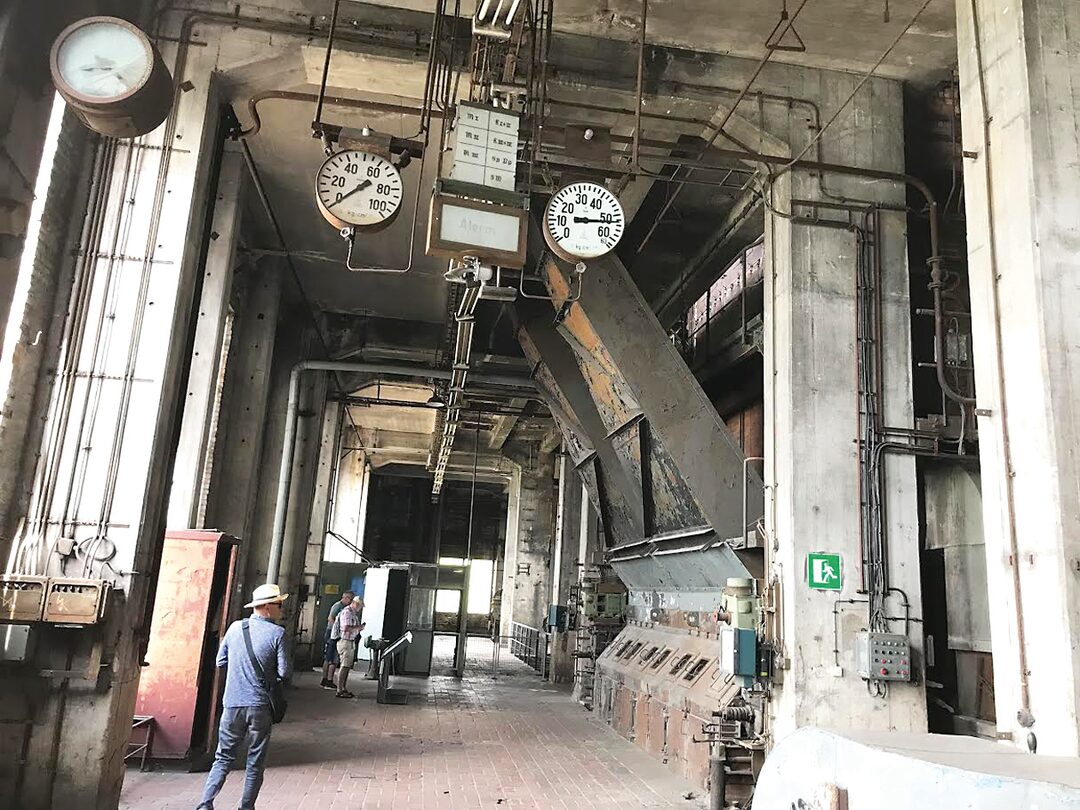
The former power station control room has been kept in its original state. It shows how the power plant with a 380-volt switching station that ensured the supply of electricity to the entire facility. It regulated the distribution of current to the various parts of the power plant.
“The control lamps, the switch levers, the straight, simple forms all evoke a plain, business-like functionality – and give a glimpse of the style of the time,” the citation says.
“This room may be the only remaining example of an accessible control room dating from the 1940s.”
From 1943, the power station took over the supply of electricity to the surrounding district because it often produced more energy than the research centre needed.
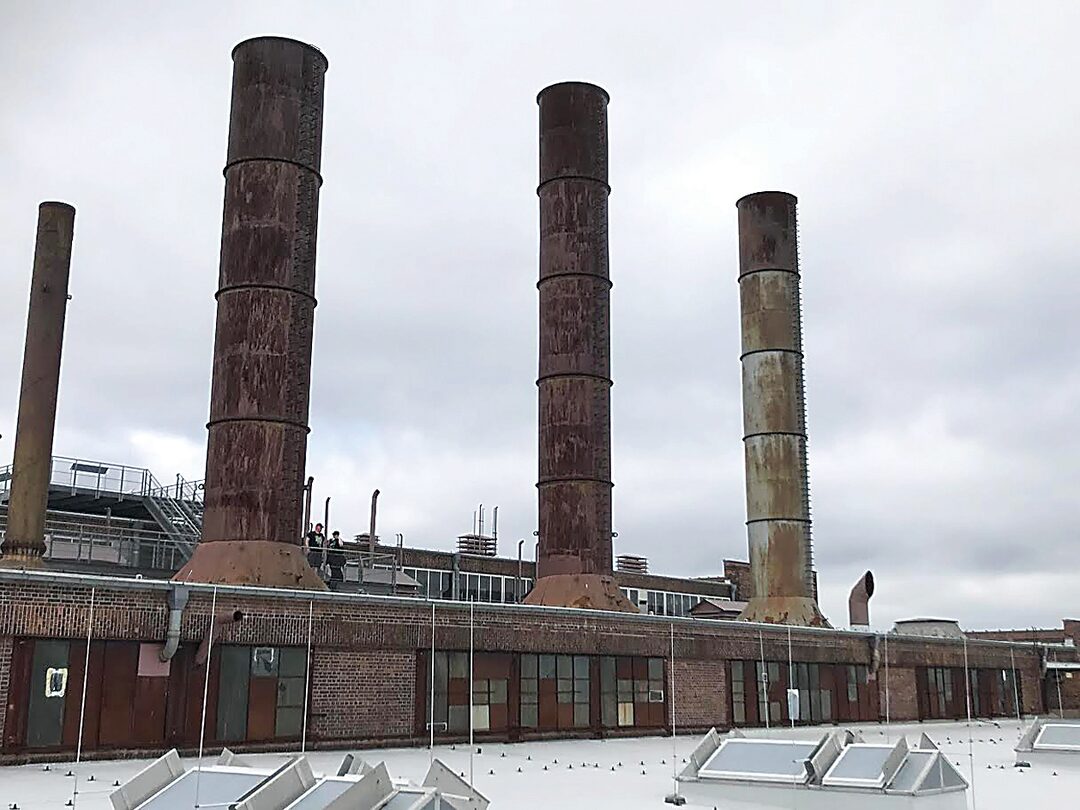
Despite the enormous consumption of coal to generate the energy, the four working chimneys emitted only a small amount of visible smoke; it appeared as though the power station was not in operation.
An ultra-modern filtration system from the German company Lurgi provided an effective flue gas cleaning that helped filter the dust particles, which were ultimately removed and then pumped to a nearby lake via the de-ashing plant of the power station.
The complex’s research began producing results: in the summer of 1943, the first flying bomb, the V1, was tested using a catapult launch ramp, which can be seen at the museum. This “was one of the most momentous technical innovations of the 20th century”, the citation says.
Work on the design of its successor, the A4, had begun in 1936, and when it came into use in autumn 1944, the rocket was known as the V-2. The technology contained in this missile formed the basis for all later developments in rocket engineering.
The booster rockets used in space exploration as well as the guided missiles of the Cold War have their roots in the research and development undertaken at Peenemunde.
British intelligence failed to realise the importance of Peenemunde until hints of secret German weapons became more frequent.
Military command and the government recognised the perilous danger that German rockets posed for London. British reconnaissance flights in early summer 1943 identified the site and rockets; the War Cabinet discussed the findings on June 29, decided on an air attack, which was scheduled for mid-August to avoid short summer nights.
Operation Hydra became the largest British action against a single target in World War 2.
Almost the entire bomber fleet took off towards Peenemunde – 596 aircraft, 4241 men and 1924 tons of bombs.
Large destruction ensued, the attack was deemed a success and only 40 bombers were lost – but Peenemunde was not completely destroyed – the power station survived.
The damage to the plant was repaired, research work could continue, although delayed and under difficult conditions. The first V1 was fired six days after D-Day in June 6, 1944. A total of 10,492 V1s were fired at Great Britain, killing 6148 people and wounding 17,492. Production of the A-4 was relocated to a safer place in central Germany and overseen by Peenemunde staff. The V2, which was fired at Britain, Belgium and the Netherlands, had a range of up to 320km with a ceiling up to 90km. Of the 1054 rockets that hit targets in Britain, 2754 people were killed and 6523 injured.
For thousands, Peenemunde was slavery. Slave labourers from all over Europe, Soviet prisoners of war and concentration camp prisoners were commandeered to work on the production of the A-4 under inhuman conditions.
There is a chapel near the site which commemorates all the victims.
Since January 2007, the Peenemunde information centre has become an anchor point on the European Route for Industrial Heritage.
The Peenemünde Historical Technical Museum, despite its isolation, attracts between 160,000-200,000 visitors annually.