


By AIDAN KNIGHT
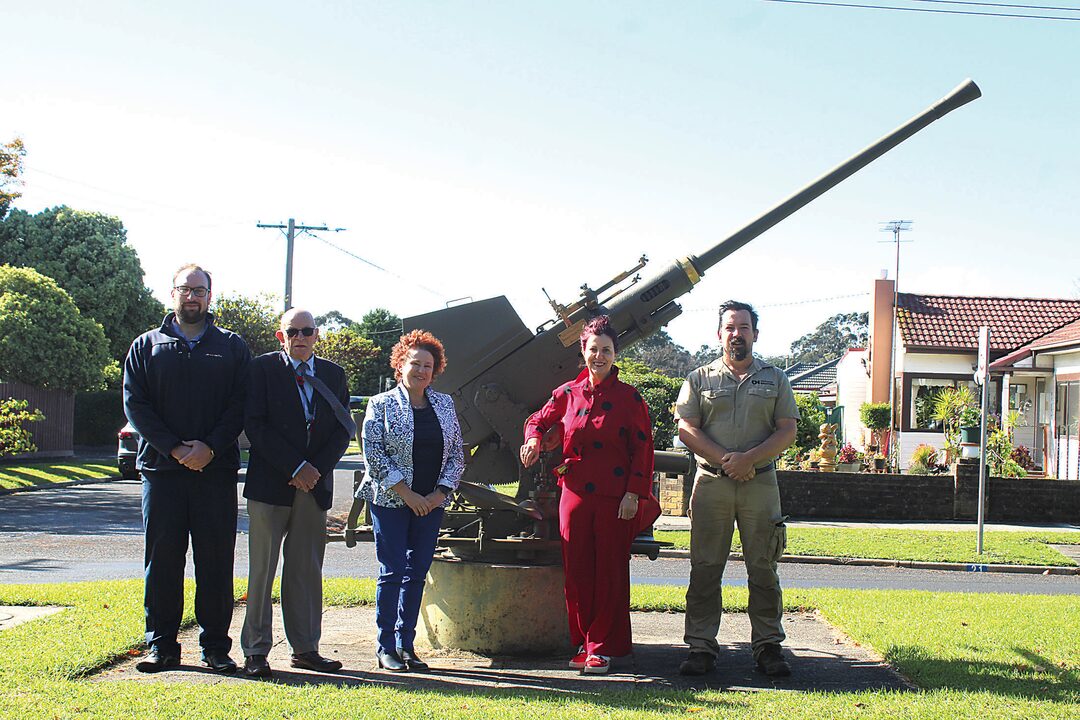
MOE residents will be very familiar with the iconic Bofors gun, which has been an unmissable part of Anzac Street since the 1970’s.
The ancient artillery artifact has recently been returned after 11 months for refurbishing.
Latrobe City Moe Ward councillor Adele Pugsley made a public post online, thanking Outlook Industries and Hardchrome, based in Yinnar and Yallourn respectively, who were involved in reconditioning and maintaining the historical piece.
Outlook Industries is operated by former ADF personnel, brothers Luke and Duncan Townsend. The pair have made Express headlines for their development of defence force technology, namely the Ground Unmanned System (GUS), essentially a robot scout, that looks something like a toy tank.
The Townsend brothers relocated Moe’s Bofor gun to the front of their workshop for a period, not only to refurbish it for the community, but to study it, using the mechanics and principles of the 1930’s weapon as a way of exploring more cost-effective anti-drone technology.
Luke pointed to the current situation in the Middle East, where modern anti-air systems are sometimes firing multimillion dollar missiles at relatively cheap drones.
“If your interception’s costing more than the thing that’s attacking you, then it’s not viable,” he said. “We’re just looking at old-fashioned ways of doing it. And there’s plenty of those.”
Using the Bofors gun as a case study, Outlook carried out metallurgical analysis and other technical assessments.
“We were kind of looking around for a Bofors gun that we could get a better look at,” Luke said. “We saw the one on Anzac Street and went, ‘Oh, that’s in pretty bad nick.’”
The brothers approached Latrobe City Council, who then struck up a 12-month agreement with the RSL for the loan of the artifact – on the condition it would be refurbished in time for the next Anzac Day ceremony.
Nationals Member for Gippsland and federal Shadow Minister for Veterans Affairs, Darren Chester has called Luke a “creative genius”, though the former soldier turned R&D expert was quick to stress that restoring the gun was a team effort carried out on a volunteer basis.
Initially, Outlook took the gun to its workshop, gave it an initial inspection and started work – including replacing the seat – before bringing in specialist help. Hardchrome in Yallourn grit-blasted the old paint off the gun and repainted it using colour codes supplied by Outlook, which had developed an accurate Australian Army green.
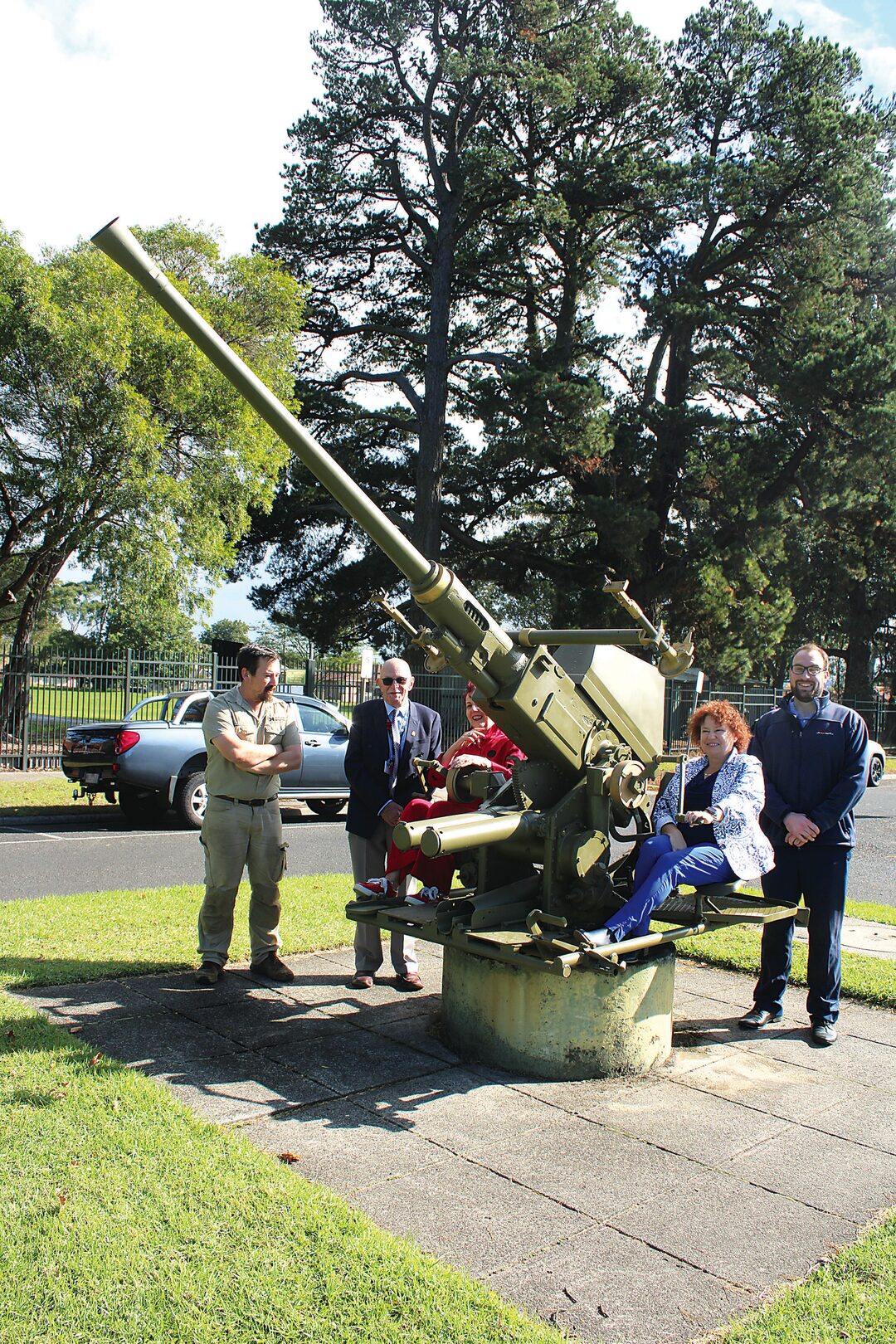
For all this to happen, the one-tonne gun had to be lifted and transported by Lawlex Excavations and Earthmoving, a local company based out of Hazelwood.
“It was a bit of a team effort, and nobody got paid, so it’s all volunteer,” Luke said.
“We got a lot of good technical data from it. So yeah, it was good, and it looks good now it’s all restored.”
The Bofors gun is a Swedish-designed, 40mm autocannon, designed to fire up to 180 rounds per minute to take enemy planes out of the sky. It was used by both sides of World War 2 after its expansion in popularity. At one stage, it was utilised by close to 100 militaries globally and was deployed on coastal defence bunkers to intercept incoming naval ships.
The Bofors Gun on Anzac Street (formally Road) was installed as a reminder of the importance of the Latrobe region during WW2, as similar units were put in place around Yallourn Power Station, protecting one of the state’s most prominent power producers, keeping the lights on in a time of distress. The site where this exact unit once was, a children’s playground now stands.
“You can tell it’s kind of a particular one, because it doesn’t have the chassis that you can tow around. It was built to be bolted down to concrete,” Luke said. “It was there to protect infrastructure.”
While many militaries moved towards missiles because they were seen as more advanced, technologically appealing and commercially lucrative, Luke argued that medium-calibre guns like the Bofors remain highly relevant.
Luke noted that Australian patrol boats carried 40mm Bofors guns until about a decade ago.
“All our patrol boats were armed with 40 mil Bofors,” he said.
“They’re quite lightweight for what they can do, very simple to maintain, very reliable.”
There are currently no working or in-service anti-aircraft guns in Australia, which makes the Anzac St landmark all that more important – and why the team moved in quickly to restore it while they could.
President of Moe RSL Sub Branch, Steve Mayes, had nothing but praise for the project and those involved, making note of how much care the organisation took in ensuring the brass elements of the gun were preserved.
Luke Townsend himself has a very impressive military record, serving in both Australian and British forces, even meeting the King at Buckingham Palace at one point. He has served in various operations, including deployments to East Timor, South East Asia and Afghanistan, and was awarded a NATO Meritorious Service Medal and an MBE. He also had involvement in the parks preservation program Prince Harry assisted with in parts of Africa, that is credited to the ongoing survival of endangered rhino species.
The knowledge gained from the Bofors analysis will feed into Outlook’s broader research into lower-cost, scalable ways to counter drones and other threats, drawing on “old-fashioned” but proven ballistic solutions instead of relying solely on expensive missiles, without risking Australian lives.