



By PHILIP HOPKINS
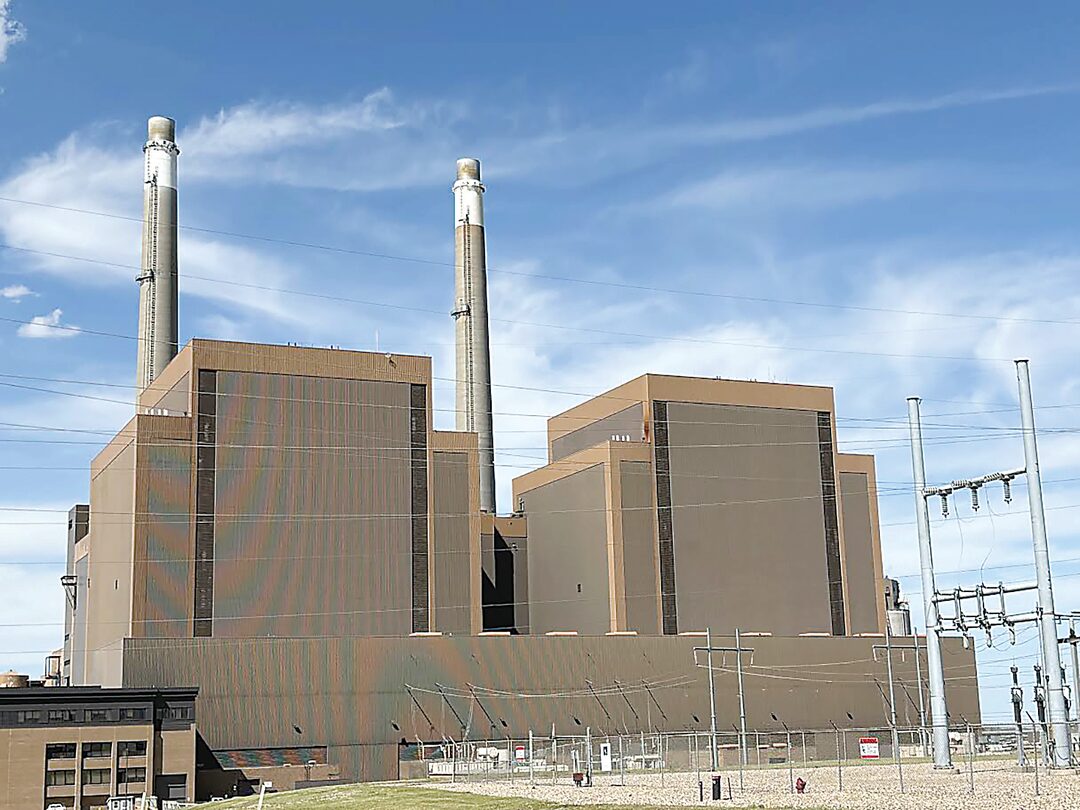
IN a world where energy production is increasingly constrained by greenhouse gas pressures, the Coal Creek power station in North Dakota has come up with a multi-layered approach to deal with it.
At the heart of the power station, owned by Rainbow Energy Center since 2022 and which uses brown coal (lignite) as its fuel, is the company’s patented system that dries the coal before burning.
Brown Coal in the northern US state is 38 per cent water – less than the Latrobe Valley’s average 66 per cent – but has higher emissions of sulphur, mercury and ash than the Valley.
Burning wet brown coal increases carbon dioxide emissions.
At the same time, Coal Creek produces waste that is used in other ways, ranging from powering an ethanol plant to providing material for cement.
It is not just a power plant, but the heart of a wider regional energy park.
Coal Creek uses lignite – it processes 24,000 tons (22,000 tonnes) a day and eight million tons a year – from the neighbouring Falkirk mine to generate 1200 megawatts (MW) of electricity. It supports 650 jobs in North Dakota.
Construction of Coal Creek began in 1974, with the first electricity produced in 1979.
The drying system, DryFining, used since 2009, reduces the amount of water in the processed coal.
The refining components segregate the lignite stream from the high-density compounds that contain higher levels of sulphur and mercury.
The fly ash is captured using electrostatic precipitators.
Ryan Repnow, a mechanical engineer and the leader of plant operations at Coal Creek, said the technology had improved the plant’s efficiency and emissions performance.
The plant’s fuel moisture had reduced from 38 to 29 per cent, he said. Fuel input had been cut by 14 per cent, and overall plant efficiency had increased by four per cent.
Specifically, chemical emissions had been reduced – sulphur dioxide by 40 per cent, mercury by about 40 per cent, nitrogen oxide by more than 20 per cent, and carbon dioxide by four per cent, he said.
The drying technology refines or raises the value of the lignite coal, improving energy output.
“It gives us more bang for our buck,” Mr Repnow said.
Carbon capture and storage is part of the company’s plan to deal with carbon dioxide emissions.
Rainbow bought the plant in 2022 with plans to retrofit it using carbon capture systems. More than $70 million has been invested to study CCS at Coal Creek. This includes help from universities and government.
In May 2023, the University of North Dakota’s Energy & Environmental Research Center (EERC) received US$38 million from the US Department of Energy for a CCS project at Coal Creek.
Rainbow Energy Center entered a partnership with the EERC and Neset Consulting Service to evaluate the project site through an engineering study and prepare underground injection control permit applications.
The aim is for the site to store up to 200 million metric tons of CO2 captured from Coal Creek power station and the adjacent Blue Flint Ethanol plant – annually up to 8.9 million metric tons from Coal Creek and up to 200,000 metric tons from the ethanol plant. It will allow Coal Creek to sequester 95 per cent of its CO2 emissions.
The project team is also studying the social and economic impacts, especially on disadvantaged communities, and developing a region-specific plan.
The development of CCS at Coal Creek would create about 35-40 long-term jobs and more than 2000 direct/indirect short-term construction jobs. It would bring training and retain a skilled and well-qualified workforce for these new and existing jobs. On another environmental front, Coal Creek draws water from the nearby Missouri River, using and recycling it throughout the plant.
However, the power plant does not discharge water back into rivers, lakes or wetlands. No chemicals return to the river. Processed water is managed through on-site recycling and pond systems, which settle the water and cool it for reuse.
Mr Repnow said the Coal Creek power plant was part of the larger vision of the Rainbow Energy Park, sharing resources with other industries to maximise efficiency.
“The power plant had been using heat from some of the steam to dry the lignite coal it burns as fuel, but 60 per cent of the steam’s heat energy was being lost,” he said.
The upshot was, “we sell it next door” to the Blue Flint Ethanol biorefinery, Mr Repnow said.
Construction of the US$100 million plant took place in 2006 with ethanol production beginning in February 2007.
By 2010, it was capable of processing 460,000 metric tons of corn to produce 190 million litres of ethanol each year and is estimated to have a net annual economic impact of $160 million on the North Dakota economy, as well as the creation of about 40 new jobs to run the plant.
The plant also injects 200,000 tonnes per year of CO2 into pore space leases from Rainbow. In addition to producing ethanol, the plant can also produce dry distillers grains, a byproduct of the distillation process that is used as animal feed.
Most of the corn used each year for feedstock is grown in south-east North Dakota and brought in via rail, with the remaining one third being produced locally.
In 2006, the Blue Flint Ethanol project was awarded the Project of the Year Award by North Dakota Governor John Hoeven.
Another arm of the energy park is the use of 95 per cent of the plant’s fly ash in cement production. The company says this offsets up to 500,000 tons of CO2 emissions per year and eliminates landfill storage.
Rainbow is also building a bottom ash grinding facility to take the bottom ash from the plant’s boilers, grind it and mix it with the fly ash to provide another revenue stream, with sales in the concrete market.
Mr Repnow said Coal Creek was now becoming a hub for digital innovation, further diversifying its energy use.
“We host several data mining operations on site,” he said. “We provide power to 225MW of data mining load.”
These operations use a mix of air-cooled and hydro-cooled miners.
The new Rainbow substation, completed in 2023, has added 285MW of power to partners through its on-site load.
Additional capacity for on-site load will be available as incremental generation comes online.
A diverse workforce runs the plant – the control room where five rotating shift teams of 13 people keep things running all day; a laboratory where technicians check water quality, analyse fuel and monitor emissions; electricians and instrument technicians monitor the facility; there is a team of mechanics, welders and machinists; and a fuel systems team manages the complex logistics from mine to boiler.
Behind the scenes, warehouse staff, office teams and maintenance crews support day-to-day operations.
North Dakota’s five power plants and its coal gasification plant have a $US5.75 billion economic impact on the state, according to work conducted by the North Dakota State University Department of Agribusiness and Applied Economics.
Rainbow estimates that the Coal Creek power station has an annual economic impact of $US1.5 billion.
Recent Energy Information Agency data indicates that North Dakota has the lowest electricity prices in the United States.