




By AIDAN KNIGHT
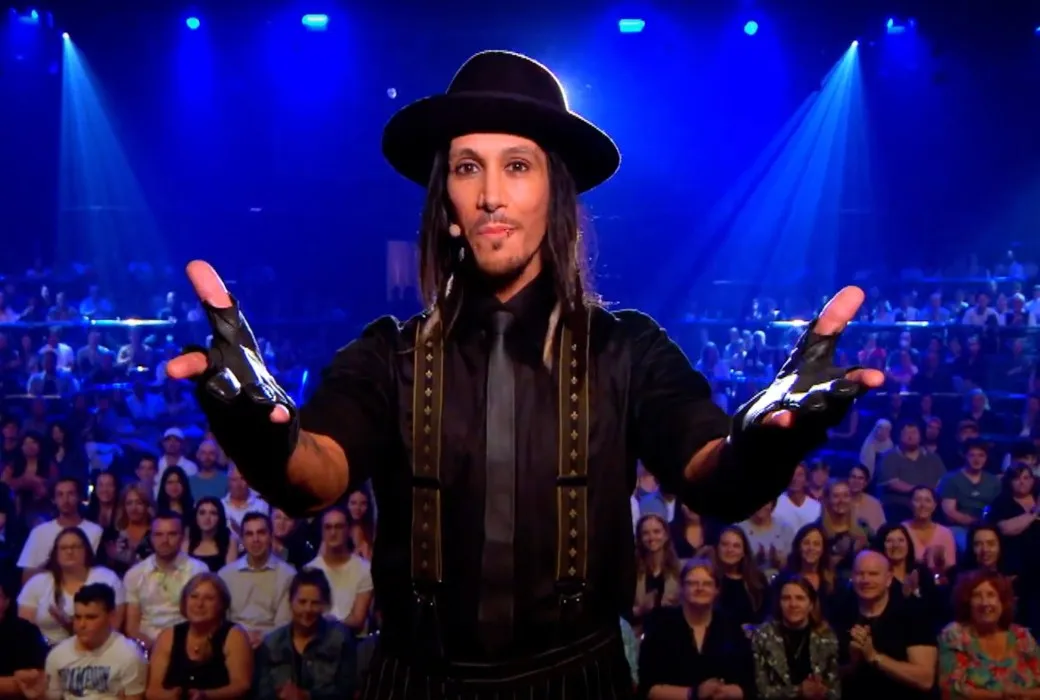
COSENTINO is a name synonymous with magic in Australia.
The iconic illusionist has been making waves since his big break on Australia’s Got Talent back in 2011, but has always made time for regional audiences.
His upcoming return to GPAC, as part of the Anything is Possible tour, is his third visit to the area, on which the Express asked his opinion.
“Honestly, I’ve seen the inside of the venue, and that’s it,” he chuckled transparently.
“We get in at 8am and do a seven-and-a-half hour day without seeing daylight. Bump in all the lighting and sound, props and illusion, then jump straight into rehearsal and soundcheck, before the actual performance and pack it all back up.”
The operation, while still very self-sufficient, looks very different these days compared to when he started out, as he explains what goes into what audiences see.
What will be presented in GPAC as a 90-minute whirlwind of escapes, stunts and mind-reading is built on a punishing schedule, which “makes me really sad to be travelling so much and see so little beyond the four walls of a theatre”.
What Cosentino tours regionally is merely a scaled-down iteration of the larger arena-setting show, with all the same tricks, but transported in one semi-truck, with seven crew members working to make the magic, which is doubled in major settings.
“All we do is make things economical for people, so tickets sell, and scale to fit the room in a way that is logistically and physically manageable,” Cos went on to say.
What sets his show apart from other touring acts is how bespoke and technical his shows are.
“Most comedians would probably just rock up to a regional theatre with a microphone and have ‘no cares about what the lighting is like’ (attitude),” he said.
Even the audio is more pivotal, with audience volunteers getting miked up so the crowd can hear reactions when Cosentino calls volunteers on stage – something he believes is crucial to making the experience feel as real as possible, as the rest of the world transitions further into believable CGI and AI.
“They sit opposite me when I borrow objects – coins, cards, Rubik’s cubes, rings … and all this is shot live with cameras: a top shot, a side shot, a front shot. It’s like a live editing studio happening on the fly,” Cosentino said.
The visual aspect is something he has increasingly invested in over time, using the downtime during the pandemic to upskill videography using Adobe software.
“I actually ended up getting involved in film photography as well,” he said, “and performing a lot of online Zoom shows for corporate companies and family events, I naturally had to learn camera work and live vision mixing.”
COVID also showed Cosentino how demanding his craft had actually become.
“It was kind of like going to the gym and working out for years and years and then stopping,” he said.
“You get back into it and then go, ‘oh my gosh, I’m really unfit’.
“When you’re doing it over and over again, the level of complexity and difficulty – it’s the one-percenters. You fix one per cent here, one per cent there, and over the years that adds up to 100 per cent. You stop it all, and you try to go back to 100 per cent, and you can’t. That’s how complicated the show actually is. But it doesn’t look like that – it just looks like a show.”
The current tour features both new illusions and reimagined classics, including a tribute to legendary escapologist Harry Houdini.
“In Houdini’s version of metamorphosis he was locked inside a wooden trunk and escaped minutes later,” Cosentino said.
“In ours the trunk has a clear front, I’m inside a clear bag, and it happens in seconds. We show the inside and back of the trunk so the audience can see there’s no trap doors or compartments.”
Creating a single illusion can take months of experimentation.
“To come up with the idea is about four months. Each escape can take six,” he said.
“It starts with cardboard, garbage bags and gaffer tape, then you build it properly, put it on stage, add sound, choreography and lighting. Sometimes it still doesn’t work and you have to start again.”
While many Australians first discovered Cosentino on television, he has also built a large international following. His television specials across Asia have attracted audiences of up to five million viewers in markets such as the Philippines, Taiwan, Singapore and Indonesia. Despite the global reach, Cosentino remains passionate about keeping magic accessible – particularly for younger audiences.
“Magic’s niche enough, you don’t need to make it any more niche,” he said.
His advice for aspiring magicians in the Latrobe Valley is simple: practice and perform.
“Go out and perform live. Don’t just do tricks for TikTok or social media,” he said.
“At some stage you have to do it in front of real people. A lot of magic is about managing the audience – you’ve got to be a people person.”