



By LIAM DURKIN
BACK for more.
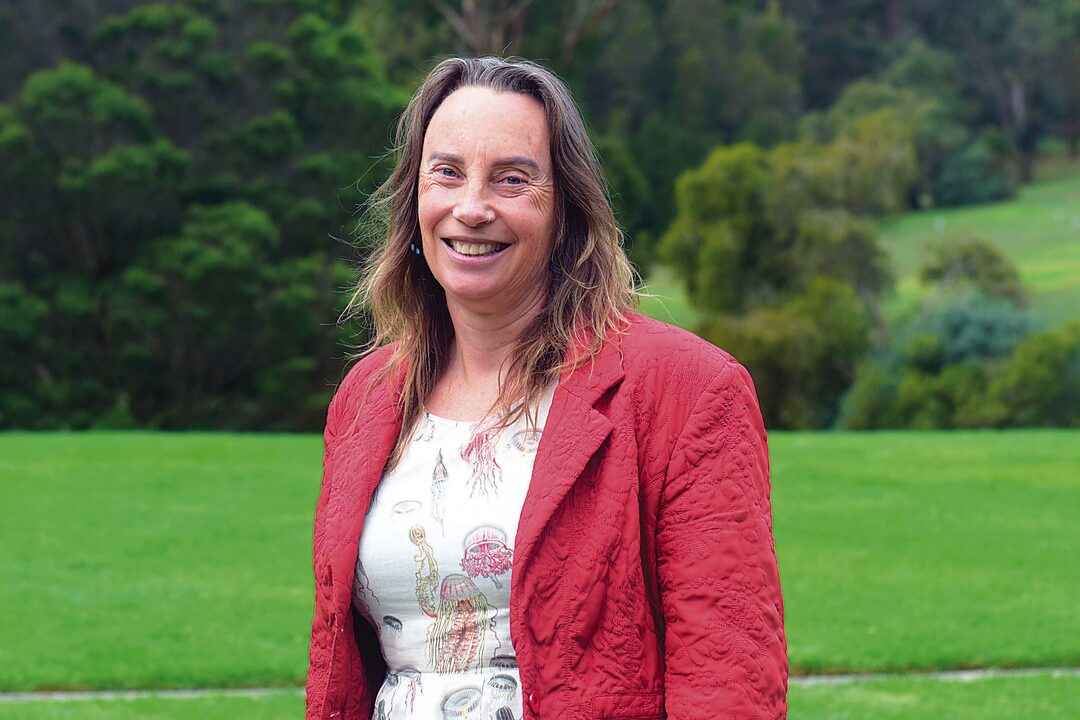
Rochelle Hine will run on the Greens ticket at this year’s state election for the seat of Morwell.
Dr Hine has become a familiar face at the local ballot box in recent years, appearing at last year’s federal election (for Gippsland) and the 2022 state election (Morwell).
The academic, who works for Monash Rural Health in early career research, again hopes to provide an alternative choice to voters.
With the campaign underway, Dr Hine sat down with Express editor Liam Durkin to discuss the road ahead.
Liam Durkin: Happy to put your hand up again?
Rochelle Hine: Happy and willing to give the community an alternative voice and vision for a more socially just and equitable society.
LD: How’s the feeling within the camp?
RH: There’s a whole lot of energy and momentum building. We’ve got all of our Gippsland candidates selected already. We’re trying to run a really collaborative campaign across the region. It’s a really important time to be doing this with the ongoing cost-of-living crisis, the fuel crisis, the geopolitical instability and I think, there’s lot’s of issues that the Labor government, both Victorian and federal, are just failing to act on.
Hidden beneath the (federal) budget was the government’s response to the Murphy report into gambling, and I know that across the Latrobe Valley, gambling is an issue that concerns lots of people; it’s an issue that disproportionately affects young people, particularly young men who are embedded in sports.
The way that the gambling industry has tied itself to sport and the lack of political will from Labor because they’re beholden to the gambling lobby is just really disappointing.
I think locally as well, we know that housing and cost-of-living is a very big stress for people particularly in Moe and Morwell – they might be spending more than 30 per cent of their income on housing, and often substandard housing at that.
With Labor having such thumping majorities at both state and federal level, it seems really disappointing that they can’t do more to address those basic human rights issues.
LD: The Greens have some prominent and vocal members locally. Does that give you confidence?
RH: The thing about the Greens is that, we have our policies developed all-year round, we don’t just develop our policies in response to political donors, and we don’t take any political donations from fossil fuel companies, billionaires, supermarket duopolies, any of those groups that tend to build more inequality into all of our systems. Our policies are developed by the members, and informed by evidence.
LD: How was the fallout from the federal election after Adam Bandt (then Greens leader) lost his seat?
RH: These things happen. Part of that was about change to the electoral boundaries. We move on and regroup. I feel like the Greens are stronger than ever at the moment in Victoria.
LD: NSW recently passed legislation to ban nuclear energy. That would clearly be concerning from where you sit?
RH: There’s a few interesting policy decisions being made in NSW at the moment, particularly around the attempts to quash public protests. I think we have to be really staunch about defending democracy.
At federal level, Labor tried to push through legislation to restrict freedom of information as well. We can’t rely on the stereotype and traditions of the Labor movement to determine what Labor will do next.
There was that massive protest in Melbourne with the education union recently as well, and Labor have traditionally been closely tied to the union movement.
I’m a member of the National Tertiary Education Union and the Gippsland Trades and Labour Council, and I think the union movement are questioning their ties to Labor because Labor are making decisions that are just not in the interest of improving human rights at work and workplace conditions for Australians.
LD: Can you give us a brief snapshot of your career?
RH: I work in a university setting now, but my career began in public health. I worked in public health for 20 years, in women’s health promotion and predominately in mental health. The way that the public health and public education systems have been eroded over the years is absolutely disgusting. We know that health and education and access to free healthcare, including dental and mental health, is really important for peoples health and wellbeing across the lifespan, and we also know that education is one of the most dynamic of the social determinants of health, and can help people move on from transgenerational adversity and poverty. The fact that Labor is not investing in those critical sectors says a lot.
LD: Has the conversation around most aspects of psychological health shifted?
RH: Fifteen years ago, I was delivering gender and diversity training to local councils and we were having arguments about whether the terms ‘sex’ and ‘gender’ are different or the same. So we have come a long way in some respects, and it’s really heartening to see the normalisation of some of those conversations.
However, we have such a long way to go and we can’t rest on our laurels, we’ve got to keep being advocates and make sure that we don’t slide back in terms of gender equity.
Racism is also on the rise; really concerning to see all of the conservative parties, the National party, the Liberal party and One Nation of course, being so outright racist. That’s another area that Labor need to show more leadership and be speaking out about.
LD: You would be quite appalled then at the Coalition’s plan to cap migration in line with housing supply?
RH: It’s disgusting. I think people understand that migrants contribute so much to our society. If people think about who they see at the dentist, who works in medicine, in surgery, in psychiatry, in aged care and childcare, education and health – all over the place – you’d be hard pressed to get through a week without having a migrant add some quality to your life.
LD: Has it been difficult being a Green in a traditionally conservative part of Victoria?
RH: Yes and no. Rural communities are stereotyped as being very conservative, and we do sometimes see that transmit to who our local members are. But there are actually an incredible diversity of views and perspectives in the community and I think that that’s represented by the amazing community groups and volunteers and the diversity that we see in our rural communities is heartening. I think things are changing as well.
LD: How have you gone shaking the old adage that the Greens are just tree-hugging hippies?
RH: I think the Greens have really sustainable and meaningful policies across the board, not just in terms of environmental sustainability which is not really a fringe issue anymore, but also in terms of social, housing, income, workplaces, the whole gamut of policies.
LD: How would you respond to someone saying the Greens are a destructive party?
RH: I’d say have a look at our policies. Have a look at what our parliamentarians vote for, actually have a look and have a listen. There’s a lot of stigma about the Greens, but I think that’s been fuelled by the conservative media who are just promoting the interest of wealthy billionaires.
LD: Have you been a lifelong Green?
RH: I’ve been a lifelong progressive person. I’ve been a voter of the Greens for a really long time.
LD: Was politics ever really on the radar?
RH: Not really. I guess politics is an extension of my activism identity and just being an advocate for social justice. I’ve been involved in the pro-Palestine demonstrations, Black Lives Matter, myself and a couple of friends and allies have been organising the Braiakaulung Allies Group, which is a movement around changing the date of Australia Day.
LD: Indigenous issues are a big one for you then?
RH: My son is Indigenous and I think none of us can be liberated and free in the community until we reconcile with the history of this country.
Looking at the impacts of colonialism are important, but also the ongoing legacies. One of the really damaging and destructive things that’s happening right now is the number of Indigenous children who are in out-of-home care, so we need to really look at racism within our healthcare, education and community sectors and look at providing strength-based supports and nurturing care, rather than surveillance and monitoring.
LD: A lot of people however think it’s gone too far, where we have a Welcome to Country at every event and acknowledgements left, right and centre?
RH: People seem to think that welcomes and acknowledgements are a new thing. They’re actually an ancient protocol, they are about respect and about coming with purpose to an area, and recognising Indigenous people have lived here since time immemorial. So, I think that’s really hard for non-Indigenous people to understand that length of time. We’ve been here, what, 250 years? Compared to 100,000 years. It can bring up a lot of defensiveness as well and maybe some guilt and shame around the destruction that’s being done. I think that we need to get better at having uncomfortable conversations and sitting with discomfort to be truly respectful and understand the generosity of a welcome and the respect that an acknowledgement shows.
LD: Are you concerned about One Nation’s momentum?
RH: I’m very concerned. Because it has the potential to completely derail the egalitarian nature of Australian society. We pride ourselves on mateship and fairness and having a go, and even though One Nation and other conservative parties, regressive parties I’ll call them, claim to be really trying to promote Australian values, what they’re doing is creating conflict and hate and unsafe community that undermine our Australian values.
LD: Encouraging to see the number of wind projects slated for Gippsland?
RH: Yes. The Latrobe Valley has the potential to be a manufacturing hub and to promote a lot of industries. We got all of the electricity infrastructure here. The move to renewables is going to mean that is going to be important and there is so much potential that once again, the Labor government haven’t matched their rhetoric with action. The Latrobe Valley continues to be a place where there is high unemployment levels, especially among young people, and it needn’t be like that.
We heard from The Australia Institute and a whole lot of sensible people about taxing the gas exports, and that’s something the Greens have been banging on about for years.
LD: Are you prepared for a tough fight between now and November as they always are?
RH: I really relish the opportunity to have deeper conversations about the future of our community and our state more broadly, and to look at different possibilities and visions for the future.
I get along okay with Martin (sitting member Martin Cameron). He’s a popular local tradie and footy player, but we need to look beyond those local credentials and popularity to try and select a really good candidate who understands the region and understands how to create positive change.
LD: You attracted four per cent of the vote last time, would bumping that up closer to 10 be the aim?
RH: I think we’re always looking at making incremental increases. It’s a marathon, not a sprint.
LD: If people want to know who Rochelle Hine the person is, how would you describe yourself?
RH: I’m a mother and a grandmother, a social worker, even though I’m an academic, I think social work principles and values are the way that I make my decisions and run my life.
I’m a runner, I like to stay active and very social.
LD: Well Mat Morgan wants an electric bike track around the Philip Island GP circuit, so we might see you out there cutting some laps?
RH: Of course! We need more active transport!