


By PEACE IJIYERA
ON the Saturday of Reconciliation Week (May 30), Indigenous author, Traditional Owner and Native Title Holder, Frankie Dunne, held a book launch and author talk at Moe library.
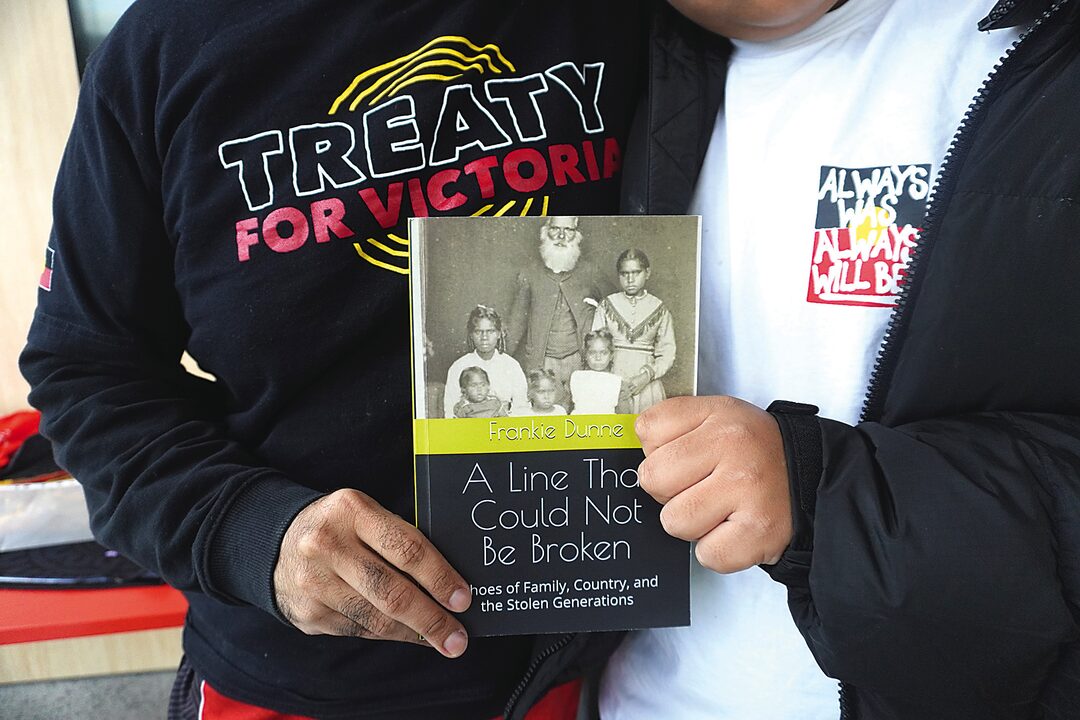
His book titled, A Line That Could Not Be Broken is a truth telling account of his family’s history, genealogy, connection to Country and intergenerational experiences with the Stolen Generation.
A Line That Could Not Be Broken is nationally recognised and a part of the Parliamentary bill in New South Wales.
The book is also held within major collections in state and international libraries, including the National Library of Australia, the British Library and the Library of Congress (United States).
To begin the event, a series of dances were performed outside by local dance groups, Dejeetung Girls and Boorun Boys. Passers by stopped to observe the showing of culture.
Back inside for the main event, around 40 people gathered in the east end of the library to hear Mr Dunne speak about his book. Interview style, Mr Dunne was asked questions by the host, and gave the audience a deeper insight into what the book was about.
Born and raised in Preston, Mr Dunne is well connected to Country and culture. He says his love for culture blossomed at school.
“Where I got all my cultural connections was probably at Thornbury primary, it was really multicultural,” he said.
Mr Dunne was a part of Bringing Them Home, a landmark 1997 report documenting the traumatic events of the Stolen Generation.
Both Mr Dunne’s parents were survivors of the Stolen Generation. With all the grief and trauma that came from these experiences, Mr Dunne wrote this book to preserve family connections.
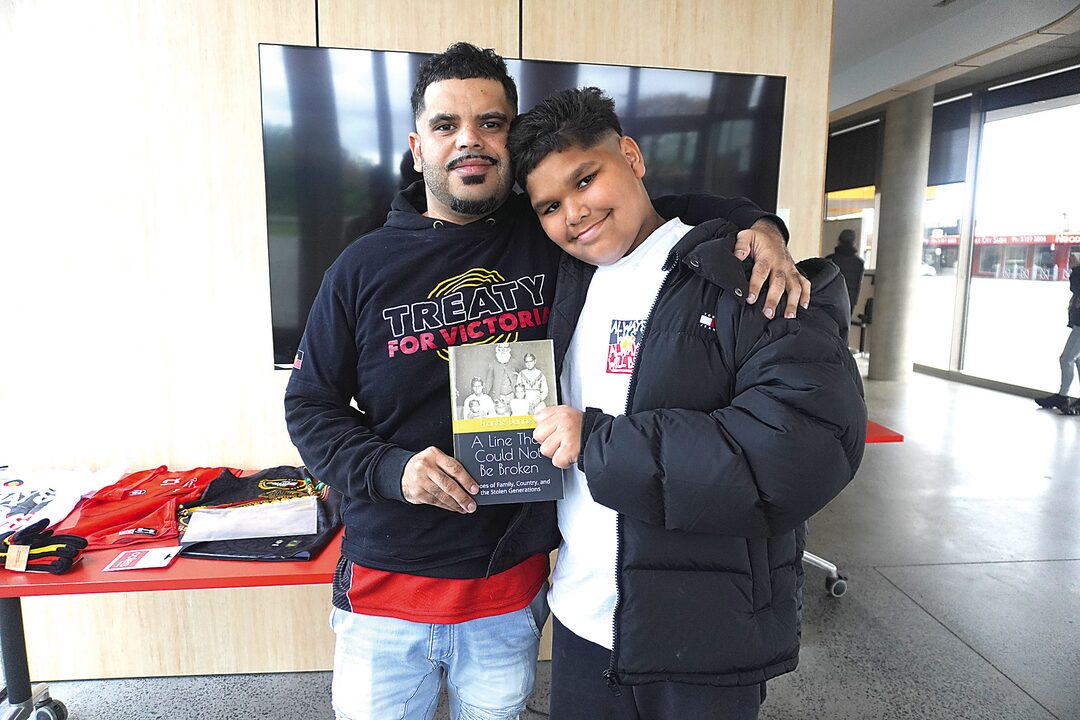
“I [wrote] this book for my son, and not just my son, I [wrote] it for my future generations including my sisters and brothers kids,” he said.
To have his book nationally recognised and part of truth telling is special for Mr Dunne, who says it feels “incredibly humbling and emotional.”
“The book began as an effort to preserve my family’s history and ensure future generations would know where they come from. To see A Line That Could Not Be Broken recognised through national and international collections is something I never imagined when I first started writing.
“For me, it is not just recognition of a book, it is recognition of the survival, resilience, and stories of my ancestors, including those affected by the Stolen Generations. Knowing that these stories will remain accessible to future generations through libraries and cultural institutions means a great deal.”
Mr Dunne was shocked to discover he was a Native Title Holder. As a Native Title Holder of the Gunditjmara and Gunaikurnai people, Mr Dunne possess the right to access and use Country, practise and protect culture, influence land development (right to negotiate), co-manage parks and natural resources and drive economic and community development.
With a big family and connections to the land spreading from “coast to coast”, Mr Dunne spoke about how his family is all connected and hidden in plain sight around the land, rivers and waters. Mr Dunne says there are more than 150 locations around Australia bearing his family’s names.
“Every river has a story and a meaning, and it has a connection to our bloodline,” he explained.
A self-published author, he wrote the book all on his phone. It was important for him to write and publish his own story in his own way.
On the front cover of the book shows George ‘Botany Bay’ Gilbert and his five daughters.
“George ‘Botany Bay’ Gilbert was one of my ancestors. His daughters included Lydia Gilbert and Polly Gilbert. Through this family lines I maintain connections to the Snowy River region and broader Aboriginal family networks that form part of the story documented in my book,” he said.
“My family lineage also traces to significant Aboriginal historical figures including Chief Namut Gilbert, Pemulwuy, Bennelong, Yarramundi, and Maria Gilbert. The book explores these family connections, their relationship to Country, and the impact of government policies across generations.”
This year’s theme for Reconciliation week was ‘All In’. To Mr Dunne, this signifies the team effort of Australians coming together.
“It means we’re in this together. We’re survivors, oldest living culture in the world, so it’s really special,” he said.
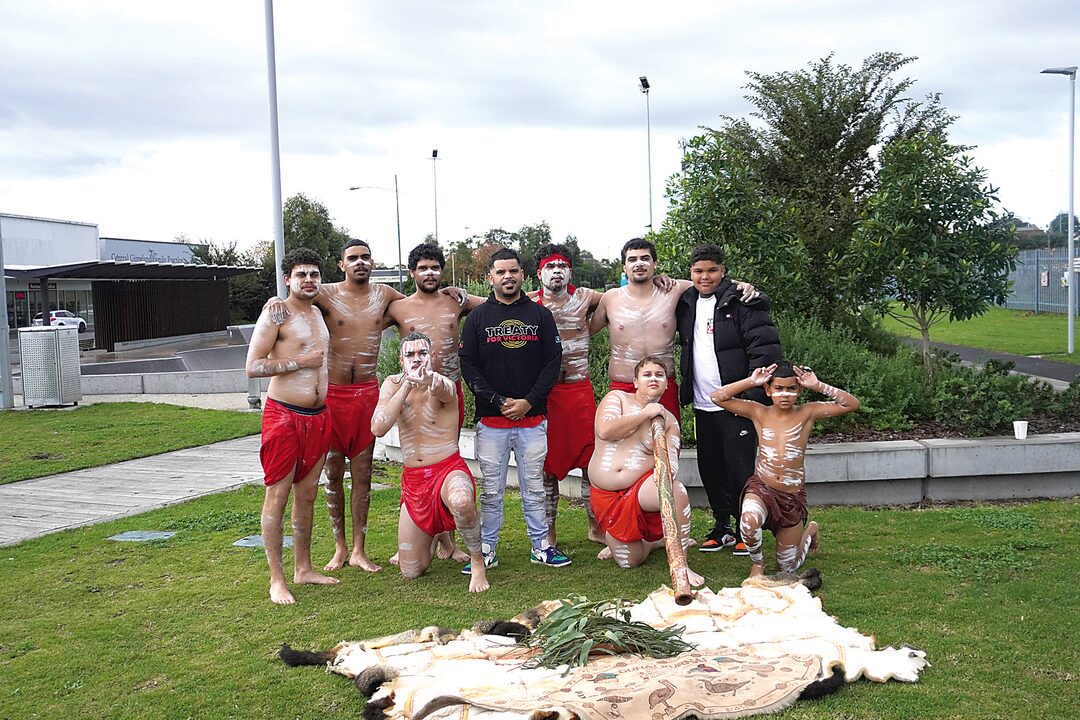
Community and being part of a mob is a big part of Aboriginal culture. Mr Dunne spoke about how growing up, he was taught to share with others – from fish and chips to stories and knowledge.
On the day, it was clear that Mr Dunne was a well respected member of the Aboriginal community.
“I have a lot of support from the community, family, Elders, and the younger generation who look up to me, and see me as a role model for them,” he said.
Mr Dunne has future aspirations of creating a film or documentary version of the book.
To end the event, a raffle was drawn. Winners were able to win a meat pack sponsored by Butchers on George, merch courtesy of Clothing The Gaps and Essendon and Richmond football clubs or a gift card sponsored by Quantum. Mr Dunne wished to extend his thanks to Reconciliation Australia, Connecting Home, and Find and Connect. He also wished to thank the Victorian Aboriginal Health Service and Latrobe City Council for their support.