


By AIDAN KNIGHT
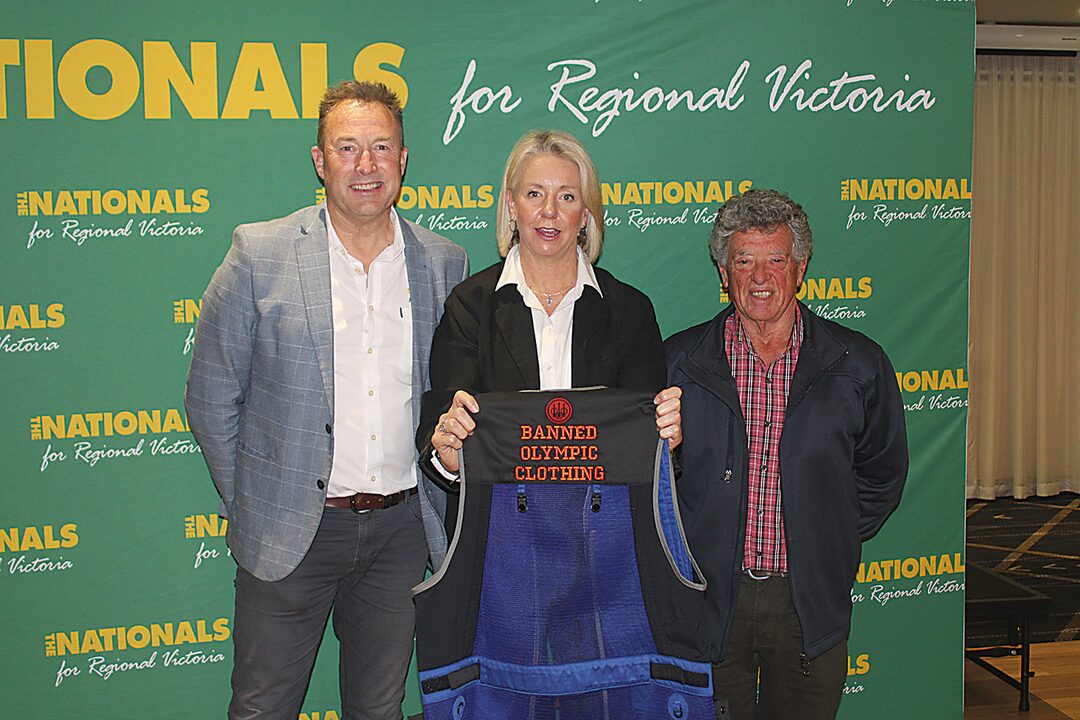
THE Nationals showed up in full force earlier this month, as Senate Leader Bridget McKenzie held a pro-firearm forum at the Morwell RSL to discuss potential regulations on guns and their licensed owners.
Emceed by Member for Morwell, Martin Cameron, key speakers also included Member for Eastern Victoria Region Melina Bath, prolific conservationist and Field & Game expert Gary ‘Pud’ Howard OAM, and Nationals state leader Danny O’Brien.
Mr O’Brien appeared unscheduled on the program, as he had a prior commitment the same day at the state funeral for AFL legend Neil Daniher, and travelled to the RSL straight from the service.
Mr Cameron began the address, to a full room of older shooters and farmers. He made the point of the party’s intent to “look after everybody, both those worried about guns, and those who use them responsibly”, before handing over to the Wondonga-based Senator, and making the first pun of the night, as he told her to “fire away”.
Senator McKenzie told the room she was proud to be back in the Valley, and pitched her party as the only one to back licensed shooters. She framed the event as part of a national campaign to resist tougher gun laws following last December’s Bondi attack, saying that law-abiding shooters were being unfairly targeted for the actions of terrorists, and that the previously proposed Victorian gun cap would not have changed the events of December 14 because the number of firearms used in the attack was compliant with the proposed cap (as detailed by Mr O’Brien later on the night).
Ms McKenzie argued that the federal government had used the incident to push a national firearms buyback and tighter import rules on firearms accessories, saying those measures would hurt clubs, dealers and disabled or older shooters without addressing illicit guns.
At state level, much of the discussion centred on the Ken Lay Review of Victoria’s firearms framework.
Senator McKenzie detailed the proposed firearm buyback would cost around $15 billion, and included drastic changes to firearm accessory imports – including an early attempt to ban speed loaders and even Olympic ammunition belts. She argued those measures had stalled gun sales and left dealers with “millions of dollars of kit” they could not move, and would render shooting as a sport to be less inclusive, with revolver speed-loaders a big item for participants with arthritis, or physical disabilities.
She was, overall, supportive of a Royal Commission into the Bondi attack, which was frequently referred back to throughout the night, but on a different topic – the allowing of gun licences to be granted to those previously under ASIO investigation.
It was made clear this was a separate issue from racial discrimination or immigration, by Mr Howard later in the meeting.
Mr Howard spoke of a close friend of his who had immigrated from India to work as a highly skilled surgeon in Sale hospital, and before he was granted Australian citizenship, acquired both licences for fishing and shooting. If an immigration-based ban was in place, the surgeon (a keen hunter) would not have come to Australia in the first place, according to Mr Howard, who said “The irony of it was, he was operating in Sale within a week of arriving, and his first job was removing an arrow from a young boy”.
A Q&A session aimed at Ms McKenzie and Ms Bath took place for the second half of the event, and highlighted operational frustrations with Victoria’s current firearms and game management systems.
Attendees reported inconsistent police storage inspections, with some officers allegedly “having no idea what they were doing or what they were looking at”, checking serial numbers but not security systems or safes.
Administrative errors that left disposed or transferred firearms incorrectly recorded under their names for years, forcing owners to attend stations in person to resolve paperwork was also a source of frustration.
Among other issues were:
- Licensing delays, including a claim it can take four months from submitting an application to receiving a new license, and;
- Difficulties for older or regional shooters following a shift to online-only processes for game licenses and access permits.
The discussion also prompted a personal admission from Mr O’Brien, who corrected an earlier reference to himself as a licensed shooter by noting that his own firearms licence had expired. The exchange briefly shifted attention to the ongoing compliance requirements faced by firearm owners, regardless of their level of experience or involvement in the shooting community.
Speakers also linked hunting and club shooting to bushfire response and animal welfare, citing examples of shooters donating ammunition and time to help farmers humanely destroy severely injured stock after major fires, to which Ms Bath responded the Animal Rights Party should support the Nationals over.
The forum repeatedly returned to the question of public perception of firearms and how regional shooters are portrayed in metropolitan media.
Senator McKenzie, a licensed shooter who “didn’t grow up in a gun culture” and long-time advocate for hunting and sporting firearms, has built a national profile on such issues.
While perhaps best known to many Australians for her resignation from cabinet in the Morrison government during the 2020 sports grants controversy, she remains one of the most prominent political voices representing licensed firearm owners.
She didn’t shy away from the topic, winning laughs when she described herself as a former sports minister “not afraid to invest in gun clubs”, and argued that well-resourced clubs are the “front face” of shooting culture and critical to making the sport more visible and accessible.
Latrobe City Mayor and confessed non-shooter “married to a shooter”, Sharon Gibson, attended, and said during the Q&A that the night had “demystified” firearms issues for her and asked how to change a media narrative that often paints shooters as “rednecks”.
The perspectives expressed throughout the evening were largely uncontested.
However, advocates of stricter firearm regulations have argued that proposed reforms are intended to improve public safety and accountability, with the state government commissioning the Lay Review to examine whether the state’s firearms framework remains fit-for-purpose.
Police Minister Anthony Carbines has argued the reforms are intended to make licensing stricter, strengthen penalties and give police greater powers, while targeting people who misuse firearms rather than law-abiding owners. That narrative was not supported at the Morwell forum.
The state government has accepted 15 of the 16 recommendations from the Lay Review, saying the changes will strengthen licensing requirements, penalties and enforcement powers while continuing to target criminal misuse of firearms.
The evening ended much as it began, with discussion centred on how firearm owners are perceived by the broader community.
Whether talking about licensing delays, hunting, sporting clubs or proposed reforms, speakers repeatedly returned to a common theme: a desire for licensed shooters to be viewed as ordinary people in regional communities rather than through the lens of crime and gun violence.