


By KATRINA BRANDON
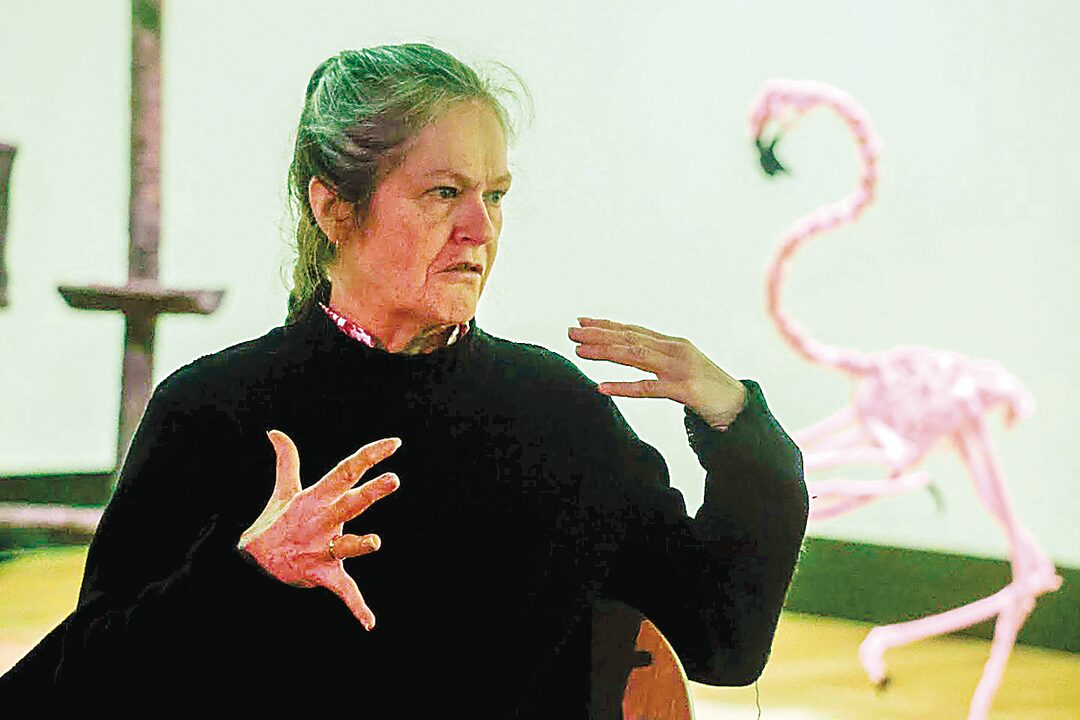
BRINGING life to creatures of the past, Anatomy Lessons, which is currently featured at Latrobe Regional Gallery (LRG), shines a light on the impact people have on the things around them through skeletal-knit animals.
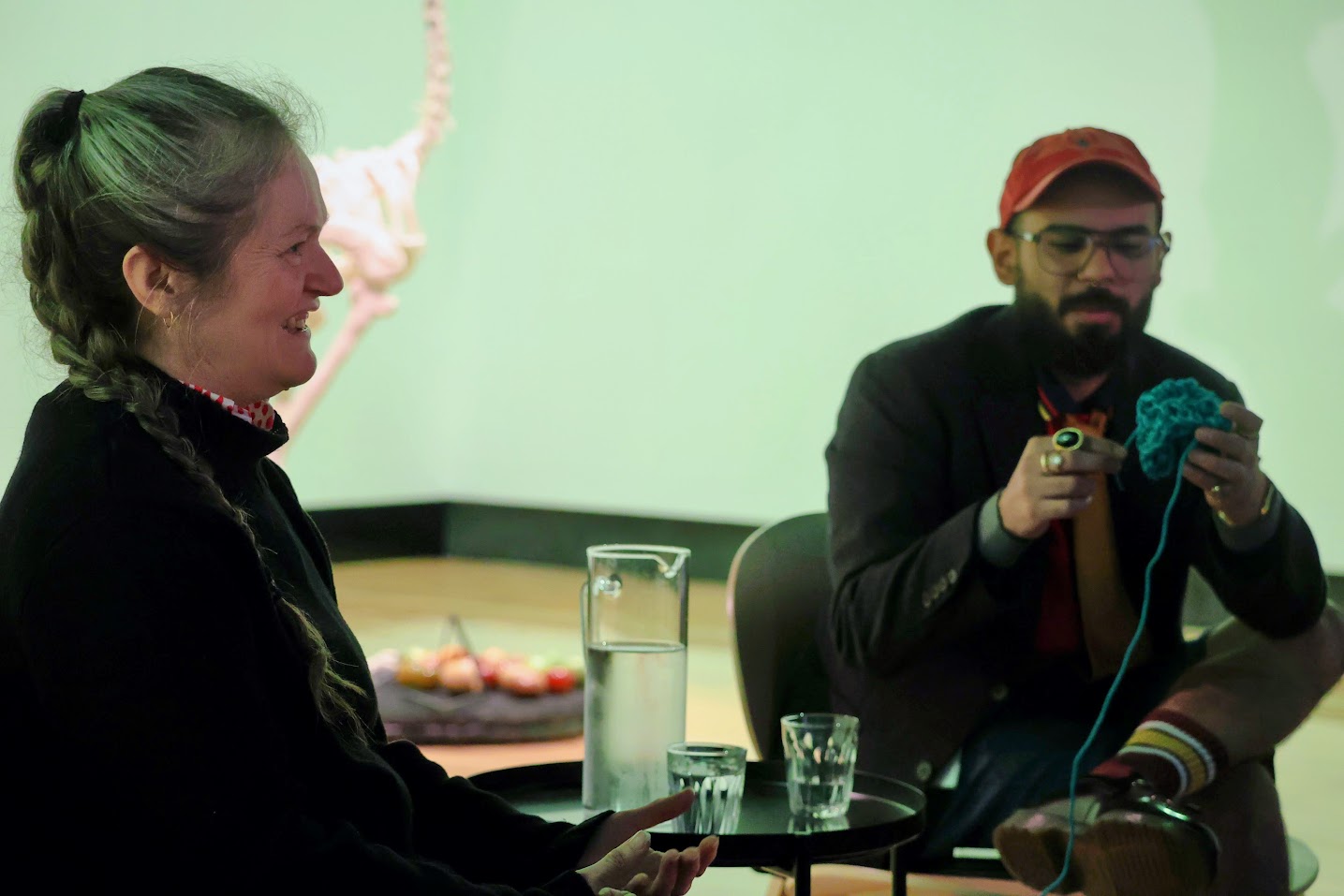
With a chance to learn about the craft and creatures created, New Zealand-Australian artist Michele Beevors welcomed more than 15 attendees to an artist talk session on July 11.
Joined by LRG’s exhibitions curator, Juan Rodriquez Sandoval, Ms Beevors helped attendees explore the project’s inspiration and motivation and peer into personal experiences.
Ms Beevors is originally from Australia, but has been practising in New Zealand for the last 22 years. She has a Master’s in Fine Arts and is a principal lecturer and sculptor at Dunedin School of Art, Otago Polytechnic, New Zealand’s oldest and one of its most prestigious art schools.
Beevors holds postgraduate degrees from the Australian National University in Canberra and from Columbia University in New York.
Sharing her exhibition with Latrobe locals and beyond, Anatomy Lessons took Ms Beevors more than 17 years or 36,000 hours to knit, along with hundreds of sketches of each creature. Each creature knitted by Ms Beevors tells a different story of the human impact on the environment around us.
Ms Beevors interest in knitting was generational. She told the group that her mother used to knit.
Many memories sparked the course of the exhibition and her work, with the memory of a horse starting the collection.
“My father used to take me riding instead of taking me to church,” Ms Beevors said.
Later in life, her father got cancer.
“Over the two years he was struggling and was bedridden, I was sitting by his side,” she said.
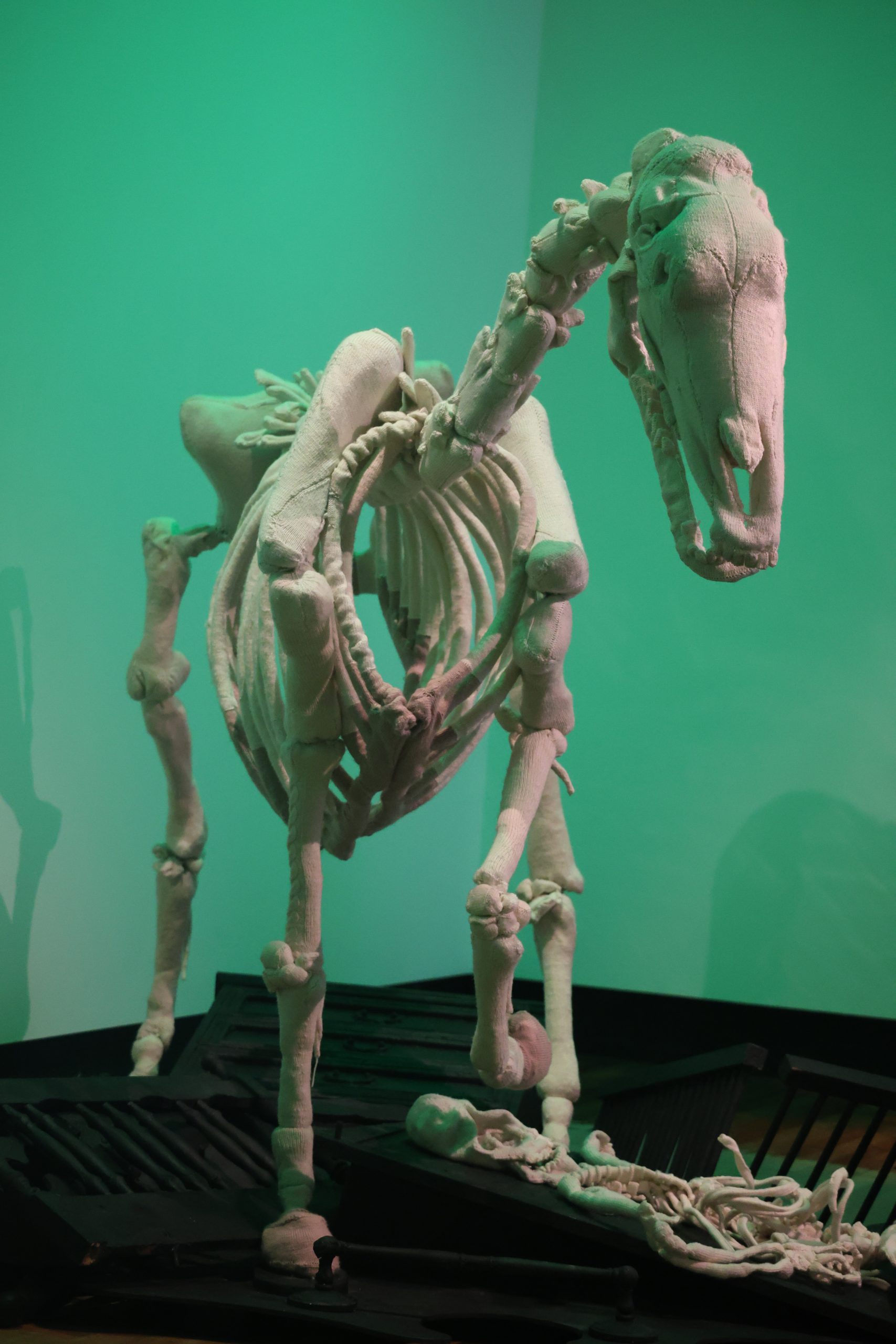
“(While sitting by his side) I was knitting the horse and continued to knit that after he died because I couldn’t do anything else. That moment made me feel connected to my father.”
The knitted horse at LRG is standing over a rider. Ms Beevors explained that there is a famous skeleton in the Sydney museum of a horse and rider, which was her first encounter with skeletons in a museum.
Going back to her first experience with animals, Skippy the Kangaroo, Mr Rodriquez and Ms Beevors touched on the first interactions most have with animals and how they absorbed those experiences.
Taking those experiences and combining each work with thorough research, Ms Beevors spends hours on each piece, not just knitting, but sketching to ensure she captures the beauty of each creation.
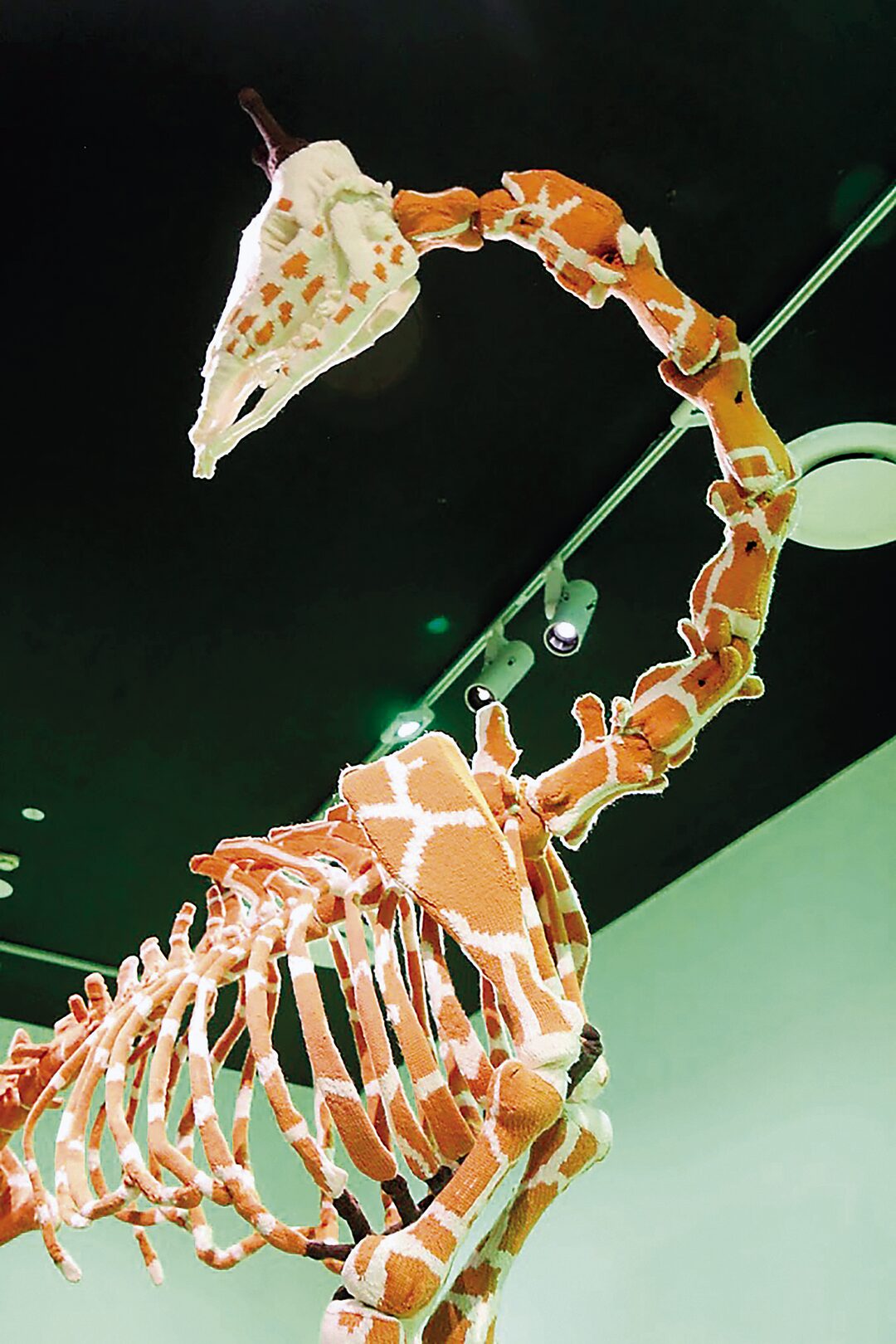
For the giraffe, for example, Ms Beevors went to Tūhura Otago Museum to draw, photograph, and measure a four metre tall subadult African giraffe skeleton. She used these exact dimensions to craft a life-sized, hand-knitted adult giraffe skeleton over five metres tall.
Behind each animal in the exhibition is a story.
“They’re always telling us stories,” Ms Beevors told the group.
“Thinking through that idea, John Burgess’s way of animals … thinking through that idea of not telling our story but telling the animal’s story is important to me. It was important to me that (it’s not just) a skeleton.”
One of the examples Ms Beevors used was of the elephant. The elephant in the exhibition is a female Asian elephant (Topsy) electrocuted by the Edison Manufacturing Company in January 1903. The group deemed her “too dangerous” after she killed a spectator who burned her trunk with a lit cigar.
Ms Beevors work focuses on violence: dissection and restitution; death: specimen and requiem; grief: solastalgia and entanglement; and labour, materiality and companionship. Through these subjects, Ms Beevors explores human relationships with non-human forms of life, highlighting decolonial, feminist and activist values.
Everything behind the work has meaning, including the stand on which each piece sits.
Anatomy Lessons is open to the public at LRG until August 23.