


By DAVID BRAITHWAITE
CHANGES to voting for the upper house of state parliament is set to affect the electoral fortunes of smaller political parties.
The Electoral Amendment (Miscellaneous Matters) Bill 2026, introduced into the Victorian Parliament last week, will abolish group voting tickets. This will make it harder for candidates who received a low primary vote to be elected thanks to complex preference deals.
According to the government, this will end “preference whispering”, where parties strike complex preference deals that can see candidates elected with only a small share of the primary vote.
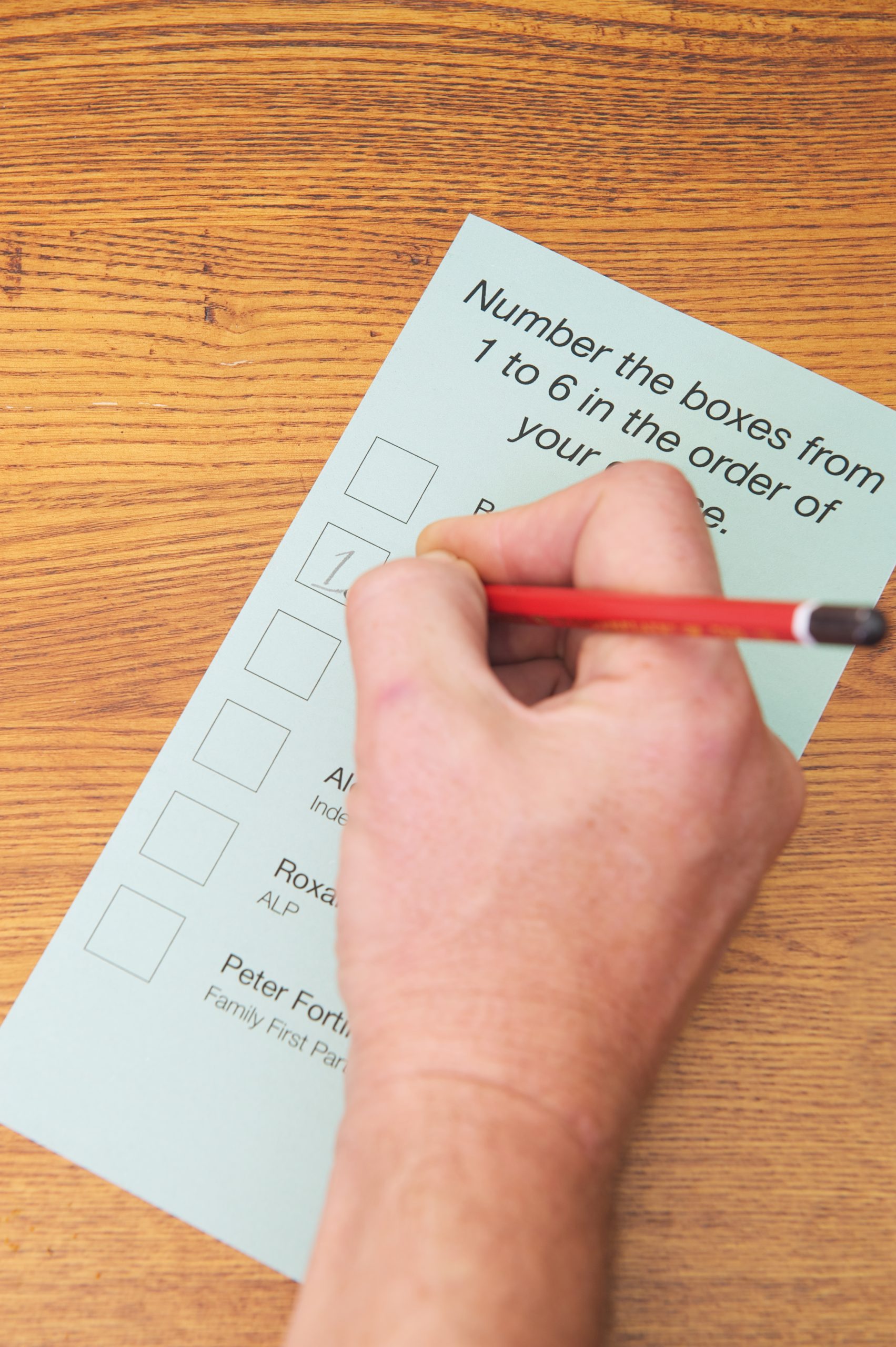
In previous elections for the upper house, voters had to their place a ‘1’ in line their their preferred group of candidates above the line on their ballot paper, with their preferences to flow based on that party’s order, or number every box below the line in order of preference.
A new above-the-line voting system, similar to the one used to elect the federal Senate, will require voters to number at least five groups in order of preference. Those preferences will then flow to candidates in the order they appear below the line for each party or group.
This change will also bring Victoria into line with other states.
The government says this will put voters in control of their preferences, making elections fairer and more transparent.
The reforms will also require the Victorian Electoral Commission to publish information about new political parties – this is in response to concerns that the name of some parties don’t always tell voters who is behind them or where their preferences may flow.
Premier Ben Carroll said the reforms would ensure Victorians could be confidence in their electoral processes.
“Fair elections are the bedrock of democracy,” he said.
“Victorians shouldn’t wake up after an election wondering how someone with only a handful of votes ended up in parliament.”
Special Minister of State Ingrid Stitt said the government was making elections “fairer and more transparent” by removing backroom preference deals, “ensuring Victorians know exactly who they are voting for”.
The bill has the support of Labor, Liberal, National and Greens MPs. One Nation, which could benefit from the reform, is also supportive.
Victoria is divided into eight upper house regions, each represented by five MPs. Gippsland is part of the Eastern Victoria region, which stretches to the Mornington Peninsula and the outer eastern suburbs of Melbourne.
To be elected, a candidate needs to get at least 16.7 per cent of the vote, either through primary votes or preferences.
The previous complex scheme has allowed so-called micro-parties to pool preferences who vote above the line on the ballot paper. Candidates have gone ahead of more popular ones through preference deals.
One of the MPs who has benefitted from this is Shooters, Fishers and Farmers Party Member for Eastern Victoria Jeff Bourman.
An MP since 2014, Mr Bourman was election despite receiving three per cent of the primary vote, less than the lead candidates of the Greens, Legalise Cannabis, Democratic Labour and One Nation parties, who did not get elected.
Mr Bourman’s chances of re-election are likely to be hindered by the abolishment of group voting tickets. The Express asked Mr Bourman’s office for his response to the bill, and how it affects his chances of re-election.