


By DAVID BRAITHWAITE
THE National and Liberal Coalition’s forestry and timber policy centres on “active forest management”.
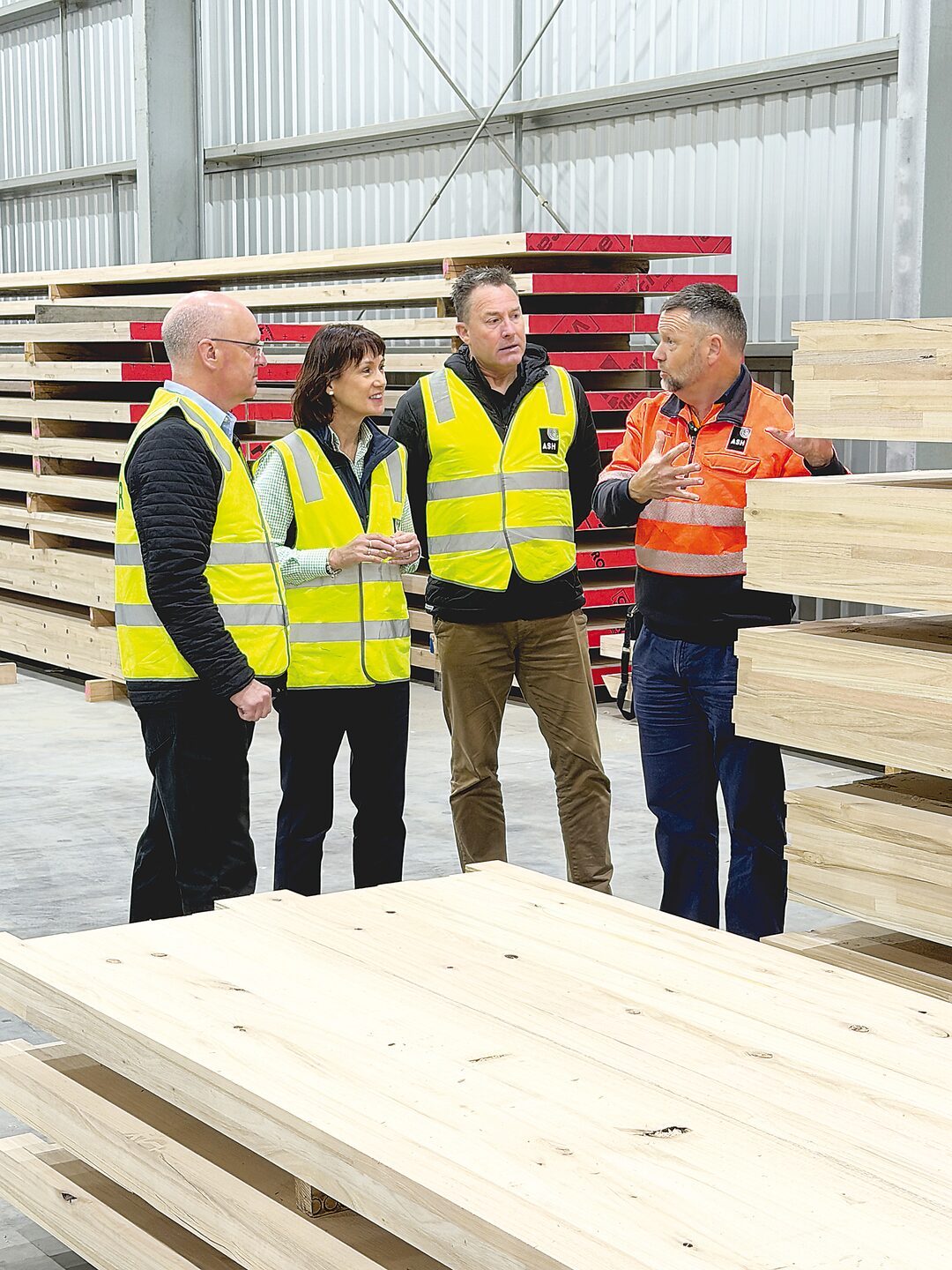
Pleading to protect healthy forests and restore degraded ones through a Forest Management Program, the Nationals formally announced the policy at Heyfield last Wednesday morning.
The Coalition parties promised, if they form government after this month’s state election, to reintroduce the timber industry with product obtained through forest restoration and fuel reduction measures, while protecting old growth and hollow-bearing trees; double planned burning and expand cultural burning in partnership with Indigenous Victorians to reduce fuel loads and build and maintain a statewide firebreak network; deliver an expanded bushfire detection camera network across eastern and western Victoria; control invasive pests and weeds; put more rangers on the ground, and deliver increased public reporting every year on biodiversity and ecological outcomes.
State Nationals leader and Member for Gippsland South, Danny O’Brien said the two parties would put forest management back at the forefront of what happens with state forest reserves.
“(The plan) will include active management of about 5000 hectares per year of our forests – of degraded forests, forest that have been impacted by repeated bushfires, that have not had sufficient regeneration that are impacted by pest and weeds,” Mr O’Brien said.
“That, along with the roading work that needs to be done and the fire break that will be done right around the state, that will produce timber, that will produce logs. Some of it will be low quality, some of it will be saw logs.
“We will make sure that those logs are available to support local timber mills, to support jobs in our regions and to support our timber communities that have been let down by a Labor government that dumped them for chasing Green votes, that shut down the native timber industry at massive costs, particularly to Gippsland communities, to the north-east to other parts of the state, where timber was an important source of local employment.”
Mr O’Brien said timber would be a by-product of this forest management.
“That will be used locally for best in highest value use – whether that’s firewood, whether it’s saw logs, whether it’s to things like biochar,” he said.
“Make no mistake, this is about forest management. We have had too long of a ‘lock it up and leave it’ approach. This is about making sure that we actually managed the forest – that we treat the pest and weeds, that we provide the firebreaks, that we provide the access in there through roads to ensure that firefighters can get there when the wildfires come, and making sure that then, when there is timber, when there are trees taken out for all those activities that we put it to its most high value use, and that we support local jobs here in Gippsland and in other areas of the state.”
It was no coincident the policy was announced at ASH Timber, which Mr O’Brien said has to use overseas and interstate timber at its manufacturing facility.
“Our active forest management program will deliver some timber, and it will be made available to mills like Heyfield that will be able to purchase it, add value, create jobs and create economic activity for our state. That, in itself, will help pay for the forest management program, so to some degree at least, it will be self-sustaining,” Mr O’Brien said.
Member for Eastern Victoria and Shadow Public Land Use Minister, Melina Bath said the Labor government’s “lock up and leave” approach was “unacceptable”.
“It’s unacceptable from a forest point-of-view, it’s unacceptable from a community risk point-of-view, and it needs to change,” she said.
“(Labor’s) decision is neglect, our decision is active management of our forests.”
Ms Bath said the Coalition’s policy was “a win” for the environment, forest communities, and “for a cyclical process that helps regenerate and refund this ongoing maintenance”.
“This is important work, we have collaborated with scientists over the time, with timber communities with former forest harvesters, with former workers in this industry, and we know that we have the right policy settings, both for the benefit of our communities and for the safety and health of our forests,” Ms Bath said.
Member for Morwell, Martin Cameron said the announcement was great news for local cartage contractors.
“We see them heading up-and-down the highway at the moment, with logs on the back of their truck, but their logs were interstate and overseas,” he said.
“We need to make sure that the products that we are gaining here locally are staying locally for use in mills that are like here at Heyfield, and also that local cartage contractors can work local – give them some certainty because they have had no certain since the timber industry shut.
“We are also bringing them back to the forefront, so they’ll have certainty for their workers. They are going to be carting local timber locally to our local mills.”
ASH managing director Vince Hurley welcomed the Coalition’s plan.
“I think the announcement of active forest management to fix degraded forests is good for the state, it’s good for the people of Victoria, it’s good for communities like ours, it’s good for fire management, it’s good for fire suppression, it’s good for managing pest, plant and animals,” he said.
“But for us, it’s a lot of it is about is good for the people in Victoria, who now will have access to our high-quality products again that are locally-produced.
“We’ve been calling for active forest management for quite a while, or something that will deliver great outcomes in the forest. Remember, Heyfield’s been impacted by bushfire three times in the last 25 years, so having active forest management to enable bushfires to be controlled properly to allow the forest not allowed to be continually degraded is good for Heyfield and good for local communities, but it’s also good for employment here.”
Mr Hurley said ASH had to make major adjustments to the business after the ending of native timber harvesting in Victoria in 2024.
“It’s been very tough, we’ve had to source our timber from elsewhere. We’ve had to buy operations in other states, we’ve had to go to the United States and manufacturer in Australia,” he said.
“We’ve also had to spend a lot of money on capital works … we’ve built four of these new factories since 2019, and that’s to pivot.”
Under the Coalition plan, Mr Hurley said ASH would be able to supplement its current supplies with local wood.
“By supplementing it with local wood, it means it’s economically better for us, it’s better for the local communities, it’s better for the local contractors, and it’s better for the people in Melbourne,” he said.
One Nation previously promised to resume native timber logging in Victoria, with its policy also including provisions to protect old-growth forest and native habitat.
Labor Member for Eastern Victoria Region, Harriet Shing, who stood alongside then Agriculture Minister Gayle Tierney at a sombre media conference at TAFE Gippsland when the announcement to end native timber harvesting was made in 2023, said there was too many holes in the Coalition’s plan.
“It’ll be a challenge, to put it mildly, for state forest to be used, given for old growth and native timber harvesting, where we’ve seen repeatedly, wood challenges, that led to timber yards being empty, to workers sitting at home without certainty and for businesses to not being able to continue to run their operations,” she told the Express.
“We have invested in planting millions of trees to enable us to deliver on plantation timber to meet current and future demand, and the industry is transitioning to enable local businesses to process and produce the products that we need.”