



By PHILIP HOPKINS
ONE of the world’s leading nuclear experts has told the Express that nuclear energy – even at the cost of $US10 billion for a 1000 megawatt unit – makes the electric grid cheaper, cleaner and more reliable when combined with other energy forms such as gas, coal and renewables.
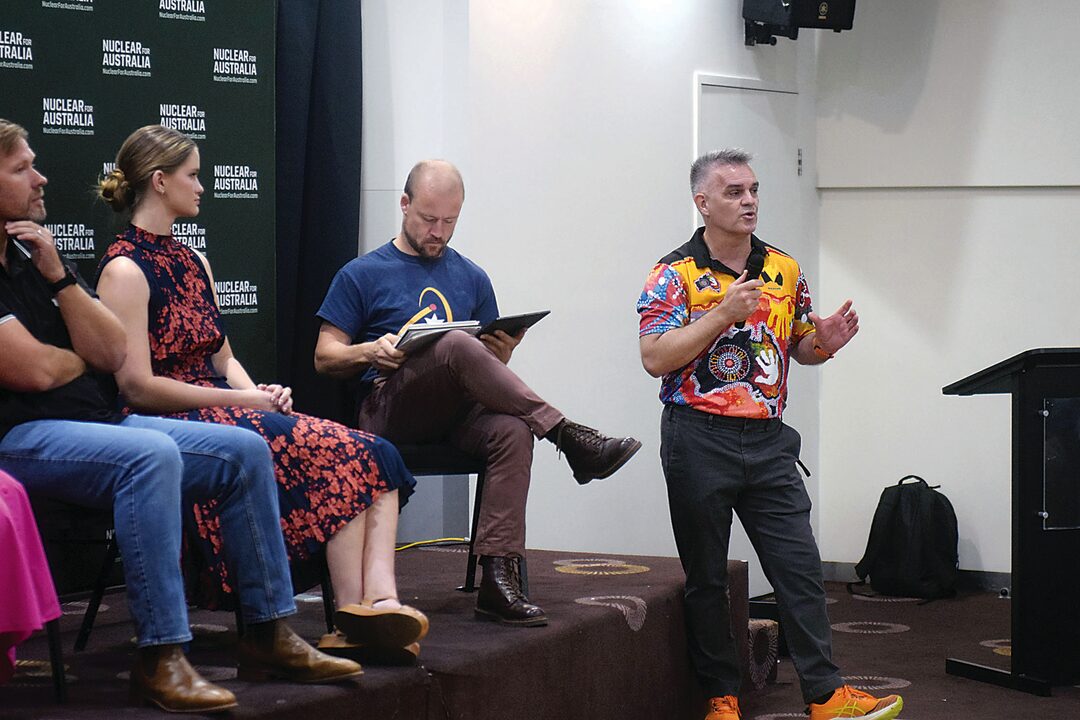
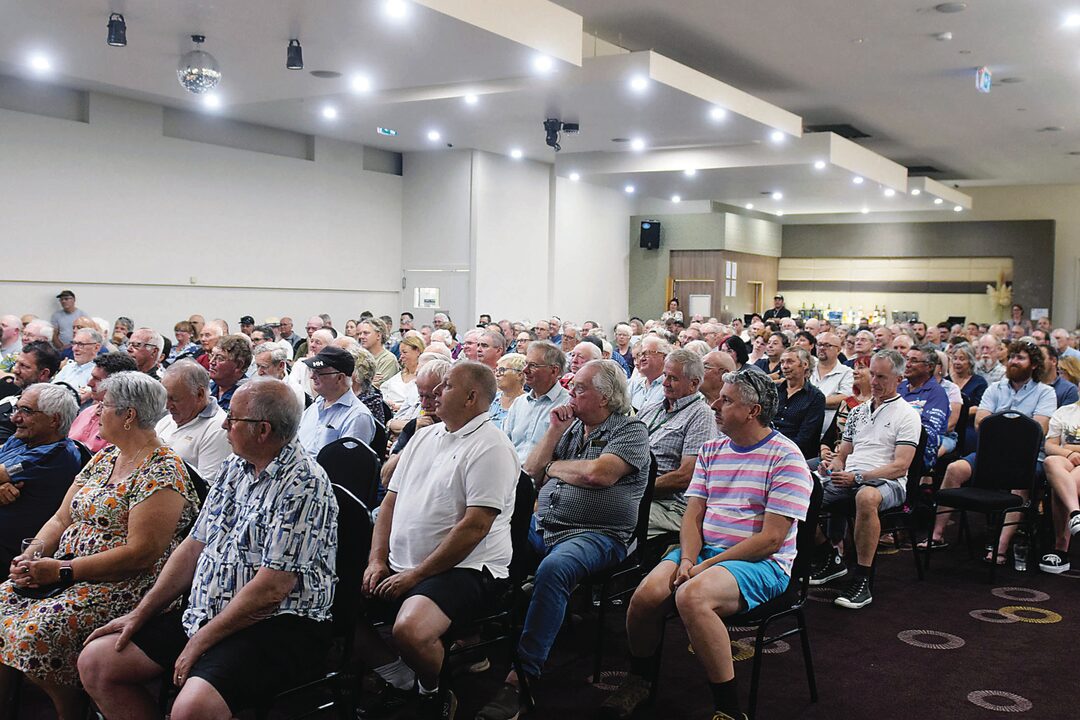
Jacopo Buongiorno, the Professor of Nuclear Engineering at the Massachusetts Institute of Technology (MIT), made these comments during a recent roundtable discussion at the Parliament of Victoria hosted by the Libertarian Upper House Member, David Limbrick.
Mr Limbrick is a Legislative Council member for South-East Metropolitan.
Professor Buongiorno, who is also an elected member of the United States National Academy of Engineering, has published more than 100 journal articles and teaches a variety of undergraduate and graduate courses in thermo-fluids engineering and nuclear reactor engineering.
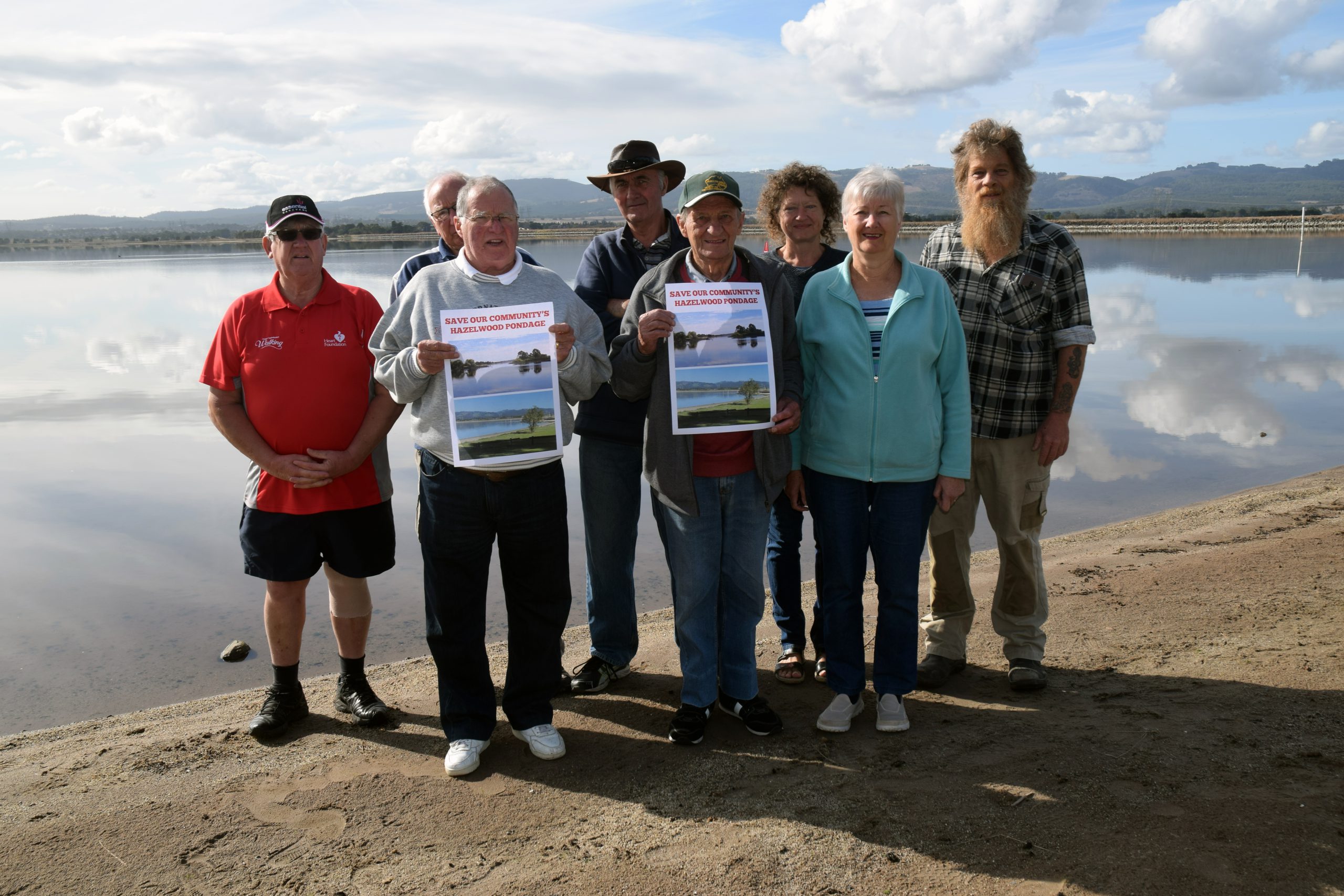
Nuclear energy remains a viable option for the Latrobe Valley if the federal ban on nuclear is lifted.
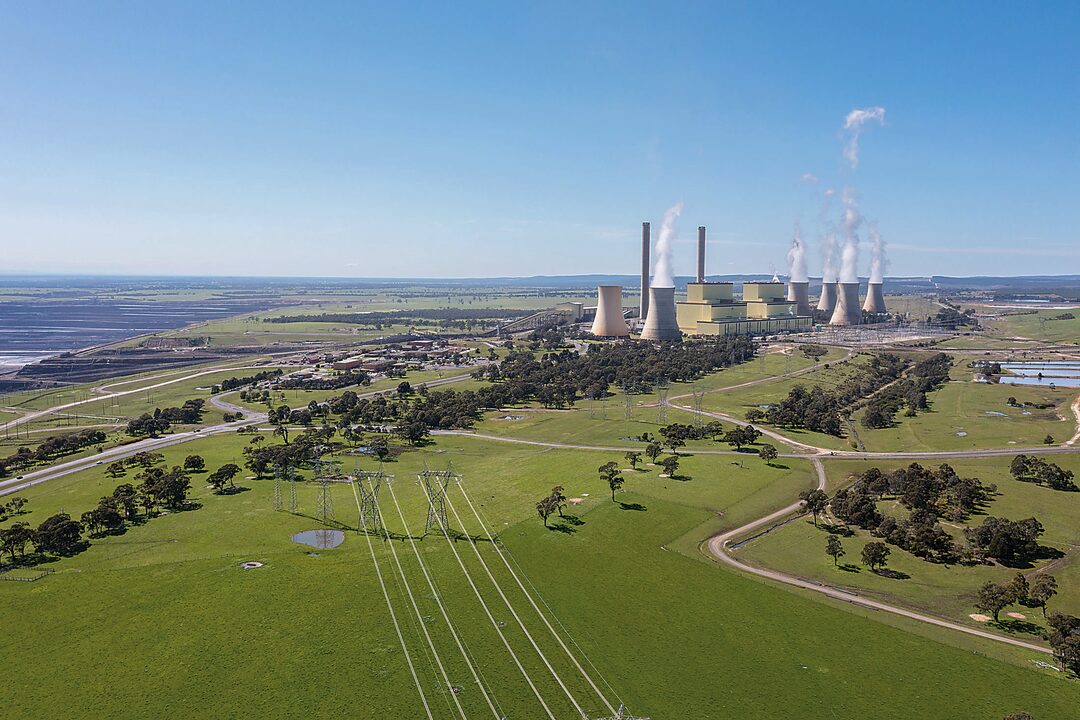
The federal Opposition at the last election promised a government-owned nuclear plant at the site of the Loy Yang A coal plant, due to shut in 2035.

Professor Buongiorno in 2016-2018 led what became an influential future study on the future of nuclear energy.
“It allegedly changed the (nuclear) conversation in the US towards economics – a big hurdle,” he said, away from safety, technology or waste, which tend to be incorrectly over-emphasised.
“In the end, the reason why nuclear was not growing as much as it could, was its high upfront cost and poor business model; it was the first major academic report that shone a light on that,” he said.
“The rest is history; now there is a lot happening in the US and everywhere with nuclear start-ups, and also established companies are finally finding their way back into new nuclear construction.”
Comparing renewables and nuclear, Professor Buongiorno said a look at system costs – the accurate costs of generation, transmission and distribution, including back-up, batteries as energy storage – showed that “a grid without nuclear is more expensive than a grid with nuclear”.
Professor Buongiorno said nuclear power by MW-hour is expensive – “that is clear”. But nuclear “lowers the average cost of electricity in the region significantly”, particularly when there is a mandate to reduce greenhouse gas emissions.
The conclusion is solidly quantitative even when the effects of location on the quality of the renewable energy resources and the cost of nuclear are accounted for.
“Including nuclear reduces the need to overbuild the capacity of renewable generation, back-up and energy storage, as well as transmission and distribution, to meet demand reliability at all times of the day and throughout the year,” he said.
Professor Buongiorno said it helped that nuclear in the US had been bipartisan for a decade.
“Not a single piece of legislation in the past 10 years was passed without bipartisan support – overwhelmingly. That creates an environment for an honest conversation on energy,” he said, minus petty technology wars.
There are different technical lifetimes for different assets, Professor Buongiorno said.
Solar panels and wind farms last about 20 years, sometimes even less, while the initial licence for a nuclear power plant reactor is 60 years, some go to 80, some may even go to 100 years.
“After 20 years, you have to replace wind with wind, discount the value and have enough capital after 20 years to finance it. Once you build a nuclear plant, it becomes a long-term national asset. The fleet in the US is a jewel; it has been producing 20 per cent of power steadily with 90pc capacity factor year after year for decades.
“The electric utilities are finally making money with nuclear again, so there is no shutting them down until the plants are fit to run,” he said.
Issues such as vessel embrittlement, stress corrosion cracking, and the ageing of the concrete must be dealt with, but at the moment, “it looks like you can run these plants for up to a century.”
Professor Buongiorno said the trend was so strong that plants that were shut down five or six years for purely economic reasons, such as Three-Mile Island in Pennsylvania and two more in Michigan and Iowa, were now being brought back.
“All three were mothballed and reasonably well maintained. Now the economic case for new nuclear is so strong. Constructing new plant is expensive, but bringing these plants back is relatively cheap, a few billion in comparison to $US10-plus,” he said.
Professor Buongiorno said market distortions in the US – some states were regulated and others were deregulated – were also responsible for some nuclear shutdowns in the 2010s.
“In regulated markets, there was no issue; baseload generators were making a reasonable profit over their cost, they were safe; in deregulated markets, you were at the mercy of the wild price fluctuations due primarily to wind generation and subsidies,” he said.
At times of high wind generation, the prices plummeted, but power plants were still generating and losing money.
“You can’t turn on and off a nuclear power plant because the fixed costs are too high. It does not make sense to shut it down for two days; that is a losing proposition for nuclear.
“It did not help that individual states were subsiding wind, particularly in the mid-west. Electricity prices on some days in the US were negative, they paid people to take the electricity.”
In Australia, Professor Buongiorno said assessing the cost of nuclear by citing the worst construction case in the world was “absurd” and somewhat biased.
“A more balanced approach would be to buy from an experienced country like South Korea, or the US and France after they have built a few, “he said.
In the US, Professor Buongiorno said data centres were becoming unpopular in rural areas where nuclear, gas or coal plant produced power at normal prices.
“Data centres pay a premium for guaranteed long-term supply. What was guaranteed cheaper electricity prices to local residents is now taken by the data centres, so their electricity bills go up,” he said.
“On top of that, data centres don’t employ a lot of people. It’s a bit like a big warehouse, once you build it, only a few are needed to run it. It does not have a significant economic footprint. Nuclear power plants employ a lot of people and have a big local economic impact also in terms of jobs and tax revenue.”
Professor Buongiorno said the growth of data centres was unclear, but restarted, uprated and new nuclear reactors were likely to eventually supply about 20 per cent of data centre power needs.
“The rest will come from natural gas, sadly for the environment,” he said.
On nuclear power’s use of water, Professor Buongiorno said power plants (nuclear, coal, gas, concentrated solar) are heat sources that use water from the sea or river. The water is returned to the source, but warmer; the water is not continually consumed.
“The warmer water could harm wildlife, which is why we are seeing power plants, for example in France in the Rhone Valley, operating at lower power. This is an operational challenge, not a safety issue,” he said.
“Other ways to use water to dissipate the heat are through cooling towers. These have a visual impact and they actually consume a bit of water by turning it into water vapour but process less water overall by a factor of 10 and do not return it warm to the river or sea, thus minimising the environmental impact.”
The ultimate approach is dry cooling, where no water at all is used, but this is more expensive, with big fans dissipating the heat.
“With air cooling, the efficiency of converting heart to electricity is reduced a bit. But it is a completely benign alternative – it adds to the cost, but not enough to destroy the economics if one is really motivated to save water,” Professor Buongiorno said.
On small modular reactors (SMRs), Professor Buongiorno said the name was a misnomer.
“Most are not small or modular but are smaller than traditional designs. The fleet of reactors in operation in the US and the world comprise mostly of gigawatt-scale plants, the machines the industry has built and operated for 40-50 years,” he said.
“They work well. After paying back the initial construction cost of the plant, they are inexpensive, but if you have to build a new one, in the US or Europe, it will set you back $10b per gigawatt (GW) – expensive but not outrageous, it depends on the customer.”
However, smaller customers or operators who could not risk an investment of tens of billions are interested in SMRs.
“Being physically smaller, and a bit simpler design, they will cost less in absolute terms, instead of $US10 billions, maybe $US2-3b – the range where the customer base is broader, but because the units are smaller, they are less efficient at generating electricity, so the cost per unit of electricity will certainly be higher,” he said.
“This cost trend continues down to micro reactors, down to one, five, 10 MW. They will be very cheap, but the electricity they produce will be three or four times more expensive than a large unit.
“You’re trading – the financial and project risk with higher cost of electricity and energy later on. The sweet spot for some may be in the middle.”
Professor Buongiorno said in Australia, it makes sense to plan now for large-scale nuclear reactors that could be ready to operate in 15-20 years’ time and when current renewables “fall over”.
“The total capacity of the grid is 25GW, large enough that a couple of GW-scale reactors makes sense,” he said.
Nuclear is also the best way to provide power for desalination on a grand scale.
“Total water consumption in Australia – for the economy, residential, mining – is such that it would require 7GW, only a handful of large reactors, to produce enough desalinated water for the whole nation. Even at $100b, it would give the country a complete 100pc-plus of fresh water. That’s not an outrageous investment,” he said, with nuclear reactors located on the coast.
Professor Buongiorno said ‘nuclear waste’ is a small amount of material that is not really waste.
“What people call waste, it’s the spent fuels out of the reactor. It has lost some of its energy, but there is still a lot of energy left in that material,” he said.
“The problem with reusing it, you have to reprocess it, which is expensive and complex.
“The spent fuel is highly radioactive, you have to separate what is useful from what is garbage, and then refabricate what is useful into a fuel element that you can put back into the reactor.
“It sounds simple but is very complicated and expensive – you need a reprocessing plant, you need a refabrication plant – you’re looking at tens of billions of dollars just to do that. It’s much easier to implement a once-through cycle – mine the uranium, process it, enrich it, turn it into fuel, put it in the reactor. Once it comes out, it cools down for 10-15years, then put it underground.
“Underground repositories have been extensively studied and now are becoming a reality. Finland will open their repository underground this year. Sweden, France and Canada will follow. The politics of ‘nuclear waste’ disposal has always been the problem, not the technology.”
Noting that former Prime Minister, Bob Hawke, had mooted taking the nuclear ‘waste’ from other countries, Professor Buongiorno said the business case for taking waste from many countries “would be very strong”.
If Australia repealed the ban, the economic opportunity for nuclear is strong overall, and the just signed uranium deal with India goes in the right direction.
“Australia is also well connected to all international nuclear agencies,” he said.
In the US, younger people are interested in nuclear and did not put nuclear and renewables into conflict.
Professor Buongiorno said the economic situation, in terms of high-quality, well paid jobs in the US has been deteriorating continually since the early 2000s, in part because of outsourcing to Asia and Central America.
“That’s why Trump won,” he said.
“Ontario in Canada is reindustrialising very aggressively, and they are doing it with nuclear,” he said.
Ontario has recommitted to existing nuclear plants that had been set to shut down but is also building new nuclear plants.
“They see the direct impact those projects will have – jobs, during construction and operation, extra energy to bring back industries they have lost.”
Ontario had two very strong electricity utilities with big balance sheets and great nuclear experiences.
“They recently completed large refurbishments on time and on budget – unique in the West in the last 20 years,” he said.
“The government is also now putting in money. First Nations are now a co-investor in an SMR project of about $C1b. There is a positive vibe, a huge social licence.
“Canada shares a lot of Australia’s cultural history, so it could be viewed as a meaningful example.”
Elsewhere, in China, Korea and India, nuclear programs are directed top down.
“They are national projects; ‘We will figure out the financial and the licensing’, mostly not private capital. In the US, it will have to be private capital. The Eastern Europeans are hiring outside expertise,” Professor Buongiorno said.