



By PHILIP HOPKINS
TWO former CSIRO chief research scientists have strongly criticised a recent ABC Four Corners report on Gippsland native forestry as “seriously deficient” and ill-informed.
In a letter to ABC managing director Hugh Marks, the former CSIRO chief research scientists Dr John Raison and Dr Sadanandan Nambiar AO described the recent Four Corners episode, ‘Timber Turmoil’, as “yet another catering for the anti-forestry campaign, designed and delivered accordingly”.
The program argued that Victoria, having banned native forest logging, was now relying on importing native timber from Tasmania through Victorian government money.
The program described two Gippsland businesses, Australian Sustainable Hardwoods (ASH) at Heyfield and Powelltown Sawmills, near Warragul, as being intertwined in Tasmanian logging.
It quoted David Lindenmayer, professor of ecology at ANU, who claimed Victorians were effectively paying for logging in Tasmania.
ASH managing director Vince Hurley said the money was in fact from a penalty payment the company was entitled to.
The two chief research scientists said the program was seriously deficient in reporting on the science underpinning sustainable management, including harvesting, of Australia’s native forests.
“We are advised that the ABC was provided with relevant scientific background papers and offers from senior scientists to be interviewed – but to no avail. We recently published a detailed scientific analysis and rebuttal of the main claims and allegations made by activists against the harvesting of native forests,” they said.
“The program repeated many of the false claims and ignored all alternative science-based information.”
Dr Raison and Dr Nambiar said Prof Lindenmayer had several appearances and was used in interview to promote the program.
“He repeated his well-publicised (including via several ABC programs) claims including that harvesting is accelerating the loss of old habitat trees and other biodiversity values, is increasing bushfire risks and threatens water supply. He accused state forest management agencies of ‘rape and pillage’ of native forests,” they said.
“These serious allegations were left unquestioned by the presenter. All the claims above have been strongly challenged or debunked by critical scientific research and analysis published by several academics and researchers, and by experienced forest managers.” The scientists said the ageing process and repeated wildfires were the main factors driving loss of old trees, not harvesting.
“Detailed studies over extensive areas have shown that harvesting does not increase either the severity or area burnt by wildfires at the landscape scale because harvested areas are small and dispersed,” they said.
“Fire weather, heavy fuel loads and steep topography are the main drivers of extensive wildfires. Good planning and regulated harvesting are effective in protecting water values – repeated claims that harvest of mountain ash forests is a threat to Melbourne’s water are based on flawed and outdated modelling.”
Dr Raison and Dr Nambiar said in this program and on several occasions previously, the ABC sought only the opinions and conclusions on native forestry from one academic source, as though Australia has no other science-based expertise spanning the country’s diverse native forests and how to sustainably manage them.
“The extensive on-ground experience of many hundreds of dedicated forest managers across the country seems to matter little. This skewed approach is a disservice to the community and does not reflect well on our national broadcaster,” they said.
“The program used emotive techniques to create a negative image of native forest harvesting. Thus, we saw the reporter and Prof Lindenmayer standing on large stumps to create the impression that cutting down old-growth trees is common when in fact almost all areas now harvested are regrowth originating after earlier harvesting or wildfire.”
Nationally, the scientists said about 95 per cent of current harvesting uses lower impact selective removal trees – “but background images used in the program mostly show intensive higher impact harvesting operations”.
“Then an activist spotlights to locate a glider and argues that their identification of ‘den’ trees will save gliders from harvesting. No mention is made of the considerable efforts made by the Forestry Corporation in pre-harvest surveys, and in modifying harvest plans and practices to protect endangered species,” they said.
“The activist from the Wilderness Society made the usual allegation, without providing any evidence, that harvesting is destroying forests and creating major threats to biodiversity, especially old-growth forests.”
The program made much of so-called ‘timber turmoil’.
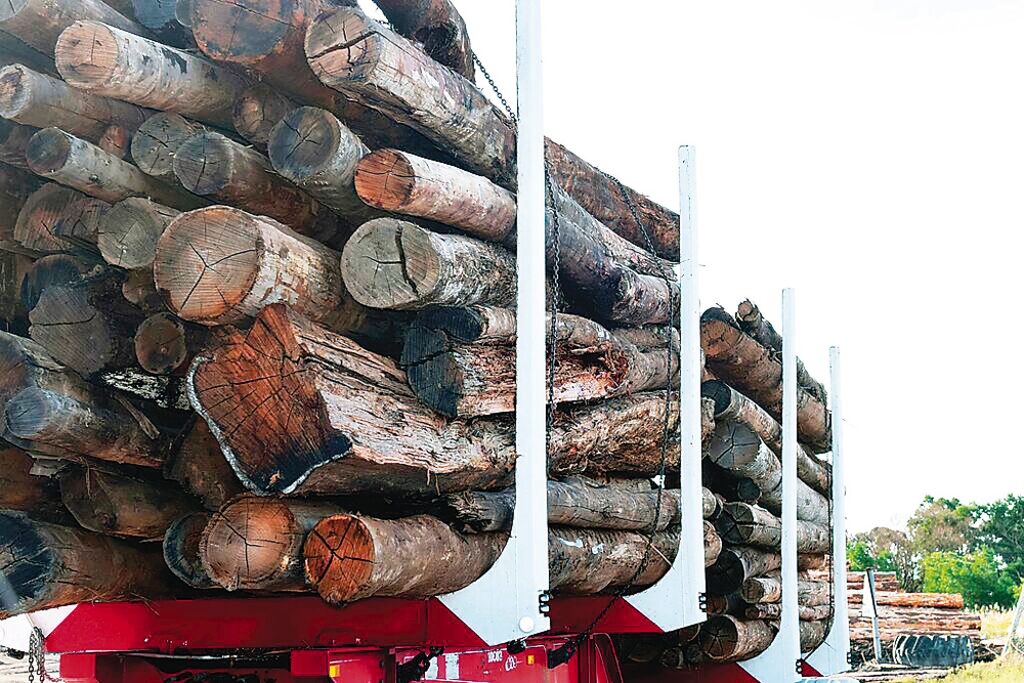
At the hub of the story was the discovery (by the ABC and anti-forestry ‘detectives’) that a small quantity of logs from Tasmanian public forests are being sold and transported to Victoria for processing.
“What is improper or wrong about that? The logs are being legally sourced from sustainably managed, independently certified, forests and being converted into high value, strong, long lasting (storing carbon) and beautiful wood products which we use,” Dr Raison and Dr Nambiar said.
“Those industries support rural economies and jobs for hundreds of fellow Australians and is exactly what we should do and promote. Such activities are internationally recognised as one effective way to support climate change mitigation. The allegations made by Prof Lindenmayer and by the Wilderness Society that Victorian taxpayers are subsidising a ‘zombie’ industry are flimsy and highly disrespectful.”
Dr Raison and Dr Nambiar said broad claims and campaigns against native forestry, including calls for a total ban on harvesting, were largely based on misinformation, selective or flawed use of science, misplaced focus on iconic fauna and exaggerated accounts of occasional management failures.
“Such campaigns hinder the development of better policies and practices that can benefit both the environment and the community. What we urgently need is not more ‘Forest Wars’ or one-sided activism, but science-based forest policies that support informed conservation and enable sustainable forest management for multiple forest values and community benefits,” the scientists said.
THE ABC’s Ombudsman’s Office last month released a report on the controversial Four Corners episode, titled ‘Timber Turmoil’, after receiving five complaints.
The ABC says the editorial and newsworthy focus of the program was the discovery that native timber logged in Tasmania is being shipped to Victoria for processing, where native logging had been banned, including to a timber mill that had received government support following the shutdown of the local native timber industry.
The ombudsman on August 4 ruled the investigative program, aired on June 22, did not breach the ABC’s editorial standards for accuracy or impartiality.
Featured in the program was Victoria’s biggest native hardwood sawmill, Australian Sustainable Hardwoods (ASH) at Heyfield, which now mainly survives on trees from Tasmania: half from plantation and half from native forests.
The complainants believed the episode was not impartial because it was framed as anti-native forestry and highlighted the views of industry critics and did not include alternative arguments or represent the perspectives of the industry.
“Four Corners went to great lengths to include assertions of how important timber jobs are to regional communities. The reporting team spent time speaking, on camera, to people around the town of Heyfield, where ASH is based, where we showed how vital the mill is to the region,” Four Corners said.
One complainant objected to the statement that Victorian taxpayers had put “more than $110 million into” a timber mill in Victoria.
ASH managing director Vince Hurley said in the episode it was wrong to characterise it as taxpayers’ money as most of it was from a penalty payment the company was legally entitled to.
The ombudsman said this distinction was conveyed in the program and Mr Hurley’s point of view was shown.
“Regardless of the category of the money given to ASH, and for what purpose, the underlying fact remains that more than $110 million in Victorian taxpayer dollars has gone to ASH,” Four Corners said.
In a statement after the program aired, ASH said ABC’s editing of the interview with Mr Hurley was dubious.
The ombudsman said Mr Hurley’s responses were edited together from different parts of the interview, with Four Corners saying doing so was to strengthen Mr Hurley’s point of view.
Critics of the episode, not just the complainants, have framed the episode as anti-native forestry, pointing to statements by the presenter that native forest logging was unpopular and losing political support.
Four Corners pointed to polling data “dating back to 2002” and that both Western Australia and Victoria’s elected state governments chose to end native logging.
The ombudsman said the program included contributions from five forestry industry representatives, six conservationists/activists and researchers, and four politicians or government representatives (from the Greens, Liberal and Labor parties).
One complaint said Four Corners ignored scientific publications which advance an argument that native forestry in Australia is sustainable, instead highlighting the views of anti-forestry scientist, Professor David Lindenmayer, professor of ecology and conservation biology at the Australian National University.
Four Corners said he was an expert in this field, with more than 1003 peer-reviewed scientific publications, cited 118,200 times by his colleagues.
The lengthy report can be read at: abc.net.au/about/ ombudsman/significant-no-breach-findings/ombudsman-investigation-report/106938934