



By PHILIP HOPKINS
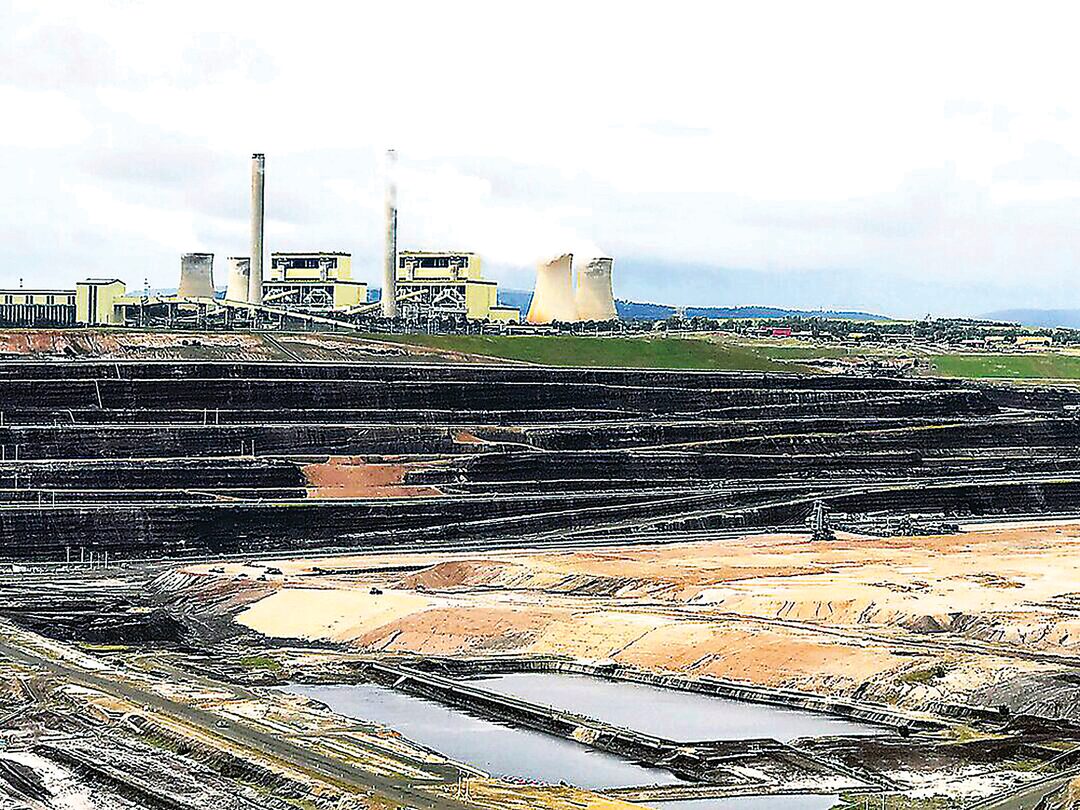
THE industrialist Allan Blood aims to return to the Latrobe Valley to build a multi-billion-dollar diesel fuel production plant from gasifying the region’s brown coal despite the government rejecting its earlier $2 billion urea fertiliser project.
Mr Blood, the executive director and founder of Victorian Hydrogen & Ammonia Industries Ltd (VHAI), wrote to the new Victorian Premier, Ben Carroll, not long after he took the job, advising he is keen to developing a new project to produce diesel fuel from brown coal.
The waste heat co-produced would also be suitable for large-scale base load power production that would be green by definition.
VHAI earlier this year abandoned its $2 billion project to make fertiliser from the Valley’s brown coal due to government opposition and shifted the project to New Zealand.
Mr Blood said the state government should stop the ‘ideological nonsense’ that abounded when Lily D’Ambrosio was the Energy Minister, causing the project to be moved to NZ.
Since moving there, they had achieved more in the first six months than in the past six years in Victoria.
“In terms of government action and encouragement, the difference is like night and day,” he told the Express.
“If Victoria does not change, it will ‘fall off the map of Australia’.”
Mr Blood said the baseload waste heat would produce power at a far lesser cost than offshore wind, a power source he described as “economic madness”.
“It (offshore wind) would either inflict massive price hikes on the community or the government would have to massively subsidise it and send the state further into the red,” he said.
Mr Blood said he had written to the new Premier.
“After some weeks, I received the standard ‘Thank you for writing reply’ and referred my letter to the Energy Minister (Jaclyn Symes). I have heard nothing back,” he said.
Ms Symes replaced Ms D’Ambrosio, who strongly opposed coal gasification.
“Symes is a pretty good lady but is probably surrounded by D’Ambrosio’s old team.”
Mr Blood said his company, with Anglo-American and technical assistance from Shell, had spent more than $100 million on the diesel project in the early 2000s. It was a project that could help solve Australia’s diesel fuel shortage long-term and create thousands of jobs in the Valley, plus assist with reliable base load power, which the state is desperately going to need, he said.
The company plans to export urea and ammonia from NZ to Victoria and Eastern Australia, but the Valley remains the preferred place to make diesel due to its huge active resource of highly chemically suitable lignitic coal.
“The Latrobe Valley has an existing coal mine operating and the plans of AGL to cease its operations and rehabilitate it are just ridiculous when it still has billions of tonnes of lignite that can still be accessed at very low cost,” he said.
This action of AGL must be stopped, Mr Blood said.
“It’s not their coal, it belongs to the people of Victoria. The government must step up and tell them how the mine is going to run and operate,” he said.
“There is not one reason why they can’t ask someone else to mine that coal – they can do it by a simple common-sense meeting with AGL and put some facts on the table.”The original coal-to-gas-to-diesel project was granted for the Flynn coal field, which is contiguous with the Loy Yang coal – effectively a continuation of the Loy Yang coal mine, which is operated by AGL.
Mr Blood said there would be three or four billion tonnes left in the Loy Yang mining lease area and a total resource of 32 billion tonnes in the Flynn field.
“That contains energy in gaseous form that would dwarf any of the gas contained in the offshore gas fields in Western Australia and should be regarded as Victoria’s greatest fiscal asset instead of being handled in the way that it is,” he said.
“The Bracks and Brumby Labor governments recognised this and came to power with a plan to utilise the asset in a low-to-zero emissions way, so why have these clowns been allowed to denigrate the state’s most valuable asset in the way that they have?”
The government was approached for a comment but had not replied by publication.
Mr Blood emphasised his company has the backing of outstanding Chinese engineers who have further developed the Fischer-Tropsch coal gasification technology developed by Germany almost 90 years ago, before World War 2, and which supplied most of Germany’s aviation fuel and diesel during the war.
This process was further refined in the 1960s by South Africa who, due to sanctions on fuel imports, developed Sasol, which is still making 150,000 barrels of petroleum products to this day. Then, in the 1970s, the OPEC oil price hike propelled every major oil company to go into coal gasification in case it was needed.
“These were all refinements on the old German technology,” he said.
“Today, the Chinese have picked it up. China is gasifying 460 million tonnes of coal a year into various products, including diesel and fertilisers. That will double in the next five years. So, the Chinese are leading the world with their technology using their very updated version of the old Fischer-Tropsch technology, with a lot of refinements. The Chinese group who are doing our engineering, now do 60 per cent of the world’s coal gasification, to urea, to diesel and other products.”
Mr Blood said this was done by a particular Chinese engineering firm that is a subsidiary of China’s equivalent of NASA.
Mr Blood described the Latrobe Valley as the ideal place on the planet to make diesel.
“There are pipeline easements that run from Bass Strait, but you don’t need to refine it, the diesel you make on site, you can pull up your ‘Mac truck’, fill it and away you go. You could start an entire distribution system from the Latrobe Valley via the pipeline that is already there, or road haul it, which is how you get it around the state anyway. You can make Victoria and a fair chunk of eastern Australia self-sufficient,” he said.
Further, Mr Blood emphasised that you can use the waste heat from the gasification process to make baseload green electricity.
“There is no better place to make electricity than the Latrobe Valley – all the grid interconnectors are there. The plan we were going to do some years ago, making 65,000 barrels a day of diesel and 800MW of baseload green electricity from the waste heat and the excess CO2 from gasification, you can sequester in Bass Strait through CarbonNet. It would be the foundation for CarbonNet to get it going,” he said.
“The Latrobe Valley can utilise its coal for zero emissions – and produce diesel, aviation fuel, lubricants and a whole pile of chemical feedstocks.”
The state and federal government-funded CarbonNet aims to build a pipeline from the Latrobe Valley to take greenhouse gas emissions from industry and sequester them in empty oil and gas reservoirs in Bass Strait. However, Mr Blood said the current state government and their federal colleagues are not going to extend funding for this in spite of Australia agreeing to it by the signing of The Paris Accord at the COP 21 in 2016.
“The technology works as has been proven all over the world and it is fool-proof. The CO2 cannot physically re-enter the atmosphere because it is injected as a liquid, it is far heavier than air and below 800 metres of surface depth, the earth’s natural pressure will keep it as a liquid forever,” he said.
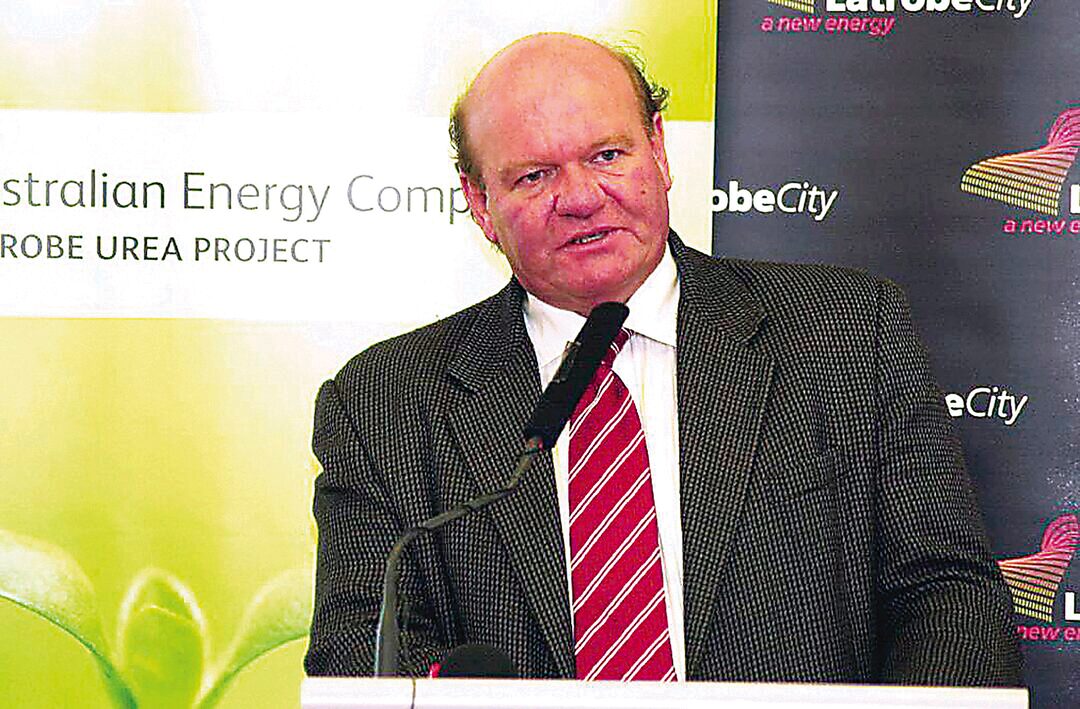
Mr Blood said the other gasification product that will become very important is ammonia.
“Around the world, already eight per cent of world shipping is running on ammonia fuel and that is increasing rapidly. All new ship orders are being based either on ammonia or dual ammonia and diesel fuel ships,” he said.
“Ammonia is going to become a huge issue. Victoria will have to offer bunkering fuel of ammonia – Singapore is already doing it. If it is not on offer, ships will not come. It is a big issue for the government. You have to plan these things years in advance. All the port people are aware of it, but nothing is happening. If you do not produce it locally, it will be an expensive fuel to import and an issue for the ship owners.”
Ammonia is made as part of the process to produce urea and can be made as a separate product.
“At this point in time, we will be ready to import it from our project in New Zealand,” Mr Blood said.
According to Lloyd’s Shipping Register, the potential of ammonia as fuel in shipping has emerged as a potential low-carbon option.
Unlike traditional marine fuels, ammonia is virtually free of sulphur oxide (SOx) and particulate matter (PM) emissions, contributing to cleaner air quality. When produced using renewable energy, ammonia can achieve a lifecycle greenhouse gas (GHG) emission reduction of up to 90 per cent compared to traditional fossil fuels. This makes it a viable option for achieving the International Maritime Organization’s (IMO) target of reducing GHG emissions by at least 50 per cent by 2050.
In assessing the cost of a process plant, Mr Blood said it “depends on how big you want to make it”.
“Our plant in NZ is 1.5m tonnes of urea a year, that is $A3b. It costs half that in China. To make diesel, I have no current costing on that, but years ago (in the early 2000s) we were going to make 65,000 barrels a day with 800MW of base load power. That was going to cost about $5b then,” he said.
The NZ project is on the South Island right at the bottom, near Invercargill, where there is seven to billion tonnes of lignite.
“We have an agreement for over half a billion tonnes of that, which is more than what we need. We need about 200m tonnes for a 50-plus year, 1.5m tonne per year urea plant,” he said.
Mr Blood’s company won a tender from the Bracks/Brumby Labor government 20 years ago to produce fuel from gasifying the brown coal, he said, in contrast to the current government’s anti-coal position regardless of the environmental and economic outcomes.
“One of the greatest economic tragedies on the planet is the way the Labor government has shut down – is shutting down – the Latrobe Valley,” he said.
“The contained energy there is way in excess of the total energy of the North-West Shelf gas project in WA, way in excess. They could produce all of Australia’s fuel for hundreds of years, on a zero emissions basis – how sexy is that?” he said.