




By PHILIP HOPKINS
THE gasification of Latrobe Valley brown coal has been politically thwarted, but in the northern US state of North Dakota, it is a multi-billion-dollar reality.
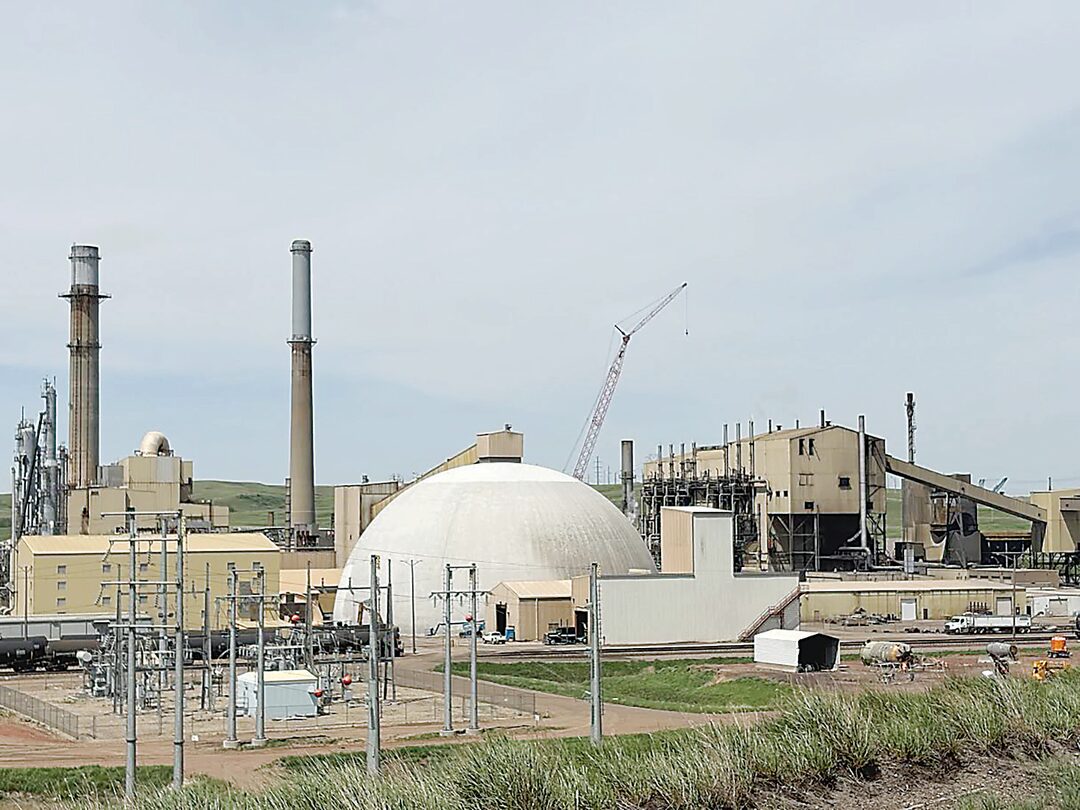
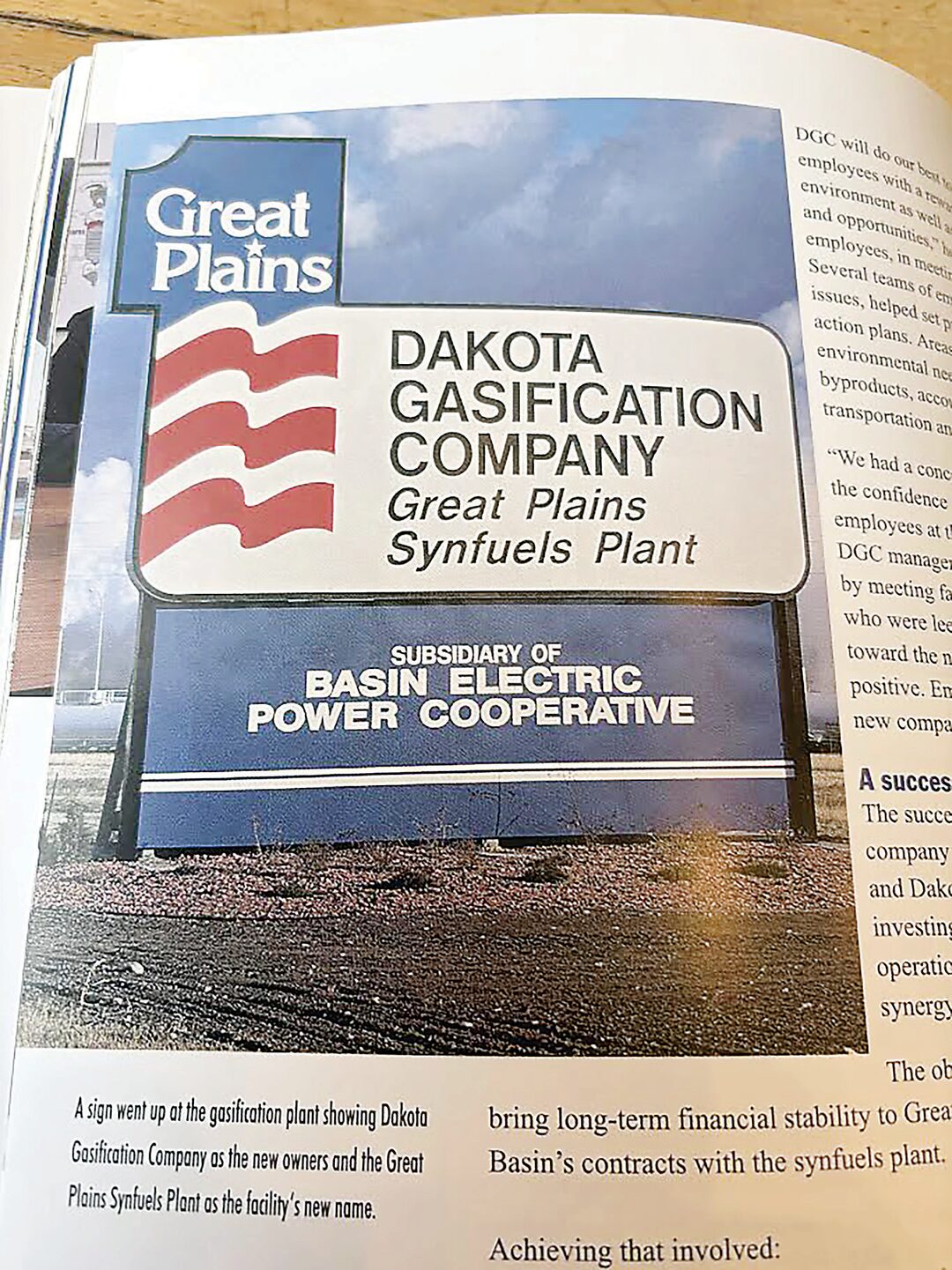
The Dakota Gasification Company Great Plains Synfuels Plant, which has been operating for more than 40 years, produces not just natural gas but thousands of tonnes of fertiliser – urea and ammonia – commercially sold carbon dioxide and many other products for industry.
These products now make up more than half the synfuel’s plant’s income.
The plant uses well-established German Lurgi technology to gasify the brown coal.
Lurgi gasification technology was used in the Morwell Lurgi plant in the 1950s and ’60s to supply Melbourne with medium heating value towns gas. It employed 200-300 people before the advent of Bass Strait natural gas, whose supply is now dwindling.
Construction of North Dakota’s synfuels plant began in 1980, about the same time as the building of Loy Yang A station in the Valley and was completed in 1984.
Now, Loy Yang will be closed in a decade, but in contrast, the synfuels plant has an open-ended future, with North Dakota having an estimated 80 years of gettable coal, and its products in high demand.
The fertiliser is sold throughout America.
A major catalyst for the construction of the North Dakota gasification plant was the Arab oil crisis of the 1970s, when then-US President Jimmy Carter introduced a policy to guarantee America’s energy independence.
There was also a fear of a natural gas shortage.
The gasification plant, whose original cost was $US2.1 billion, would never have got off the ground without crucial federal and state government financial backing and bipartisan support from Republicans and Democrats in Congress.
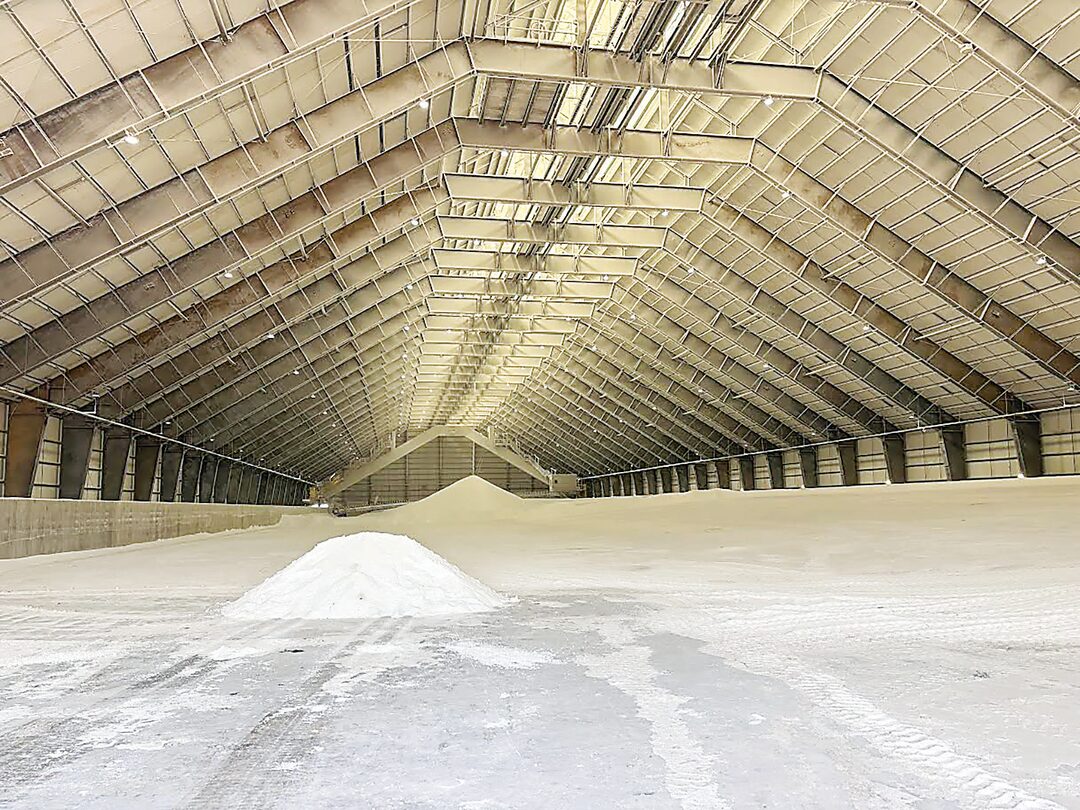
The remaining small mounds of fertiliser gleam white in the cavernous storage shed.
It’s the end of the Northern America spring, and thousands of tonnes of fertiliser, made from brown coal in the US state of North Dakota, have largely been sold.
The fertiliser, distributed throughout the northern and eastern United States, is the product of the Dakota Gasification Company Great Plains Synfuels Plant. It has been operating for more than 40 years.
The plant is owned by Basin Electric Power Cooperative, a supplier of electricity to rural communities in the US for more than 60 years, and is located at Beulah, a town 120 kilometres north-west of the state capital Bismarck, on the rolling prairies where buffalo once roamed.
North Dakota and the Latrobe Valley are kindred spirits: they have the biggest brown coal resources in the world.
The state, in the north-central US, borders Canada and at 179,000 square kilometres, is marginally smaller than Victoria, 227,000 sq km, but has only 880,000 people.
The plant, which uses well-established German Lurgi technology to gasify the brown coal, produces not just natural gas, but a variety of other products, of which fertiliser made from urea is the most important and biggest money earner.
Other products include ammonia, commercially sold carbon dioxide, naphtta, phenol, tar oil, liquid nitrogen, krypton and xenon gases and crude cresylic acid.
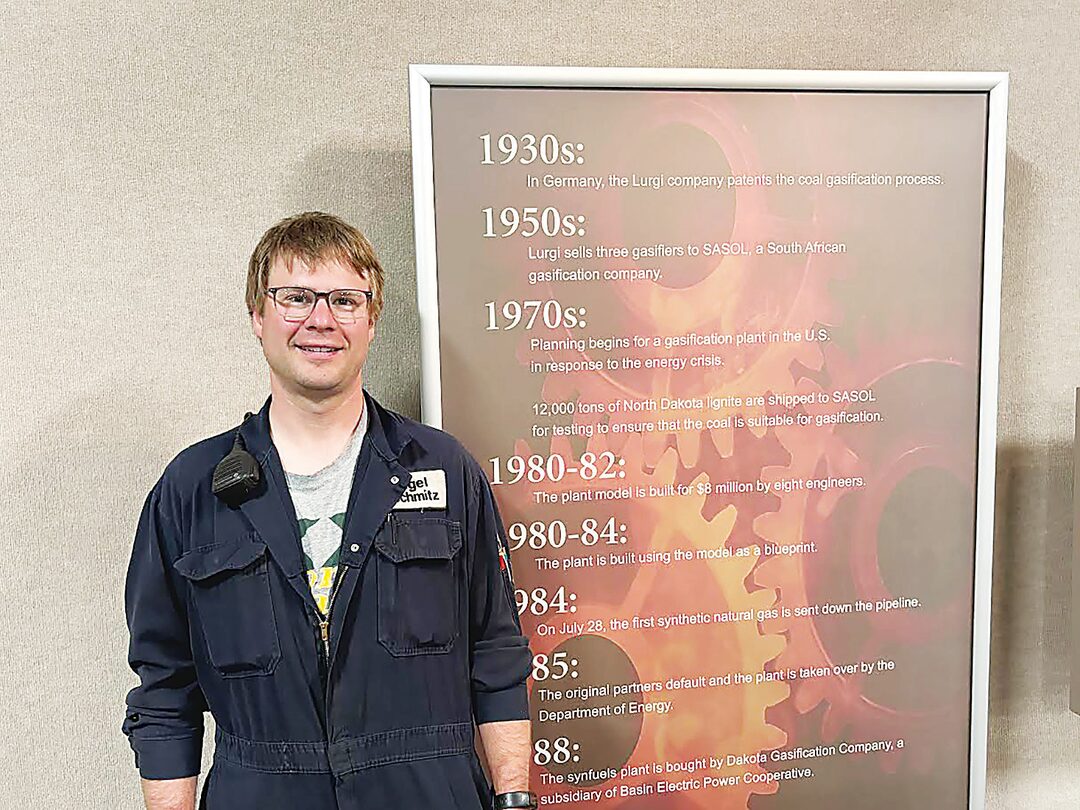
“The urea plant started production in 2017. Its capacity is 1100 tons (1000 tonnes) per day or 400,000 tons per year. We have storage onsite for over 50,000 tons,” Nigel Schmitz, a chemical engineer at the plant, told the Express.
Construction of the synfuels plant began in 1980, about the same time as the building of Loy Yang A station in the Latrobe Valley. It was completed in 1984 – the first gas was fed into the pipeline on July 28 – and production was in full swing in 1988 when Loy Yang A started producing electricity.
Now, Loy Yang will be closed in a decade, despite the Valley’s massive coal resource; a major consortium this year abandoned a $2 billion project to make fertiliser from Valley brown coal, blaming the state government and AGL.
In contrast, the synfuels plant has an open-ended future, with North Dakota having an estimated 80 years of gettable coal.
However, Mr Schmitz said there was now no plans to expand urea production.
“The synfuels plant space, itself about a square mile (2.6 square kilometres), not including the mine and landfill facilities, is pretty full,” he said.
At the Dakota Gasification head office, there is a huge model on a 1/32 scale of the plant as it was built in 1984.
Between 1980-82, the plant model built for $US8 million by eight engineers.
“Most additional units constructed since are not included in the model,” Mr Schmitz said.
A major catalyst for the construction of the gasification plant was the Arab oil crisis of the 1970s, when then-US President Jimmy Carter put in place a policy to guarantee America’s energy independence. There was also a fear of a natural gas shortage.
The gasification plant, whose original cost was $US2.1 billion, would never have got off the ground without crucial federal and state government financial backing and bipartisan support from Republicans and Democrats in Congress.
This support came despite the then President Ronald Reagan’s vow to get “government off people’s backs”.
It was a roller-coaster ride, full of controversy and confusion, over three decades.
The result: North Dakota’s Dakota Gasification Company is the only coal gasification plant in North America.
Elsewhere, only South Africa has a similar plant.
The heart of the North Dakota coal gasification plant is a six-storey building with 14 gasifiers. They are cylindrical pressure vessels about 13 metres high and four metres in diameter, each weighing 170 tons. They look like midget submarines stood end on end, but each now has his own name and personality.
A system of both female and male names, from people who were at the plant during start-up or someone’s spouse. The ‘girls’ are on the south side of the gasifier building, the ‘boys’ on the north side.
Electricity for the synfuels plant comes from the neighbouring 900-megawatt brown coal Antelope Valley power station, owned by North American Coal Company.
“There is no power generation here, all of the coal gas goes into the syngas stream – either to synthetic natural gas production or to ammonia production,” Mr Schmitz said.
“We also use natural gas in the plant to run our boilers. They are not coal-fired boilers but are primarily natural gas-generated. We can also burn all those liquid streams, in the original designed plant, in the boilers.”
Mr Schmitz, a process engineer at the synfuels plant, is a youthful 35-year-old with a young family, and was born, raised and educated in North Dakota.
The long-standing mining and manufacturing industry offered local employment.
Mr Schmitz said just below 600 people were employed at Dakota Gas, mainly in operations and maintenance; administration is centralised at Basin Electric head office.
“The 14 Lurgi gasifiers are old technology by current standards, all World War 2 era technology, but they still work well,” he said.
Each day more than 18,000 tons of lignite are fed into the top of the gasifiers.
Put simply, Mr Schmitz said gasification works by injecting steam and oxygen into the coal beds.
“You end up with a lot of condensation. We also recover the tar oils from the process condensate, there is ammonia we can remove, also phenol and naphtha – all those things we refine into other biproduct streams. It’s not all that much work after we separate them from the water,” he said.
After the complex process, the synthetic natural gas is cooled, dried and compressed and fed into the pipeline.
Carbon dioxide has been captured since the early 2000s.
“It’s part of the gasification process, we have to remove the CO2 anyway; technically, we have always had capture. We used to burn it in boilers as waste gas, but around 2000 we began sending that to the Canadian tar sands (Saskatchewan) for oil recovery. Now we have wells where we can sequester straight into the ground. We’ve been doing that for the last couple of years,” Mr Schmitz said.
The CO2 is transported 500-kilometres to Canada through a 30cm and 35cm carbon steel pipeline. It has a computerised leak detection system that collects data, monitors check flow rates, pressures and temperatures every five seconds from 14 spots along the way.
Sections of the pipeline can be isolated remotely if a leak is detected and then fixed.
The other treatment of CO2 happens a few kilometres to the north of the plant.
Mr Schmitz said the CO2 was sequestered into the ground at six wells.
“The formation is called the Broom Creek formation. We have a permit to inject the CO2, which is hard-capped and dilutes into the ground. We started doing that in 2024,” he explained.
“The formation where we can inject is quite large. You would have to draw a lot of wells before you fill it all up.”
The project is supported by federal tax incentives.
“We also have the ability to do liquify the CO2; we do sell some for beverage bottling, but not a large amount.”
The company always realised a myriad of chemicals and products could be extracted in the gasification process, but also recognised that they was also an economic hedge against a volatile gas price.
Potential products considered were methanol, petrol, diesel fuel and jet fuel.
For economic and other reasons, they were not pursued, and other products were chosen to concentrate on.
By 2012, the other products made up more than half the revenue stream for the first time.
Various forms of fertiliser, from urea and ammonia as a feedstock, became big sellers.
“About 10 years ago, we built the urea plant – a large investment, probably the single biggest investment since we built the plant,” Mr Schmitz said.
“There has also been a little investment in refining the byproducts of the gasification process.
“We added the ammonia plant in the early 90s. We bought a used ammonia plant in Iowa, brought it back here and put it together. The ammonia plant takes syngas as feed, we make 1100 tonnes a day. It’s a dedicated use of syngas. Before that, all syngas went to natural gas production; now about one-third goes to ammonia production. We add ammonia as feedstock to the urea plant.”
Mr Schmitz said ammonia was harder to ship; rail shipping of ammonia had decreased.
“Around here, it’s almost non-existent now, so ammonia stays regional due to the logistics of trucking it. Urea we send by train to other areas in America,” he said.
When construction of the US2.1 billion synfuels plant began in 1980, the DeBy PHILIP HOPKINS
THE remaining small mounds of fertiliser gleam white in the cavernous storage shed.
It’s the end of the Northern America spring, and thousands of tonnes of fertiliser, made from brown coal in the US state of North Dakota, have largely been sold.
The fertiliser, distributed throughout the northern and eastern United States, is the product of the Dakota Gasification Company Great Plains Synfuels Plant. It has been operating for more than 40 years.
The plant is owned by Basin Electric Power Cooperative, a supplier of electricity to rural communities in the US for more than 60 years, and is located at Beulah, a town 120 kilometres north-west of the state capital Bismarck, on the rolling prairies where buffalo once roamed.
North Dakota and the Latrobe Valley are kindred spirits: they have the biggest brown coal resources in the world.
The state, in the north-central US, borders Canada and at 179,000 square kilometres, is marginally smaller than Victoria, 227,000 sq km, but has only 880,000 people.
The plant, which uses well-established German Lurgi technology to gasify the brown coal, produces not just natural gas, but a variety of other products, of which fertiliser made from urea is the most important and biggest money earner.
Other products include ammonia, commercially sold carbon dioxide, naphtta, phenol, tar oil, liquid nitrogen, krypton and xenon gases and crude cresylic acid.
“The urea plant started production in 2017. Its capacity is 1100 tons (1000 tonnes) per day or 400,000 tons per year. We have storage onsite for over 50,000 tons,” Nigel Schmitz, a chemical engineer at the plant, told the Express.
Construction of the synfuels plant began in 1980, about the same time as the building of Loy Yang A station in the Latrobe Valley. It was completed in 1984 – the first gas was fed into the pipeline on July 28 – and production was in full swing in 1988 when Loy Yang A started producing electricity.
Now, Loy Yang will be closed in a decade, despite the Valley’s massive coal resource; a major consortium this year abandoned a $2 billion project to make fertiliser from Valley brown coal, blaming the state government and AGL.
In contrast, the synfuels plant has an open-ended future, with North Dakota having an estimated 80 years of gettable coal.
However, Mr Schmitz said there was now no plans to expand urea production.
“The synfuels plant space, itself about a square mile (2.6 square kilometres), not including the mine and landfill facilities, is pretty full,” he said.
At the Dakota Gasification head office, there is a huge model on a 1/32 scale of the plant as it was built in 1984.
Between 1980-82, the plant model built for $US8 million by eight engineers.
“Most additional units constructed since are not included in the model,” Mr Schmitz said.
A major catalyst for the construction of the gasification plant was the Arab oil crisis of the 1970s, when then-US President Jimmy Carter put in place a policy to guarantee America’s energy independence. There was also a fear of a natural gas shortage.
The gasification plant, whose original cost was $US2.1 billion, would never have got off the ground without crucial federal and state government financial backing and bipartisan support from Republicans and Democrats in Congress.
This support came despite the then President Ronald Reagan’s vow to get “government off people’s backs”.
It was a roller-coaster ride, full of controversy and confusion, over three decades.
Photographs: Philip Hopkins
The result: North Dakota’s Dakota Gasification Company is the only coal gasification plant in North America.
Elsewhere, only South Africa has a similar plant.
The heart of the North Dakota coal gasification plant is a six-storey building with 14 gasifiers. They are cylindrical pressure vessels about 13 metres high and four metres in diameter, each weighing 170 tons. They look like midget submarines stood end on end, but each now has his own name and personality.
A system of both female and male names, from people who were at the plant during start-up or someone’s spouse. The ‘girls’ are on the south side of the gasifier building, the ‘boys’ on the north side.
Electricity for the synfuels plant comes from the neighbouring 900-megawatt brown coal Antelope Valley power station, owned by North American Coal Company.
“There is no power generation here, all of the coal gas goes into the syngas stream – either to synthetic natural gas production or to ammonia production,” Mr Schmitz said.
“We also use natural gas in the plant to run our boilers. They are not coal-fired boilers but are primarily natural gas-generated. We can also burn all those liquid streams, in the original designed plant, in the boilers.”
Mr Schmitz, a process engineer at the synfuels plant, is a youthful 35-year-old with a young family, and was born, raised and educated in North Dakota.
The long-standing mining and manufacturing industry offered local employment.
Mr Schmitz said just below 600 people were employed at Dakota Gas, mainly in operations and maintenance; administration is centralised at Basin Electric head office.
“The 14 Lurgi gasifiers are old technology by current standards, all World War 2 era technology, but they still work well,” he said.
Each day more than 18,000 tons of lignite are fed into the top of the gasifiers.
Put simply, Mr Schmitz said gasification works by injecting steam and oxygen into the coal beds.
“You end up with a lot of condensation. We also recover the tar oils from the process condensate, there is ammonia we can remove, also phenol and naphtha – all those things we refine into other biproduct streams. It’s not all that much work after we separate them from the water,” he said.
After the complex process, the synthetic natural gas is cooled, dried and compressed and fed into the pipeline.
Carbon dioxide has been captured since the early 2000s.
“It’s part of the gasification process, we have to remove the CO2 anyway; technically, we have always had capture. We used to burn it in boilers as waste gas, but around 2000 we began sending that to the Canadian tar sands (Saskatchewan) for oil recovery. Now we have wells where we can sequester straight into the ground. We’ve been doing that for the last couple of years,” Mr Schmitz said.
The CO2 is transported 500-kilometres to Canada through a 30cm and 35cm carbon steel pipeline. It has a computerised leak detection system that collects data, monitors check flow rates, pressures and temperatures every five seconds from 14 spots along the way.
Sections of the pipeline can be isolated remotely if a leak is detected and then fixed.
The other treatment of CO2 happens a few kilometres to the north of the plant.
Mr Schmitz said the CO2 was sequestered into the ground at six wells.
“The formation is called the Broom Creek formation. We have a permit to inject the CO2, which is hard-capped and dilutes into the ground. We started doing that in 2024,” he explained.
“The formation where we can inject is quite large. You would have to draw a lot of wells before you fill it all up.”
The project is supported by federal tax incentives.
“We also have the ability to do liquify the CO2; we do sell some for beverage bottling, but not a large amount.”
The company always realised a myriad of chemicals and products could be extracted in the gasification process, but also recognised that they was also an economic hedge against a volatile gas price.
Potential products considered were methanol, petrol, diesel fuel and jet fuel.
For economic and other reasons, they were not pursued, and other products were chosen to concentrate on.
By 2012, the other products made up more than half the revenue stream for the first time.
Various forms of fertiliser, from urea and ammonia as a feedstock, became big sellers.
“About 10 years ago, we built the urea plant – a large investment, probably the single biggest investment since we built the plant,” Mr Schmitz said.
“There has also been a little investment in refining the byproducts of the gasification process.
“We added the ammonia plant in the early 90s. We bought a used ammonia plant in Iowa, brought it back here and put it together. The ammonia plant takes syngas as feed, we make 1100 tonnes a day. It’s a dedicated use of syngas. Before that, all syngas went to natural gas production; now about one-third goes to ammonia production. We add ammonia as feedstock to the urea plant.”
Mr Schmitz said ammonia was harder to ship; rail shipping of ammonia had decreased.
“Around here, it’s almost non-existent now, so ammonia stays regional due to the logistics of trucking it. Urea we send by train to other areas in America,” he said.
When construction of the US2.1 billion synfuels plant began in 1980, the DeBy PHILIP HOPKINS
THE remaining small mounds of fertiliser gleam white in the cavernous storage shed.
It’s the end of the Northern America spring, and thousands of tonnes of fertiliser, made from brown coal in the US state of North Dakota, have largely been sold.
The fertiliser, distributed throughout the northern and eastern United States, is the product of the Dakota Gasification Company Great Plains Synfuels Plant. It has been operating for more than 40 years.
The plant is owned by Basin Electric Power Cooperative, a supplier of electricity to rural communities in the US for more than 60 years, and is located at Beulah, a town 120 kilometres north-west of the state capital Bismarck, on the rolling prairies where buffalo once roamed.
North Dakota and the Latrobe Valley are kindred spirits: they have the biggest brown coal resources in the world.
The state, in the north-central US, borders Canada and at 179,000 square kilometres, is marginally smaller than Victoria, 227,000 sq km, but has only 880,000 people.
The plant, which uses well-established German Lurgi technology to gasify the brown coal, produces not just natural gas, but a variety of other products, of which fertiliser made from urea is the most important and biggest money earner.
Other products include ammonia, commercially sold carbon dioxide, naphtta, phenol, tar oil, liquid nitrogen, krypton and xenon gases and crude cresylic acid.
“The urea plant started production in 2017. Its capacity is 1100 tons (1000 tonnes) per day or 400,000 tons per year. We have storage onsite for over 50,000 tons,” Nigel Schmitz, a chemical engineer at the plant, told the Express.
Construction of the synfuels plant began in 1980, about the same time as the building of Loy Yang A station in the Latrobe Valley. It was completed in 1984 – the first gas was fed into the pipeline on July 28 – and production was in full swing in 1988 when Loy Yang A started producing electricity.
Now, Loy Yang will be closed in a decade, despite the Valley’s massive coal resource; a major consortium this year abandoned a $2 billion project to make fertiliser from Valley brown coal, blaming the state government and AGL.
In contrast, the synfuels plant has an open-ended future, with North Dakota having an estimated 80 years of gettable coal.
However, Mr Schmitz said there was now no plans to expand urea production.
“The synfuels plant space, itself about a square mile (2.6 square kilometres), not including the mine and landfill facilities, is pretty full,” he said.
At the Dakota Gasification head office, there is a huge model on a 1/32 scale of the plant as it was built in 1984.
Between 1980-82, the plant model built for $US8 million by eight engineers.
“Most additional units constructed since are not included in the model,” Mr Schmitz said.
A major catalyst for the construction of the gasification plant was the Arab oil crisis of the 1970s, when then-US President Jimmy Carter put in place a policy to guarantee America’s energy independence. There was also a fear of a natural gas shortage.
The gasification plant, whose original cost was $US2.1 billion, would never have got off the ground without crucial federal and state government financial backing and bipartisan support from Republicans and Democrats in Congress.
This support came despite the then President Ronald Reagan’s vow to get “government off people’s backs”.
It was a roller-coaster ride, full of controversy and confusion, over three decades.
The result: North Dakota’s Dakota Gasification Company is the only coal gasification plant in North America.
Elsewhere, only South Africa has a similar plant.
The heart of the North Dakota coal gasification plant is a six-storey building with 14 gasifiers. They are cylindrical pressure vessels about 13 metres high and four metres in diameter, each weighing 170 tons. They look like midget submarines stood end on end, but each now has his own name and personality.
A system of both female and male names, from people who were at the plant during start-up or someone’s spouse. The ‘girls’ are on the south side of the gasifier building, the ‘boys’ on the north side.
Electricity for the synfuels plant comes from the neighbouring 900-megawatt brown coal Antelope Valley power station, owned by North American Coal Company.
“There is no power generation here, all of the coal gas goes into the syngas stream – either to synthetic natural gas production or to ammonia production,” Mr Schmitz said.
“We also use natural gas in the plant to run our boilers. They are not coal-fired boilers but are primarily natural gas-generated. We can also burn all those liquid streams, in the original designed plant, in the boilers.”
Mr Schmitz, a process engineer at the synfuels plant, is a youthful 35-year-old with a young family, and was born, raised and educated in North Dakota.
The long-standing mining and manufacturing industry offered local employment.
Mr Schmitz said just below 600 people were employed at Dakota Gas, mainly in operations and maintenance; administration is centralised at Basin Electric head office.
“The 14 Lurgi gasifiers are old technology by current standards, all World War 2 era technology, but they still work well,” he said.
Each day more than 18,000 tons of lignite are fed into the top of the gasifiers.
Put simply, Mr Schmitz said gasification works by injecting steam and oxygen into the coal beds.
“You end up with a lot of condensation. We also recover the tar oils from the process condensate, there is ammonia we can remove, also phenol and naphtha – all those things we refine into other biproduct streams. It’s not all that much work after we separate them from the water,” he said.
After the complex process, the synthetic natural gas is cooled, dried and compressed and fed into the pipeline.
Carbon dioxide has been captured since the early 2000s.
“It’s part of the gasification process, we have to remove the CO2 anyway; technically, we have always had capture. We used to burn it in boilers as waste gas, but around 2000 we began sending that to the Canadian tar sands (Saskatchewan) for oil recovery. Now we have wells where we can sequester straight into the ground. We’ve been doing that for the last couple of years,” Mr Schmitz said.
The CO2 is transported 500-kilometres to Canada through a 30cm and 35cm carbon steel pipeline. It has a computerised leak detection system that collects data, monitors check flow rates, pressures and temperatures every five seconds from 14 spots along the way.
Sections of the pipeline can be isolated remotely if a leak is detected and then fixed.
The other treatment of CO2 happens a few kilometres to the north of the plant.
Mr Schmitz said the CO2 was sequestered into the ground at six wells.
“The formation is called the Broom Creek formation. We have a permit to inject the CO2, which is hard-capped and dilutes into the ground. We started doing that in 2024,” he explained.
“The formation where we can inject is quite large. You would have to draw a lot of wells before you fill it all up.”
The project is supported by federal tax incentives.
“We also have the ability to do liquify the CO2; we do sell some for beverage bottling, but not a large amount.”
The company always realised a myriad of chemicals and products could be extracted in the gasification process, but also recognised that they was also an economic hedge against a volatile gas price.
Potential products considered were methanol, petrol, diesel fuel and jet fuel.
For economic and other reasons, they were not pursued, and other products were chosen to concentrate on.
By 2012, the other products made up more than half the revenue stream for the first time.
Various forms of fertiliser, from urea and ammonia as a feedstock, became big sellers.
“About 10 years ago, we built the urea plant – a large investment, probably the single biggest investment since we built the plant,” Mr Schmitz said.
“There has also been a little investment in refining the byproducts of the gasification process.
“We added the ammonia plant in the early 90s. We bought a used ammonia plant in Iowa, brought it back here and put it together. The ammonia plant takes syngas as feed, we make 1100 tonnes a day. It’s a dedicated use of syngas. Before that, all syngas went to natural gas production; now about one-third goes to ammonia production. We add ammonia as feedstock to the urea plant.”
Mr Schmitz said ammonia was harder to ship; rail shipping of ammonia had decreased.
“Around here, it’s almost non-existent now, so ammonia stays regional due to the logistics of trucking it. Urea we send by train to other areas in America,” he said.
When construction of the US2.1 billion synfuels plant began in 1980, the Department of Energy made a $US1.5b loan to consortium members along with the $US500m already committed by the companies involved. It was the largest construction project in North America at the time.
Specialised craftsmen in the thousands – boilermakers, ironworkers and pipefitters to welders, and carpenters – operated onsite.
Antelope Valley power station and gasification plant were supplied water by nearby Lake Sakakawea.
The plant was built on time and slightly under budget.
Production began in 1984, but next year the price of natural gas fell way below the cost of production. The consortium requested financial help but was denied, so the group declared itself bankrupt.
The US Dept of Energy took control and ran it for three years, then decided to sell it.
In 1988, history was made; Basin Electric bought it, formed Dakota Gasification Company, saved more than 700 jobs and paid back the $US1.5b loan.
The Great Plains Synfuels Plant now produces a variety of products.
Apart from urea, there is:
Ammonium sulphate – a granular, premium fertiliser, 105,000 tons a year. It is marketed in US as Dak Sul 45;
Anhydrous ammonia – fertiliser feedstock, 400,000 tons annually. Used as a fertiliser, this gas is shipped in liquid form by tank truck or rail from the synfuels plant;
Naphtha – about 75 per cent of the plant’s naphtha is sold, in petrol and benzene solvents, with some reserved as fuel for the plant;
Phenol – used in resins for wood products, plastics, disinfectants, pharmaceuticals, carbon paper and pipe insulation. Shipped as a liquid rail tank car;
Crude cresylic acid, derives from same stream as phenol. This liquid is used as a wire enamel solvent for resins and antioxidants, and the manufacture of pesticides. Shipped by rail car;
Liquid nitrogen – production and sale of byproduct varieties. Refrigeration additive and enhanced oil recovery. Also marketed to food processors, oil service companies;
Krypton and zenon gases – these rare gases used for high-intensity lighting, lasers, window insulation, 3.5m tons to food processors and oil service companies;
Tar oil – fuel, feedstock, and; liquified carbon dioxide.