



By STEFAN BRADLEY
INFRASTRUCTURE Victoria (IV) has called on the state government to add more regional bus and coach services, including in Gippsland, for better access to jobs and services.
IV, an independent advisory body, released a 250-page report last November titled Victoria’s Infrastructure Strategy 2025-2055, which included 45 recommendations and eight future options on many infrastructure sectors.
Recommendation 13 urges the state government to run more coach and bus services to better connect small towns to regional centres. They recommend starting with routes that improve access to healthcare, education and jobs.
IV recommends more bus services in Bairnsdale, Warragul, Drouin, Shepparton, Wodonga, Mildura, Wangaratta and Horsham.
“If people use public transport more, they can save money and produce fewer greenhouse gas emissions. But our modelling confirms that many regional Victorians struggle to access services by public transport,” IV’s report stated.
“Many transport services do not reach the places people need, including TAFEs, universities, employment centres, hospitals and health facilities.”
The report said around 90 per cent of young people living in rural and regional Victoria could not access TAFE or university by public transport, and when they could, often had to leave class early or experience a long wait on the way home.
There are many benefits to having better public transport for regional Victorians, especially for low-income households, older people and First Peoples who may have limited access to transport.
“Better public transport can improve access to education and help young people stay in regional areas. It can connect people to jobs and help fill labour shortages,” IV said.
“It can help older people stay independent and mobile. It also improves road safety. When people choose public transport over driving, it reduces the total number of car crashes.”
Public Transport Users Association (PTUA) regional spokesperson Paul Westcott told the Express the organisation “fully agrees” with sentiments expressed in Recommendation 13. PTUA advocates for public transport users in Victoria.
“We have long noted that bus services designed to connect regional centres are glaringly inadequate. As Infrastructure Victoria notes, they run far too infrequently and some are notably indirect,” Mr Westcott said.
“The other problem is that they are a mixture of services contracted as V/Line ones, and services contracted by the (Department of Transport and Planning), which are ‘non-V/Line’.
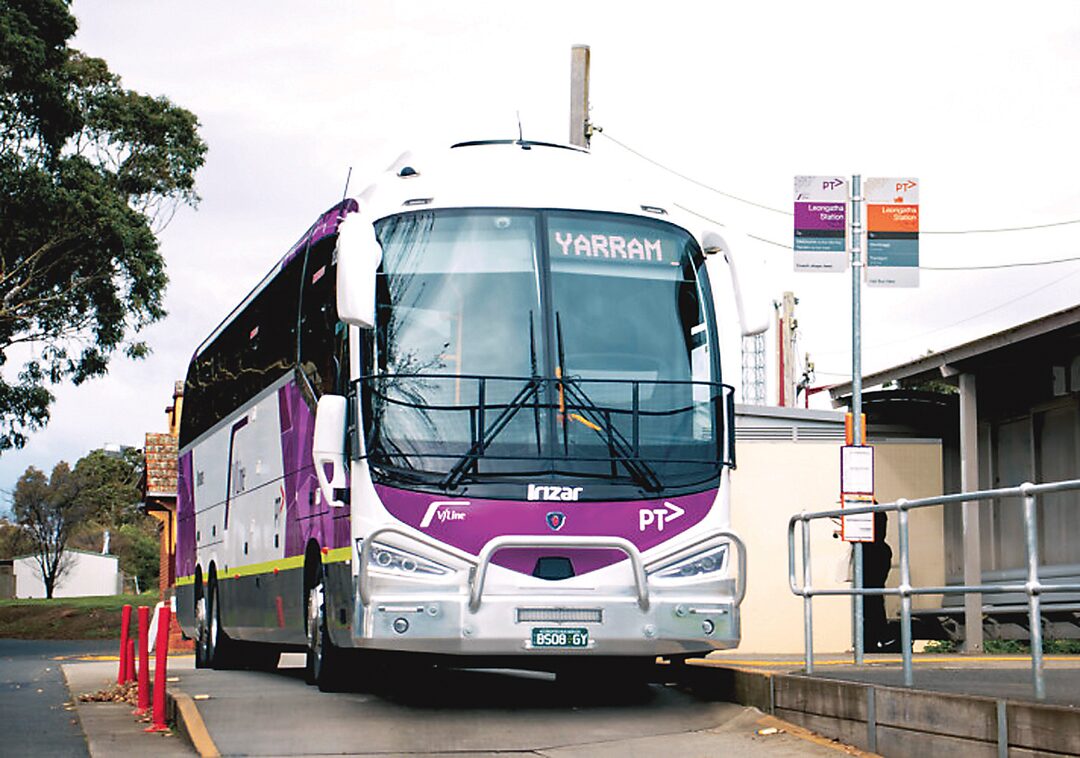
“The designated V/Line bus (‘coach’) services tend to run between the more significant regional centres, whereas the ones contracted by the DTP are usually in the remoter parts of regional Victoria. Not only should they run more frequently and directly, it would be advantageous to have all regional inter-urban bus service designated as V/Line ones, with all relevant buses sporting the V/Line livery.
“The advantage of that is that V/Line is an established brand and having a common V/Line livery will help to make the services more ‘visible’. The DTP-contracted services are run by buses just featuring the individual companies’ livery and so are ‘anonymous’.”
IV said the government should consult with communities, councils and bus operators in regional centres to confirm transport needs and then add services to meet them.
“It should coordinate local bus services with train timetables to connect people to more transport options and reduce waiting times,” IV said.
“Our analysis of possible service improvements shows that running daytime bus services every 30 minutes in larger cites (sic) will add up to 250 new services each day. Running buses every 60 minutes in smaller cities and towns will add around 30 new services a day.”
More ticket readers added to V/Line coach and bus services would make it easier for travellers to switch between connecting services.
The Express asked the state government if it intended to act on any of the ideas or recommendations in the report, in particular about regional buses.
“Passengers are already enjoying more bus and train services, better reliability and upgraded stations thanks to the Gippsland Line Upgrade,” a government spokesperson said.
“This year, we added more than 1100 extra bus services across 13 routes in Moe, Morwell, Traralgon, Drouin and Warragul, providing better transfers between the new services added as part of switching on the Gippsland Line Upgrade.
“We recognise the important role that buses play in our regional communities which is why we’re reviewing a number of regional networks to understand local usage and inform future upgrades.”
The government said the 2025/26 State Budget invested in reviewing high priority regional networks to inform future bus network plans.
A staged approach will be taken to these reviews over the next few years, with the immediate focus on the Ballarat, Bendigo and the Geelong and Bellarine bus networks. Timing for other priority network reviews will be determined as reviews progress further.
Around 24,000 additional bus services have been added since 2014, including 500 additional weekly bus services in Armstrong Creek, Charlemont and Torquay, 320 additional weekly bus services in Ballarat this year and 1100 in and around Gippsland following the completion of the Gippsland Line Upgrade last year.
The budget funded more frequent coach services for Leongatha and Yarram. Engagement on this expansion of services has just finished, with more than 1200 responses received, with the new services to be introduced in 2026.
The budget also included funding for the continuation of the Anderson to Cowes Friday evening service, two Bass Coast and South Gippsland TAFE services, and Wonthaggi to Leongatha (via Inverloch) intertown service.
IV estimated the entirety of Recommendation 13 to cost $100 million to $150 million over five years, funded by general government recommendations. More bus and coach services in regional Victoria would cost about $25-45 million each year to operate, which includes buying and maintaining bus fleet and depot upgrades.